
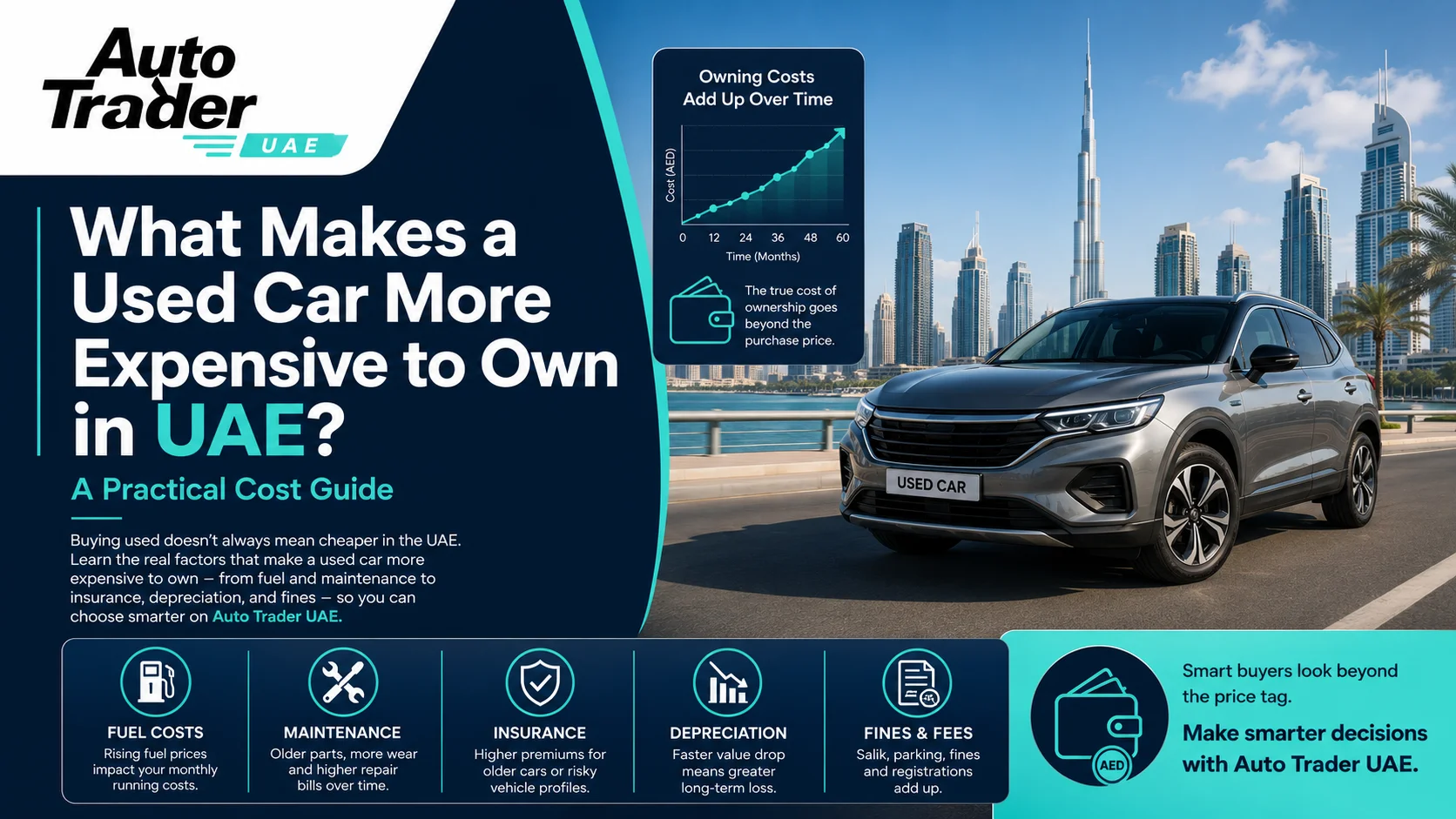
What Makes a Used Car More Expensive to Own in UAE?
In the UAE, many buyers assume a used car is always cheaper to own than a new one. The purchase price might be lower, but the total cost of ownership can sometimes be higher – especially if you choose the wrong car for local conditions.
This guide explains what really makes a used car more expensive to own in the UAE, and how to avoid costly mistakes when you shop on Auto Trader UAE.
1. Fuel Consumption in UAE Driving Conditions
Why fuel costs matter more here
Between daily commuting, school runs, and weekend drives, fuel is one of the biggest ongoing expenses. A used car that looks cheap upfront can become expensive if it’s thirsty at the pump.
In the UAE, factors that increase fuel costs include:
- Heavy traffic in Dubai, Abu Dhabi, and Sharjah causing stop–go driving
- High AC usage most of the year due to heat and humidity
- Large engines and powerful SUVs being popular choices
Which used cars tend to cost more on fuel?
- Big used SUVs with older V6 or V8 engines
- High-performance sports cars and powerful luxury sedans
- Older models without modern fuel-saving tech like start/stop or turbocharged small engines
When browsing listings, compare real-world fuel economy estimates and look for newer engine generations where possible.
2. Maintenance and Parts Costs
Older and complex cars usually cost more to maintain
Maintenance is where many UAE buyers get surprised. A cheap used car with poor service history or hard-to-find parts can quickly erase any savings on purchase price.
Costs are driven up by:
- Age and mileage – more wear on engine, suspension, gearbox, AC, and electronics
- Brand and segment – premium European brands and performance models usually have higher parts and labour rates
- Complex features – air suspension, advanced driver assistance systems, panoramic roofs, and premium infotainment add repair risk
Red flags that a car may be maintenance-heavy
- No or incomplete service history or missing stamps
- Many aftermarket modifications (tuning, lowered suspension, non-standard wheels)
- Visible oil leaks, noisy suspension, or weak AC during test drive
Before buying, ask for maintenance records and consider a pre-purchase inspection. It’s far cheaper than a major engine or gearbox repair later.
3. Insurance Premiums in the UAE
Why some used cars are expensive to insure
Insurance is mandatory, and it’s not just the car’s age that matters. Insurers in the UAE look at:
- Value and type of the car – luxury and sports cars cost more to repair and insure
- Engine size and performance – higher power often means higher risk
- Accident history – previous major claims or structural damage can push up premiums
- Driver profile – age, licence history, and claim record
A used car with a seemingly low price but a poor accident record may cost you more in yearly insurance than a slightly more expensive but clean, well-maintained car.
How to avoid insurance surprises
- Get an insurance quote using the exact car details before closing the deal.
- Check the accident history via official channels where possible.
- Compare comprehensive vs third-party options for older cars.
4. Depreciation and Resale Value
Some used cars keep losing value faster
Even after the first few years, some models continue to depreciate quickly. If you plan to sell in the short to medium term, this affects your real cost of ownership.
Factors that hurt resale value in the UAE include:
- Unpopular or discontinued models with low demand
- High mileage compared to similar cars on the market
- Heavy modifications (extreme body kits, tuning chips, non-OEM interiors)
- Visible interior or exterior damage and faded paint
On the other hand, certain brands and body types – especially reliable Japanese sedans and popular family SUVs – often hold value better in the UAE.
How depreciation makes ownership more expensive
If you buy a used car that continues to drop in value faster than average, your cost per year of ownership increases, even if running costs are reasonable. Think beyond today’s price and consider what you might realistically sell it for in two or three years.
5. Previous Accident or Flood Damage
Hidden damage can mean big bills
Cars that have been in major accidents or suffered flood damage can look fine after cosmetic repairs, but hidden issues may make ownership far more expensive.
Risks include:
- Structural weakness after poor-quality body repairs
- Electrical problems from water damage or incorrect wiring
- Uneven tyre wear and alignment issues from chassis damage
These problems often appear months after you buy the car, turning into repeated workshop visits and high repair costs.
What you should do
- Have a trusted workshop or inspection centre check the chassis and paint thickness.
- Look for panel gaps, mismatched paint, or overspray.
- Test all electronics, especially windows, central locking, sensors, and infotainment.
6. Tyres, Brakes, and Wear Items
Climate and driving style accelerate wear
In UAE heat, tyres and rubber components age faster. A used car that needs immediate replacement of tyres, brake pads, and discs can cost thousands of dirhams right after purchase.
Watch out for:
- Old or cracked tyres, even if tread seems okay – check manufacturing date
- Vibration at speed, which could indicate tyre, wheel, or alignment issues
- Squealing or grinding brakes during a test drive
Before buying, factor in the realistic cost of bringing these safety items up to standard.
7. Registration, Testing, and Fines
RTA testing and renewal
Older used cars must pass regular RTA testing. If the car is poorly maintained, you may face multiple rejection attempts and repair bills before it passes.
Outstanding fines and Salik
Some buyers forget to check fines. Unpaid traffic and Salik fines are usually tied to the car and plate; if not cleared by the seller, they can become a headache at transfer time.
Always:
- Check for outstanding fines through the official emirate portals before transfer.
- Confirm the registration status and expiry date.
8. Modifications and Customisation
Why heavily modified cars often cost more to own
Lowered suspension, engine tuning, loud exhausts, and body kits can look attractive in ads, but they often mean:
- Higher wear and tear, especially on engine, gearbox, and suspension
- More frequent mechanical issues due to non-standard parts
- Potential insurance and registration issues if modifications aren’t declared or approved
Unless you understand the modification and its impact, it’s usually safer and cheaper long-term to choose a lightly used, mostly stock vehicle.
9. Unsuitable Car for Your Real Usage
The wrong type of car can be expensive, even if it’s reliable
Sometimes the car itself isn’t bad – it’s just wrong for your lifestyle. This often leads to higher fuel, maintenance, and depreciation.
Examples:
- Using a large 4x4 SUV only for short city trips and school runs
- Buying a two-door sports car for a growing family and then replacing it sooner than planned
- Choosing a small city hatchback when you regularly drive long distances between emirates
Before buying, be honest about your daily routes, passengers, parking situation, and how long you want to keep the car.
10. How to Choose a Used Car That’s Cheaper to Own
Key steps for buyers on Auto Trader UAE
- Define your real needs: daily distance, type of driving, family size, parking, and budget for fuel and maintenance.
- Shortlist the right segment: for many UAE drivers, a practical sedan, crossover, or compact SUV offers the best balance.
- Research typical issues for the model and year you are considering.
- Check service history and ownership records carefully.
- Get a pre-purchase inspection to avoid hidden mechanical or accident damage.
- Estimate total yearly cost: fuel, insurance, maintenance, tyres, and realistic depreciation.
Smart browsing tips
- Filter by mileage and year to avoid very high-mileage options unless they’re extremely well maintained.
- Compare similar listings to see which cars have better histories for a similar price.
- Look at currently popular and in-demand models to protect your future resale value.
Buyer Takeaway
A used car in the UAE becomes expensive to own when fuel use, maintenance, insurance, and depreciation all work against you – especially if the car has poor history or doesn’t match your lifestyle. Spend time studying total cost of ownership, not just the asking price, and use inspections and service records to reduce risk.
Seller Takeaway
As a seller, you can make your car more attractive and justify a stronger price by keeping up with maintenance, documenting service history, fixing minor issues, and presenting a clean, accident-free record. Buyers in the UAE are increasingly aware of total ownership costs, so transparency can help your listing stand out on Auto Trader UAE.
Conclusion
Understanding what makes a used car more expensive to own in the UAE helps both buyers and sellers make smarter decisions. If you focus on fuel efficiency, maintenance history, insurance, and future resale value, you can avoid most of the costly traps that come with the wrong used car.
When you’re ready to search, explore a wide range of used cars in UAE and used cars in Dubai on Auto Trader UAE. Filter by budget, body type, year, and more to find a car that’s not only affordable to buy, but also affordable to own over the long term.
Browse used cars in UAE on Auto Trader UAE to compare live listings, prices, and current market activity more clearly.