
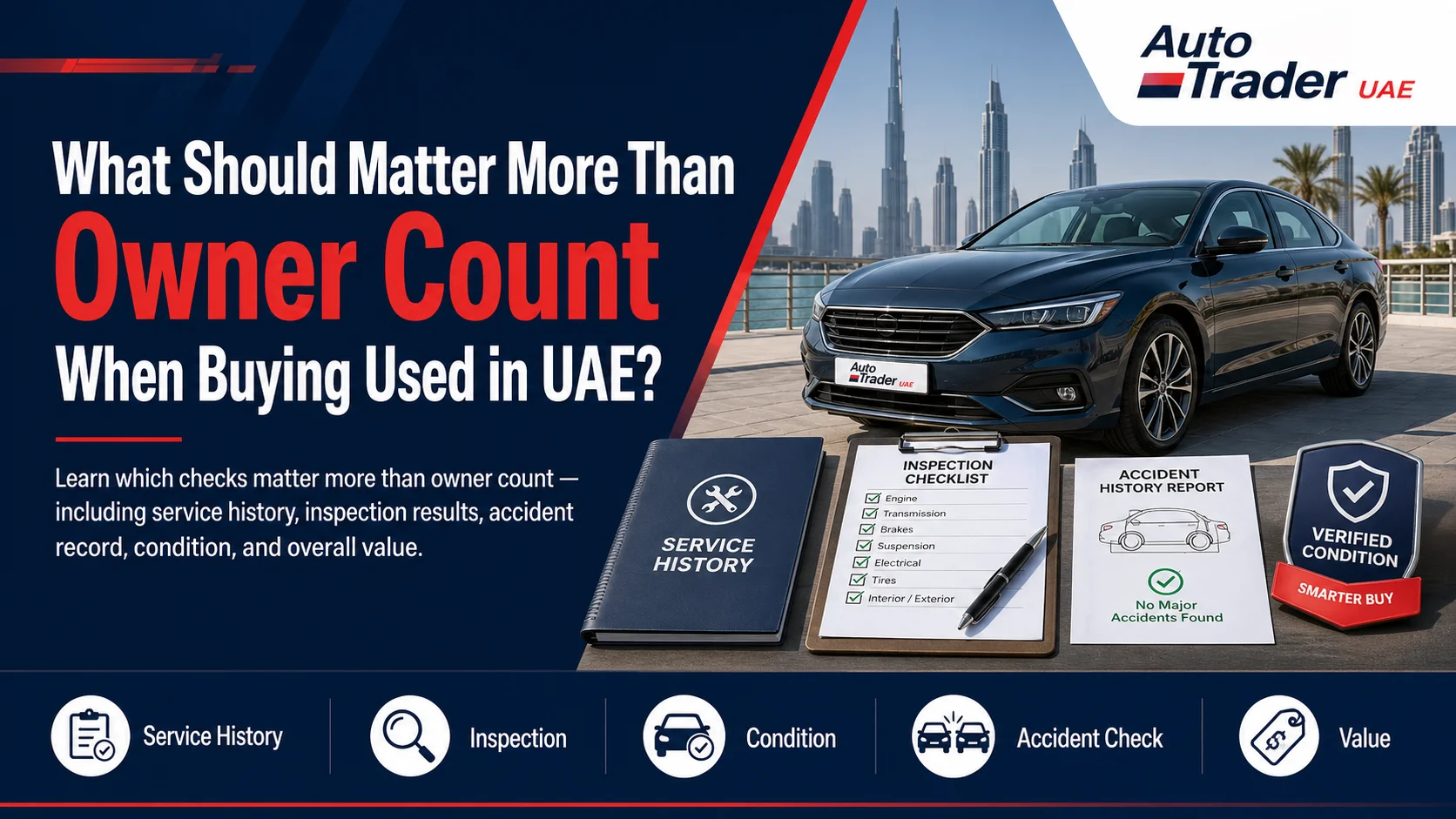
What Should Matter More Than Owner Count When Buying Used in UAE?
Scroll through used car listings in the UAE and you’ll see “Single Owner” or “One GCC Owner” proudly highlighted in bold. Owner count matters – but not the way many buyers think it does.
In reality, a two‑ or three‑owner car can easily be a better buy than a “single owner” car that’s been neglected, abused, or poorly repaired. If you focus only on the number of previous owners, you risk overpaying for a badge of comfort instead of real quality.
This guide explains what should matter more than owner count when buying a used car in the UAE, and how to check those things step by step using Auto Trader UAE and other reliable sources.
Why Owner Count Gets So Much Attention
Owner count is popular because it feels simple and reassuring. Fewer owners is often assumed to mean:
- Less chance of hidden accidents or abuse
- More consistent maintenance history
- Lower mileage and gentler use
Sometimes this is true, especially with careful first owners who service at the dealer and keep all invoices. But in the UAE used market, owner count can also be misleading:
- Many expats change jobs or relocate, forcing a sale even if the car is in excellent condition.
- Some cars pass between family members, inflating the owner count without changing how the car was driven or maintained.
- Traders may register the car under their name briefly, adding another “owner” without affecting the car’s real life story.
Instead of using owner count as a yes/no filter, treat it as one piece of context. The real value is in the details underneath.
The 10 Factors That Matter More Than Owner Count in the UAE
1. Full, Verifiable Service History
If you have to choose between a single-owner car with patchy history and a three-owner car with a thick file of stamped invoices, pick the one with the paperwork almost every time.
What to look for:
- Stamped service book or digital service records, ideally from main dealer or a reputable specialist.
- Regular service intervals (every 10,000–15,000 km or annually, depending on manufacturer recommendations).
- Major maintenance items done on time (timing belt, transmission service, brake fluid, coolant, spark plugs, etc.).
How to check in the UAE:
- Ask the seller for a photo or scan of the service book and invoices before you travel to see the car.
- For many brands, you can confirm history at the main dealer using the chassis number (VIN).
- Cross-check mileage on invoices with the current odometer reading.
2. Accident and Repair History
A clean accident record is usually more important than a low owner count. A car with one careful owner and a major structural crash is often a worse buy than a multi-owner car that has only had minor cosmetic repairs.
Key points:
- Focus on type of damage: structural and chassis damage is far more serious than replaceable panels.
- Professional, documented repairs are acceptable; quick, cheap fixes are not.
- Look for signs of repainted panels, misaligned gaps, overspray, or non‑original welds.
How to check in the UAE:
- Use RTA or local authority channels where available to check for major insurance claims (varies by emirate).
- Request previous inspection reports or dealer trade-in evaluation if the seller has them.
- Hire an independent inspection service or trusted workshop to put the car on a lift and check for structural repairs.
3. Mechanical Condition Today
How the car drives today matters more than how many names are on the registration card.
On your test drive, pay attention to:
- Engine: Smooth idle, no misfires, no warning lights, no unusual smoke, normal temperature.
- Gearbox: Smooth shifts (automatic or manual), no delays, jerks, or clunks.
- Suspension & steering: No knocking noises, no pulling to one side, stable at highway speeds.
- Brakes: Strong, straight braking without vibration.
- Air‑conditioning: Strong cooling, especially important in the UAE climate.
Many of these issues are fixable, but they affect what the car is worth and what you should budget after purchase.
4. Mileage (and Whether It Makes Sense)
Owner count is a rough clue. Mileage is measurable reality – as long as it’s genuine.
Consider:
- Average annual mileage in the UAE is often around 15,000–25,000 km; much higher or lower should be explained.
- High mileage with strong, documented maintenance can be safer than low mileage with poor or unknown maintenance.
- Extreme low mileage on an old car can bring its own issues (rubber seals, tyres, and fluids degrade with time).
How to cross-check mileage:
- Compare mileage on service records, RTA tests, and inspection sheets across the years.
- Check interior wear (steering wheel, pedal rubbers, seats) against the claimed mileage.
5. GCC Specs vs Imported Cars
In the UAE market, whether the car is GCC spec usually has a bigger impact on value than owner count.
Why GCC spec matters:
- Cooling systems and air‑conditioning designed for high temperatures.
- Suspension, fuel system, and rust protection tuned for local conditions.
- Better parts availability and easier dealer support.
Non‑GCC imports can still be good buys, but they should generally be cheaper and inspected more carefully for hidden accident history or flood damage from other markets.
6. Usage Type and Driving Pattern
The way a car has been used often tells you more than how many people have used it.
Try to understand:
- Mostly highway vs heavy city traffic use.
- Private family car vs ride‑hailing/taxi or rental use.
- Used off‑road regularly vs mainly used on tarmac.
- Parked in covered parking vs roadside under the sun.
A privately owned car that’s done long highway runs Abu Dhabi–Dubai with regular dealer service can be a stronger buy than a low‑mileage city car used for short stop‑start trips with no warming up time.
7. Ownership Type (Private, Fleet, Rental)
Owner count doesn’t tell you who those owners were. That context matters a lot in the UAE.
- Private individual: Often better cared for, especially if kept long term and serviced on time.
- Company fleet: Mixed; generally high mileage but usually maintained on schedule, sometimes at big discounts.
- Rental / ride-hailing: Higher wear and tear, driven by many people with different habits; should be priced accordingly.
Ask directly: “Was this car ever used as a rental, company fleet, or ride‑hailing vehicle?” A trustworthy seller should answer clearly.
8. Interior, Exterior, and Cosmetic Care
Cosmetic condition is not just about looks; it reflects the attitude of previous owners and how they treated the car.
Check:
- Interior plastic condition (scratches, fading, sticky buttons).
- Seat wear, especially driver side bolster and steering wheel leather.
- Window seals and rubber trims for cracks from heat exposure.
- Paint condition, signs of overspray, mismatched colours, or poor repairs.
A clean, cared‑for cabin and exterior usually correlates with better mechanical care, regardless of owner count.
9. Spec Level, Options, and Safety Features
In the UAE, trim level and options can easily change the value of a used car by thousands of dirhams – and often matter more to your daily satisfaction than whether the car had one or three owners.
Prioritise:
- Safety tech (airbags count, electronic stability control, advanced driver assistance where relevant).
- Comfort features that matter in local climate (strong AC, rear AC vents, ventilated seats where available, sunroof quality).
- Infotainment compatibility (Apple CarPlay/Android Auto, Bluetooth, reverse camera).
Compare specs carefully against other listings on Auto Trader UAE to ensure you’re paying the right price for the features you’re getting.
10. Inspection Results and Pre‑Purchase Report
A solid, independent inspection is the final reality check – and it’s easily worth more than obsessing over the number of previous owners.
For peace of mind in the UAE:
- Use a trusted workshop, brand specialist, or independent inspection service.
- Ask for a written report with photos and an estimate of upcoming costs.
- Use the report to negotiate a fair price or walk away if there are serious hidden issues.
When Owner Count Should Matter
Owner count isn’t useless; it just shouldn’t be your main decision filter. It becomes more meaningful when combined with other details.
Situations where fewer owners is genuinely a plus:
- High‑value, premium or performance cars where careful long‑term ownership is more likely to mean gentle use.
- Classic or collectible models where a clear, simple ownership history supports value and future resale.
- Cars sold directly by the first owner with all invoices, original manuals, and keys.
Situations where a higher owner count is not a red flag:
- Common, mass‑market models used by expats who relocate every few years.
- Cars that show strong service history and clean inspections but have changed hands due to job moves or upgrades.
- Vehicles passed between family members whose names all appear on the registration history.
Instead of rejecting a car blindly because it has three owners, ask why it has three owners and what the documentation tells you about its life.
Common Myths About Owner Count in the UAE
Myth 1: “Single Owner” always means better condition
A single owner can neglect maintenance, ignore warning lights, or drive the car hard. A multi‑owner car may have been cared for by each owner in turn. Condition and records should always carry more weight.
Myth 2: Multiple owners means the car was problematic
In the UAE, multiple owners often reflect lifestyle changes – job location, visa status, or family size – not mechanical trouble. Use inspection and service records to judge reliability, not assumptions.
Myth 3: You should pay a big premium just for “one owner”
It’s reasonable for a genuinely well‑kept one‑owner car with full history to carry a small premium. But if the only special thing is the owner count and everything else is average, treat it like any other car and compare prices across listings.
How to Prioritise Your Checks When Buying Used in the UAE
Use this order of priority when browsing used cars on Auto Trader UAE:
- Shortlist by model and budget
Choose models known for reliability and parts availability in the UAE. Use Auto Trader UAE make/model pages to research common issues and running costs. - Filter by GCC spec, year, and mileage
Prioritise GCC spec where possible. Aim for a mileage that matches your expectations and budget. - Check service history and accident disclosure in the ad
Look for phrases like “full service history,” “dealer maintained,” “no major accidents,” or photos of service books and invoices. - Use owner count as context only
Prefer fewer owners all else equal, but don’t reject a good car solely because of a higher owner count. - Inspect in person and test drive
Check mechanical condition, interior, exterior, tyres, and AC performance under real conditions. - Order an independent inspection
Especially for higher‑value cars, performance models, or anything with unclear history. - Negotiate based on facts
Use inspection findings, upcoming maintenance, and market prices on Auto Trader UAE listings to agree a realistic deal.
Tips for Sellers: How to Present Owner Count the Right Way
If you’re selling your car through Auto Trader UAE, be transparent and use owner count as part of a bigger trust story.
- State the accurate number of owners, and mention if it includes family transfers or dealer registrations.
- Highlight service history more than owner count – upload clear photos of the stamped service book and key invoices.
- Mention GCC spec clearly if your car is GCC and has full dealer history; buyers in the UAE care about this.
- Explain any changes of ownership (e.g. “Sold from father to son, same household; moved emirates, re‑registered”).
- Get a pre‑sale inspection and share the report; this can justify your price and accelerate the sale.
Buyer Takeaway: What Really Matters More Than Owner Count
When you’re comparing used cars in the UAE, imagine two listings side by side on Auto Trader UAE:
- Car A: One owner, incomplete service history, no inspection, imported spec, average condition.
- Car B: Three owners, full dealer service history, GCC spec, clean independent inspection, well‑presented.
Even with more owners, Car B is usually the smarter, lower‑risk choice – and it may also be better value.
To protect your money and your safety, focus on:
- Service history and maintenance proof
- Accident and repair quality
- Current mechanical and cosmetic condition
- GCC spec and suitability for UAE climate
- Usage history and inspection results
Next Steps with Auto Trader UAE
Use Auto Trader UAE to put this approach into practice:
- Browse used car listings and compare similar models by year, mileage, price, and condition.
- Visit model‑specific pages to understand common issues, running costs, and what to check before buying.
- Read more buying guides to learn how to negotiate, arrange finance, and transfer registration in different emirates.
- If you’re selling, create a detailed listing with honest owner count, full service history photos, and clear condition descriptions.
Owner count is a useful detail, but the smartest used car decisions in the UAE are made by buyers and sellers who look beyond the headline and focus on real‑world condition, history, and value. Auto Trader UAE gives you the tools and marketplace to do exactly that.
If you are exploring used cars in Dubai or elsewhere in the UAE, Auto Trader UAE makes it easier to compare listings, prices, trims, mileage, and seller details in one place.
Related Links
Seller Takeaway
If you are selling a used car in the UAE, present the service history clearly, price the vehicle realistically, and highlight condition, specification, and ownership strengths honestly. A well-prepared listing with accurate details usually attracts more serious buyers.
Conclusion
A careful used car purchase in the UAE starts with research, proper inspection, and clear paperwork before making the final decision.