
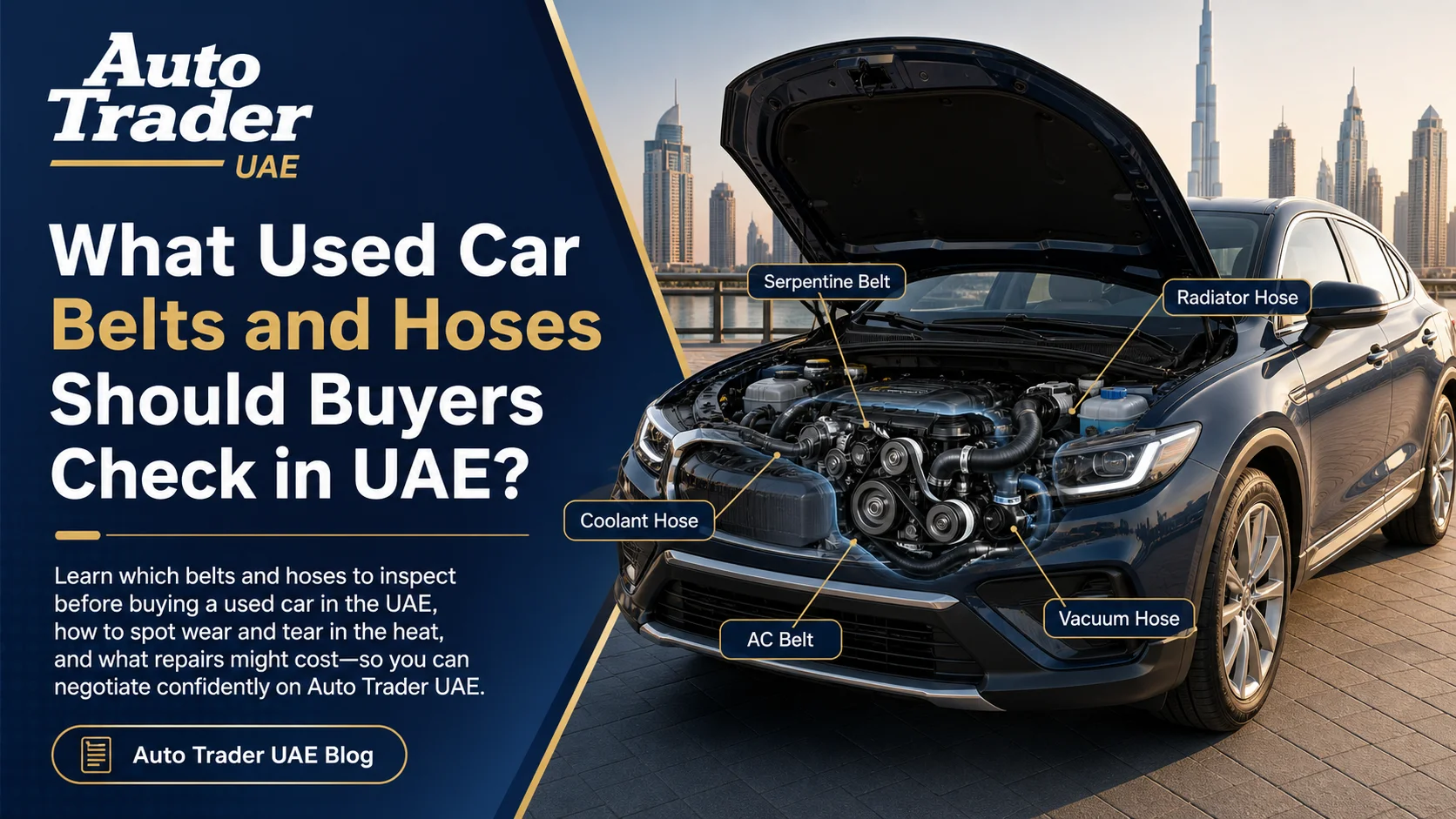
What Used Car Belts and Hoses Should Buyers Check in UAE?
Buying a used car in the UAE isn’t just about mileage, service history and options. In our hot climate, belts and hoses work harder and fail faster if they’re not maintained. Knowing what to look for can save you from overheating, breakdowns and unexpected repair bills. This guide explains exactly which belts and hoses to check on a used car in the UAE, what warning signs to look for, and how to use that information to negotiate a better deal on used cars in the UAE.
Why Belts and Hoses Matter So Much in the UAE
Belts and hoses are part of the car’s basic lifeline:
- Belts drive key components like the alternator, A/C compressor and water pump.
- Hoses carry coolant, fuel, air and power steering fluid.
In UAE conditions, they’re under extra stress:
- Extreme heat accelerates rubber aging, cracking and hardening.
- Stop‑go city traffic (Dubai, Abu Dhabi, Sharjah) means frequent heat cycles.
- Desert dust and sand can work into pulleys and seals.
Ignoring worn belts or hoses can lead to overheating, sudden loss of power steering, an A/C failure in summer, or even engine damage. That’s why a quick belt and hose check is smart before you commit to any car listed on Auto Trader UAE.
Main Belts to Check on a Used Car in the UAE
1. Serpentine (Drive) Belt
Most modern cars use a single serpentine belt that drives several components:
- Alternator (charging the battery)
- Power steering pump (if not electric)
- Air conditioning compressor
- Water pump (on some engines)
Where to find it: Open the bonnet and look at the front of the engine—this long, ribbed belt wraps around multiple pulleys. What to look for:
- Fine cracks across the ribs or on the smooth back.
- Glazing (shiny, glassy surface) – can mean slipping or overheating.
- Chunks missing from the ribs or edges.
- Fraying or rough edges.
- Noise: squealing on start‑up or when turning the steering wheel.
Typical UAE replacement interval: Many manufacturers suggest inspection every 20,000–30,000 km and replacement roughly between 70,000–120,000 km, but heat can shorten this. Check the car’s service book for actual replacement dates. Buyer tip: If you see visible cracking or hear squealing, factor in a belt replacement when negotiating the price of a used car on Auto Trader UAE.
2. Timing Belt (if equipped)
The timing belt keeps the crankshaft and camshaft(s) perfectly in sync. Not all engines use a belt—some use a timing chain. If it fails, the engine can suffer major internal damage. How to know if the car has a timing belt:
- Check the owner’s manual or service booklet.
- Search the engine code and model online.
- Ask the seller to show a service invoice for timing belt replacement.
What to ask the seller:
- Has the timing belt been replaced? When (date / mileage)?
- Was the water pump and tensioner kit replaced at the same time?
- Is there an official invoice or stamp from a workshop or dealer?
UAE‑relevant intervals:
- Common recommendations: every 90,000–160,000 km or 5–8 years (whichever comes first).
- In the Gulf, many owners wisely do it sooner due to heat.
Buyer tip: If the car is near or past the recommended timing belt interval with no proof of change, assume you’ll need to replace it. Use this as strong leverage in your price negotiation.
3. Accessory Belts on Older Cars
Some older models (and a few modern ones) use separate belts for:
- Alternator
- Power steering pump
- A/C compressor
Inspection is similar to a serpentine belt: look for cracks, glazing, fraying and noise. Buyer tip: If multiple small belts look aged, budget for a full belt refresh soon after purchase.
Main Hoses to Check on a Used Car in the UAE
1. Radiator Hoses (Upper and Lower)
Coolant hoses are critical in the UAE, where overheating is a frequent cause of breakdowns. Where to find them:
- Upper radiator hose: runs from the top of the radiator to the engine.
- Lower radiator hose: runs from the bottom of the radiator to the engine/water pump.
What to check:
- Feel the hose (when engine is cool): it should be firm but flexible, not rock‑hard or extremely soft.
- Look for bulges, swelling, or soft spots, especially near the clamps.
- Check for cracks, splits, oil contamination or dried coolant residue.
- Inspect clamps for rust, looseness, or leaks.
Red flags during a test drive:
- Temperature gauge creeping up in traffic.
- Coolant smell, white steam, or puddles under the car after the drive.
Buyer tip: Any sign of coolant leak or overheating is serious—walk away or be prepared for radiator, hose, or even engine repairs.
2. Heater Hoses (Where Equipped)
Even though cabin heaters are used less in the UAE, the heater core and hoses are still in the coolant loop. Where to find them: Smaller hoses going from the engine towards the firewall (bulkhead) at the back of the engine bay. Check for:
- Cracks and hardening.
- Dried coolant trails or green/white residue.
- Wet carpets inside (can indicate heater core leak).
3. Bypass and Small Coolant Hoses
Modern engines may have multiple smaller coolant hoses going to:
- Turbochargers
- Throttle body
- Expansion tank
These are often hidden, but any visible small hose should be checked for age, stiffness, or leaks.
4. Fuel Hoses (Especially on Older or Modified Cars)
On most modern cars, fuel lines are hard metal or reinforced plastic, but older or modified vehicles may have visible rubber hoses. Where to look:
- Around the fuel rail on top of the engine.
- Under the car near the fuel tank or filter area.
What to check:
- Cracks, wet spots, fuel smell.
- Loose or non‑original clamps (indicating DIY work).
Buyer tip: Any fuel leak is a safety hazard and should be fixed immediately. Strong smell of fuel should be a deal‑breaker unless professionally resolved.
5. Power Steering Hoses
If the car uses hydraulic power steering, it has fluid hoses running from the power steering pump to the steering rack. Check for:
- Wet areas on hoses or joints.
- Low fluid level in the power steering reservoir.
- Whining noise when turning the steering wheel.
Buyer tip: Leakage from power steering hoses is common on higher‑mileage cars in hot climates. Factor in repair costs or look for a better‑maintained alternative on Auto Trader UAE.
6. Air Intake Hoses and Turbo Pipes
While not coolant or fuel, air hoses are important for performance and fuel economy. What to inspect:
- Main air intake hose from airbox to throttle body.
- Turbo and intercooler hoses on turbocharged engines.
Look for:
- Cracks, splits, or loose clamps.
- Oily residue around joints (can suggest boost leaks on turbo cars).
Symptoms of issues:
- Loss of power, especially under acceleration.
- Hissing noises.
- Poor fuel economy or check‑engine lights.
How UAE Heat Affects Belts and Hoses
The UAE’s climate speeds up wear in several ways:
- High ambient temperatures keep under‑bonnet temperatures elevated even at night.
- Short city trips produce frequent hot‑cold cycles, stressing rubber.
- Dust and sand act as abrasives, especially on exposed pulleys and belt surfaces.
- Heavy A/C use means more load on the drive belt and compressor.
Buyer tip: A car with a complete service history from a reputable workshop or dealer is often a safer bet than a similar‑age car with unknown history, even if it’s slightly more expensive.
Simple Belt and Hose Check You Can Do Yourself
You don’t need to be a mechanic to spot obvious issues. During inspection of any car you find on Auto Trader UAE:
- Start with a cold engine (for safety).
- Open the bonnet and use a torch/phone light.
- Inspect belts:
- Look closely at the longest visible belt.
- Rotate a section by hand (engine off) to see both sides.
- Listen for squeaks or chirps during test drive.
- Inspect radiator and visible hoses:
- Squeeze gently: avoid anything mushy or rock hard.
- Check joints for wetness, stains or crusty deposits.
- Check under the car after the test drive:
- Look for fresh drips or coloured stains (often green, pink, orange for coolant; red for ATF; amber/brown for oil).
- Watch the temperature gauge during the drive:
- It should stabilise just below or around the centre.
- Any overheating is a warning sign.
Questions to Ask the Seller or Dealer
Prepare a short checklist before viewing a used car in the UAE:
- When was the serpentine/drive belt last changed?
- Does this engine have a timing belt or timing chain?
- If timing belt: When was it last replaced? At what mileage?
- Was the water pump and tensioner replaced with the timing belt?
- Have any radiator or coolant hoses been replaced?
- Has the car had any overheating incidents?
- Can I see service invoices or workshop reports?
Sellers who can clearly answer these questions, with paperwork, are usually offering a better‑maintained vehicle.
Rough Cost of Belt and Hose Repairs in the UAE
Actual prices vary by brand, model and workshop, but a basic idea helps when negotiating.
- Serpentine/drive belt: Usually a moderate‑cost job including labour, especially on common sedans and SUVs.
- Timing belt kit (with water pump): More expensive due to labour, but essential. On premium or V6/V8 engines it can be significantly higher.
- Radiator hoses: Typically mid‑range cost including coolant flush and refill.
- Power steering and other fluid hoses: Cost depends on accessibility and parts; leaks should not be ignored.
Buyer tip: If an inspection report shows upcoming belt or hose work, use this to negotiate the price of the vehicle or request the work be completed before purchase.
When to Walk Away from a Used Car
Some belt and hose issues are manageable, others suggest poor overall care. Consider walking away if:
- The car has overheated recently or repeatedly.
- You see multiple fresh leaks (coolant, oil, steering fluid).
- Timing belt history is unknown and the seller won’t adjust the price.
- Belts are badly cracked and hoses feel very brittle on a relatively low‑mileage car—often a sign of neglect.
With plenty of alternatives on Auto Trader UAE, you don’t need to take a risky gamble.
Best Practices for Sellers in the UAE
If you’re selling your car, good belt and hose maintenance can make your listing more attractive.
- Replace tired belts and hoses before listing, especially if they’re near due.
- Keep all invoices and show them to potential buyers.
- Mention recent work (timing belt, drive belt, cooling system hoses) in your ad description.
- Get a pre‑sale inspection from a reputable workshop and share the report.
A well‑documented cooling and belt system gives buyers extra confidence and can help you reach a better selling price.
Using Auto Trader UAE to Find Better‑Maintained Cars
When browsing used cars in UAE on Auto Trader UAE:
- Look for ads that mention full service history and recent timing belt or cooling system work.
- Shortlist cars from trusted dealers and well‑known service centres.
- Compare similar models and years—if one has documented belt and hose maintenance, it’s usually the smarter choice.
If you’re shopping specifically in Dubai, you can go straight to used cars in Dubai and then apply filters for year, mileage and seller type.
Conclusion: Make Belts and Hoses Part of Your Shortlist Check
Understanding what used car belts and hoses buyers should check in the UAE turns a quick bonnet inspection into real protection against expensive surprises. A few minutes checking drive belts, timing belt history and key cooling hoses can reveal how well a car has been cared for—and give you strong grounds to negotiate. Before you decide, compare several options on Auto Trader UAE, arrange an independent inspection where possible, and use what you learn about belts and hoses to choose a safer, more reliable used car for UAE roads.
Browse used cars in UAE on Auto Trader UAE to compare live listings, prices, and current market activity more clearly.
Related Links
Buyer Takeaway
When buying a used car in the UAE, focus on vehicle condition, service history, inspection quality, paperwork, and total running costs rather than price alone. Compare options carefully and choose the option that best matches your budget and real needs.
Seller Takeaway
If you are selling a used car in the UAE, present the service history clearly, price the vehicle realistically, and highlight condition, specification, and ownership strengths honestly. A well-prepared listing with accurate details usually attracts more serious buyers.