
Overview
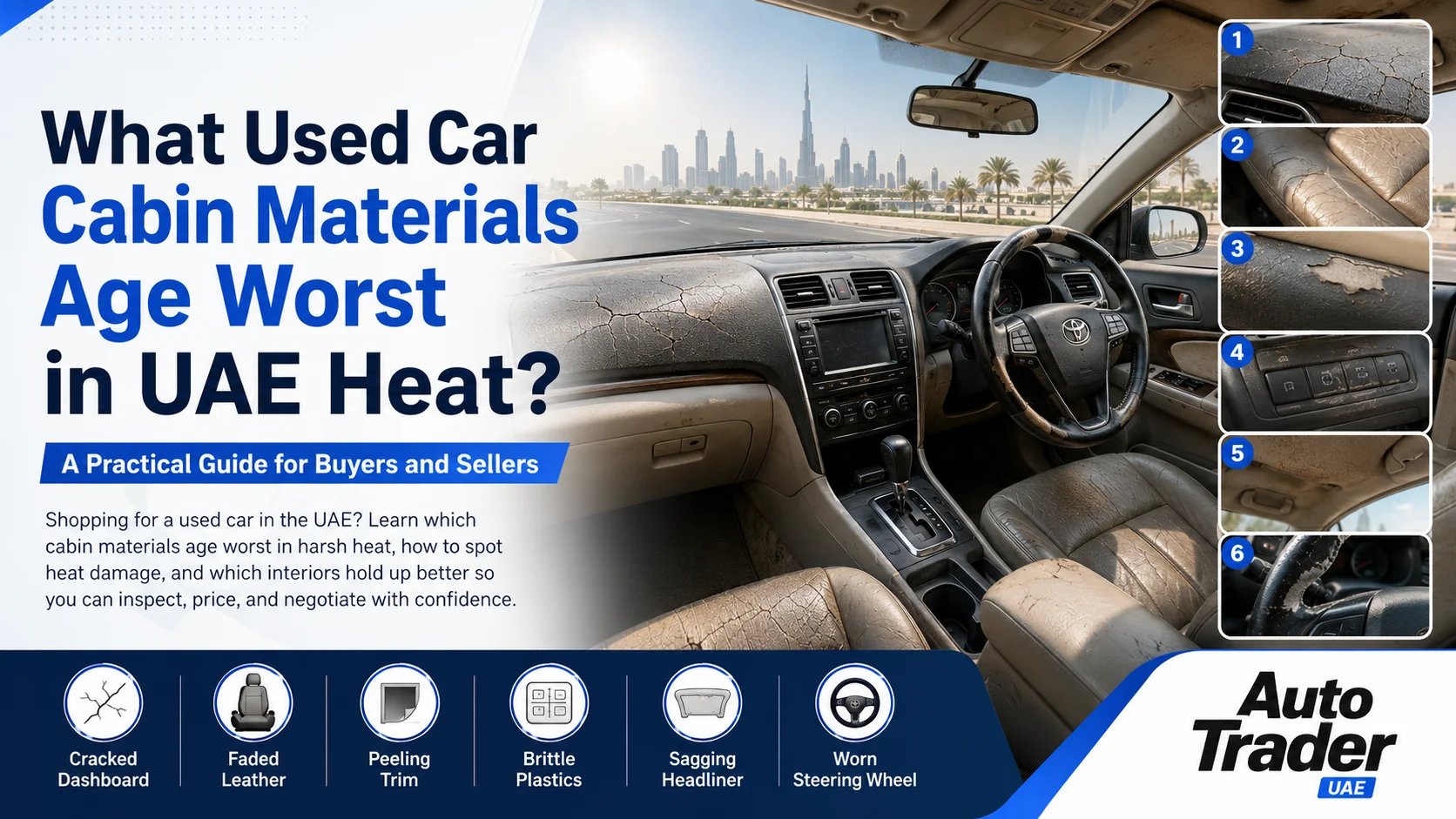
The UAE climate is tough on cars, and the cabin takes the full hit every summer. When you’re shopping for a used car – or preparing to sell yours – knowing what used car cabin materials age worst in UAE heat can save you money, protect comfort, and help you negotiate the right price.
This guide from Auto Trader UAE explains which interior materials suffer most, what damage to look for, and how buyers and sellers can use this knowledge in the UAE used car market.
Looking at heat-resilient cabins? Start browsing:
Methodology
This guide is based on common interior failures seen in hot-climate markets, typical material properties, and practical experience from the UAE used car scene. It is not a laboratory test, but a real-world checklist to help you evaluate interiors when browsing listings on Auto Trader UAE or inspecting a car in person.
Key Findings
- Soft-touch dashboards and cheap vinyl often crack, melt, or get sticky fastest in UAE heat.
- Dark, non-perforated leather dries out and cracks sooner than light, ventilated leather if not conditioned.
- Glossy piano black plastics scratch, swirl, and fade quickly, especially around high-touch areas.
- Low-grade rubber coatings on buttons peel and become sticky in high heat and humidity.
- Unprotected steering wheels, gear knobs, and armrests show wear earliest and can reveal overall cabin care.
- Quality fabric, real aluminium, and good-grain plastics tend to age better if the car is parked in shade or under cover.
Which cabin materials age worst in UAE heat?
1. Soft-touch dashboards and cheap vinyl
Many modern cars use soft-touch plastics and vinyl to make dashboards feel premium. In UAE heat, poor-quality versions of these materials can suffer badly.
Common problems:
- Cracks on the top of the dashboard near the windshield
- Sticky, rubbery surface that attracts dust
- Warping or lifting around air vents and defrost vents
- Shiny, polished patches where the sun hits directly
Where to check: look closely at the top of the dash, around the passenger airbag cover, and near the base of the windshield. Use your hand – if the surface feels tacky or unusually soft, it’s not ageing well.
2. Dark, non-perforated leather seats
Leather is popular in the UAE, but it doesn’t all age the same way. Dark, non-perforated leather absorbs more heat and dries out quicker. If not regularly cleaned and conditioned, it can go from premium to cracked quite fast.
Common problems:
- Cracking on the driver’s seat side bolster and seat base
- Hard, dry leather instead of supple, matte finish
- Colour fading or patchy discolouration
- Peeling if it’s actually synthetic leather (leatherette)
Where to check: driver’s seat shoulder and side bolster, rear seats under child seats, and any seat that looks particularly shiny or wrinkled.
When browsing used cars in UAE online, zoom into seat photos. Heavy creasing and shine on relatively low mileage cars can indicate long hours parked in direct sun without proper care.
3. Piano black and high-gloss plastics
Piano black trim looks stylish when new, but in the UAE it quickly shows its age.
Common problems:
- Fine scratches and swirl marks from dust and cleaning
- Faded, dull patches where hands frequently touch
- Hairline cracks around buttons or near the gear lever
Where to check: centre console, around the gear shifter, around multimedia controls, and door window switch panels.
4. Rubberised and soft-touch button coatings
Many manufacturers use a soft, rubber-like coating on buttons and switches. These often react badly to heat, sweat, and cleaning chemicals.
Common problems:
- Sticky or gummy feeling on buttons and knobs
- White or lighter spots where coating has worn away
- Symbols on buttons (AC, radio, window switches) fading or disappearing
Where to check: AC control panel, steering wheel buttons, window switches, and infotainment controls. If the coating is badly worn, assume the car has seen harsh heat and possibly aggressive cleaning products.
5. Low-grade synthetic leather (leatherette)
Many cabins advertised as “leather” are actually synthetic (leatherette or PVC). Some high-quality synthetics cope well with UAE heat, but cheaper ones can crack and peel quickly.
Common problems:
- Peeling on seat edges and armrests
- Top layer flaking off, exposing a fabric layer underneath
- Unnaturally shiny surface even on lower mileage cars
Where to check: outer edges of seats, centre armrest, door armrests, and gear lever gaiter.
6. Low-quality headliners and adhesives
The roof area can get extremely hot, and the headliner relies on adhesives that may soften and fail.
Common problems:
- Headliner sagging around the rear or near the sunroof
- Stains around the edges of the sunroof frame
- Loose fabric around grab handles and interior lights
Where to check: the rear section above passengers, around the sunroof or panoramic roof, and near the windshield.
7. Steering wheels, gear knobs, and armrests
These are high-contact areas that constantly see heat, sweat, and friction. They often show ageing before the rest of the cabin.
Common problems:
- Shiny, slippery steering wheel rim with worn grain
- Cracked or peeling leather on steering wheel and gear knob
- Flattened foam and torn stitching on armrests
Where to check: run your fingers around the full circumference of the steering wheel and along the edges of armrests. These areas offer a quick snapshot of how the car was used and parked.
8. Certain interior trims: faux wood, carbon-look, and chrome film
Decorative trims that use printed films or laminates over plastic can separate and fade in high heat.
Common problems:
- Peeling edges on wood-look or carbon-look trims
- Bubbles under the surface, especially near air vents
- Chrome film flaking from door handles and switch surrounds
Where to check: door trims, around the gear lever, dashboard inlays, and air vent surrounds.
Which cabin materials cope better in UAE heat?
While no material is completely immune, some tend to hold up better if the car is reasonably cared for.
1. Quality woven fabric seats
Good-quality fabric often ages more gracefully than poor leather in UAE conditions, especially in daily drivers and family cars.
Benefits:
- Less heat build-up than dark leather
- No cracking or peeling issues
- Easier and cheaper to repair or replace sections
2. Matte, hard-wearing plastics
Matte, textured plastics may look less luxurious than soft-touch at first, but they often survive UAE heat better.
Benefits:
- More resistant to cracking and melting
- Hide scratches and marks better
- No sticky surface issues
3. Real aluminium and metal-effect trims
Genuine aluminium or well-made metal-effect trims usually cope well if they’re not heavily scratched.
Benefits:
- Less prone to peeling or bubbling
- Can often be refinished or polished if mildly scratched
4. Light-coloured, ventilated leather (if maintained)
In higher-end models, light-coloured leather with perforation and seat ventilation can stay in better condition if regularly maintained.
Benefits:
- Stays cooler to the touch compared with black leather
- Perforation allows better heat dissipation
Look for service history or receipts showing leather care, and visually check seats and bolsters in listings on used luxury cars for sale in UAE.
How UAE-specific factors accelerate interior ageing
Understanding why interiors age faster here helps you judge cars more accurately.
- Extreme cabin temperatures: parked cars in UAE summer can exceed 60°C inside, stressing plastics, adhesives, and coatings.
- Strong UV exposure: sunlight through glass degrades dashboards, steering wheels, and seat tops.
- Dust and sand: micro-scratches glossy plastics and collects on sticky surfaces.
- Frequent AC use: rapid temperature cycling can stress materials and create expansion–contraction fatigue.
- Cleaning habits: harsh chemicals or strong degreasers can strip protective layers from leather, plastics, and coatings.
Buyer Takeaway: How to inspect a used car interior in UAE
When you go from browsing listings on Auto Trader UAE to inspecting a car in person, use this short checklist:
1. Do a full cabin walk-around in daylight
- Inspect dashboard top for cracks, sticky patches, and warping.
- Check all plastics around the centre console and door panels.
- Look at the headliner for sagging or stains.
2. Focus on high-wear areas
- Driver’s seat bolster: deep cracks or tears?
- Steering wheel and gear knob: heavy shine or peeling leather?
- Armrests and door pulls: worn-through or sticky surfaces?
3. Compare condition with mileage and age
- A 3–5 year old car with severe cracking or peeling may have been parked in open sun daily.
- A 7–10 year old car with a fresh-looking cabin often indicates shaded parking and careful owners.
4. Use interior wear in your negotiation
Cabin damage is rarely cheap to fix. Use visible ageing to adjust your offer:
- Cracked dash or heavy peeling: factor in potential replacement or professional repair costs.
- Badly worn leather: get quotes for re-trimming or quality seat covers.
- Sagging headliner: plan for a re-trim and reflect that in your negotiation.
When comparing options, shortlist cars on used cars in Dubai and other Emirates, and weigh interior condition alongside mechanical history and service records.
5. Consider more heat-resilient options
If you park outdoors a lot or do high mileage, prioritise cabins that tend to age better:
- Fabric seats in compact and mid-size cars
- Matte-finish dashboards and consoles
- Light-coloured or ventilated leather in premium models
Explore categories like:
Seller Takeaway: How to present your car’s interior at its best
If you’re selling your car on Auto Trader UAE, cabin condition can strongly influence interest and offers – especially in a heat-intensive market.
1. Fix simple, high-impact issues
- Deep clean: a professional interior detail can safely clean plastics, leather, and fabric without harsh chemicals.
- Minor repairs: consider leather recolouring on worn bolsters, replacing damaged floor mats, or fixing sagging headliner sections.
- De-clutter: remove personal items, seat covers with holes, and hanging accessories that hide wear.
2. Be honest about heat-related wear
Buyers in the UAE expect some sun-related ageing. Being transparent builds trust:
- Mention any dashboard cracks or seat repairs in your listing description.
- Upload clear, well-lit photos of the dashboard, steering wheel, and seats.
- If the car has mostly been parked under cover, say so – it adds value.
3. Highlight protective habits
- Regular leather conditioning or interior detailing with receipts.
- Use of sunshades, window tints (within legal limits), or covered parking.
- Any upgraded seat covers or steering wheel wraps installed to protect the originals.
These points can help your listing stand out when buyers compare your car against similar used cars in UAE.
4. Price realistically for visible ageing
If your car’s cabin shows clear UAE heat damage, adjust your asking price to reflect potential repair costs. Buyers will do this calculation anyway, so realistic pricing helps your car sell faster.
How to protect your cabin from UAE heat (for current owners)
Whether you’ve just bought a used car or you’re keeping your current one a few more years, simple habits can slow ageing:
- Park smart: use shaded parking or covered parking where possible.
- Use sunshades: front windscreen shades significantly reduce dashboard temperature.
- Legal window tinting: reduces UV exposure and heat build-up (ensure you follow UAE regulations).
- Gentle cleaning products: avoid strong solvents; use cleaners designed for automotive interiors.
- Regular conditioning: treat leather seats and steering wheels with quality conditioner every few months.
Conclusion
In the UAE, interior materials age faster than in many other markets – and that has a direct impact on comfort, appearance, and resale value. Soft-touch dashboards, dark leather, cheap vinyl, and rubberised coatings are among the cabin materials that age worst in UAE heat, while quality fabric, matte plastics, and well-maintained light leather tend to cope better.
As a buyer, use interior condition as a key clue to how a car has been used, parked, and cared for. As a seller, presenting a clean, honest, and well-protected cabin can help your listing stand out and support a stronger price.
Ready to put this into practice? Start comparing used cars in UAE, and if you’re shopping in the emirate’s busiest market, don’t miss the latest deals on used cars in Dubai on Auto Trader UAE.
Browse used cars in UAE on Auto Trader UAE to compare live listings, prices, and current market activity more clearly.