
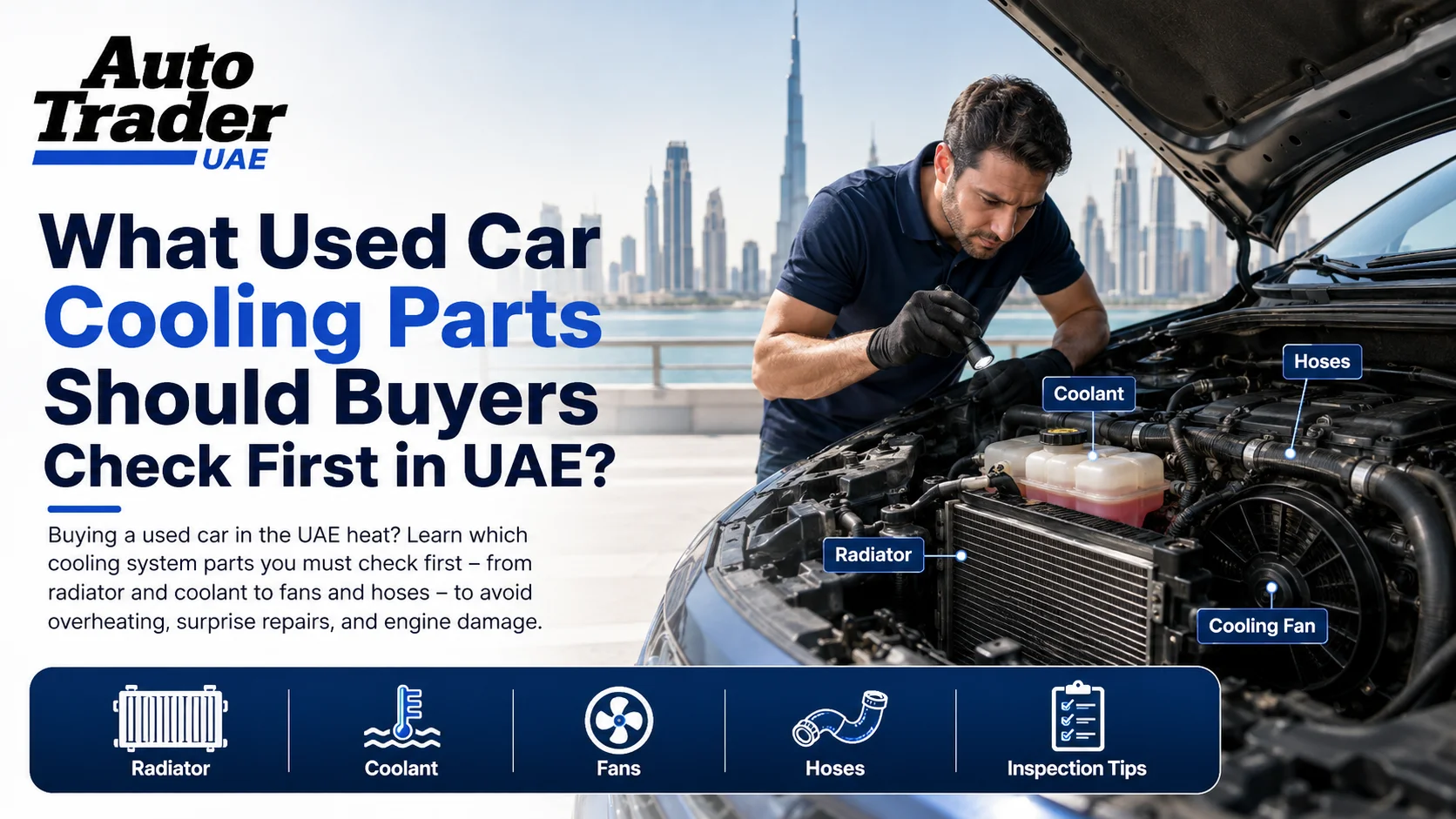
What Used Car Cooling Parts Should Buyers Check First in UAE?
In the UAE, extreme heat makes a healthy cooling system just as important as the engine itself – especially when you’re buying a used car. Overheating can lead to blown head gaskets, warped cylinder heads, and expensive repairs that easily wipe out any saving you made on the purchase price.
This guide from Auto Trader UAE explains which cooling parts buyers should check first on a used car, what warning signs to look for, and when to walk away. It’s designed for both private buyers and sellers preparing a car for listing on Auto Trader UAE.
Why the Cooling System Matters More in the UAE
In countries with mild weather, a slightly weak cooling system might not show up immediately. In the UAE, high ambient temperatures, slow-moving traffic, and long highway runs put huge stress on every cooling component.
For used cars in particular, neglect or cheap repairs can show up quickly as:
- Frequent overheating in traffic or at low speed
- Coolant leaks and low coolant warnings
- Loss of AC performance when the engine is hot
- Engine damage that may not be obvious during a short test drive
That’s why your pre-purchase checklist should always include a focused look at the cooling system.
Cooling Parts Used Car Buyers in UAE Should Check First
1. Radiator: The Heart of the Cooling System
The radiator dissipates heat from coolant. In the UAE, it can corrode from the inside if low-quality or mixed coolants were used, and it can clog externally with dust and sand.
What to look for
- Visible leaks: Check around the plastic side tanks, bottom corners, and where hoses connect.
- Corrosion or stains: White or greenish deposits, rust, or dried coolant trails are warning signs.
- Bent or clogged fins: Shine a light through the front grille; fins packed with dust, sand, or insects reduce cooling efficiency.
- Non-original radiator: An obvious cheap replacement may indicate previous overheating.
Quick buyer tips
- If the radiator looks severely corroded or damp, budget for replacement or reconsider the car.
- Ask the seller for invoices if they claim it has been replaced recently.
2. Coolant: Quality, Level, and Condition
Coolant (antifreeze) doesn’t just prevent freezing; it raises the boiling point, protects against corrosion, and lubricates internal components. In UAE conditions, using plain water or the wrong coolant mix is very risky.
What to look for
- Coolant level: When the engine is cold, check the expansion tank markings (MIN/MAX). A low level may indicate a leak.
- Coolant colour: Healthy coolant is usually clear green, orange, pink, or blue depending on the type – it should not be brown, muddy, or full of particles.
- Oil contamination: Milky, creamy, or oily coolant can indicate a blown head gasket or oil cooler issues.
- Improvised fluids: If it looks like rusty water, the system has likely been neglected.
Quick buyer tips
- A simple coolant flush is affordable; repairing internal damage from mixed or neglected coolant is not.
- Walk away from cars with obvious oil in the coolant unless you are prepared for major engine work.
3. Radiator Hoses and Heater Hoses
Rubber hoses harden, crack, and swell faster in UAE heat. A burst hose can cause sudden overheating in minutes.
What to look for
- Cracks or splits: Gently squeeze hoses (when engine is cold). They should feel firm but flexible, not rock-hard or brittle.
- Bulges or soft spots: Localised swelling indicates weakened hose walls.
- Coolant traces around clamps: Dried residue around hose clamps shows past or present leaks.
- Non-matching hoses: A mix of old and new hoses could mean previous overheating or partial repairs.
Quick buyer tips
- Replacing all main hoses is not too expensive; use this as a bargaining point.
- If multiple hoses show heavy cracking and age, question the overall maintenance of the car.
4. Thermostat: Small Part, Big Risk
The thermostat regulates coolant flow and engine temperature. A stuck thermostat can cause overheating or poor engine performance.
Signs of thermostat problems on a test drive
- Temperature gauge takes very long to reach normal, then suddenly jumps high.
- Gauge fluctuates up and down in normal driving.
- Heater (if tested) blows cold air even when gauge shows normal or high temperature.
You can’t easily see the thermostat from outside, but poor gauge behaviour should make you cautious.
Quick buyer tips
- Ask if the thermostat has ever been replaced, especially on older or high-mileage cars.
- Insist on a long enough test drive so the engine reaches and stays at normal temperature.
5. Cooling Fans (Radiator and Condenser Fans)
Electric fans pull air through the radiator at low speeds and when stationary – exactly the conditions you face in UAE traffic. If they fail, the car may run fine on the highway but overheat in the city.
How to check cooling fans
- With the engine warm and AC on, open the bonnet and listen for fans starting.
- Observe whether both (or all) fans come on – some cars have separate radiator and AC condenser fans.
- Watch the temperature gauge while idling with AC on; it should stay stable.
Warning signs
- Temperature rises quickly at idle or in slow traffic, then drops when you start moving.
- AC gets weak or warm when stationary, but cools again as you drive.
Quick buyer tips
- Loose wiring or a simple fan relay can be cheap; a failed fan assembly can be more costly.
- Use fan issues as negotiation leverage, but be careful if there are also signs of repeated overheating.
6. Water Pump: Circulating Coolant Under Pressure
The water pump moves coolant through the engine and radiator. On many cars it’s driven by the timing belt or chain, so a failing pump can be serious.
What to look for
- Coolant leaks at the front of the engine: Look under the car and around the area of the accessory belt or timing cover.
- Grinding or whining noises: May indicate worn pump bearings.
- Overheating at speed: If a car overheats on the highway (not only in traffic), a weak pump can be a cause.
Quick buyer tips
- Ask if the water pump was changed with the last timing belt service (on belt-driven engines).
- If timing belt history is unclear on a high-mileage car, budget for belt and water pump replacement.
7. Expansion Tank and Radiator Cap
The expansion tank allows coolant to expand as it heats, and the radiator cap maintains system pressure. Failing caps or tanks can cause subtle but persistent overheating.
What to look for
- Cracked or discoloured tank: Old plastic may become yellow/brown and brittle.
- Coolant traces on or below the tank: Shows minor leaks or cap failure.
- Damaged cap seal: Cracked rubber seals on the cap reduce pressure and boiling point.
Quick buyer tips
- Tanks and caps are relatively low-cost items and not a reason alone to reject a good car.
- Persistent leaks or repeated cap changes, however, may hide deeper issues like head gasket problems.
8. Heater Core and Cabin Smell
Even though heaters are rarely used in the UAE, the heater core is part of the cooling circuit. A leaking heater core can cause fogged windows and a sweet smell in the cabin.
What to look for
- Sweet, coolant-like smell inside the car.
- Oily or damp film on the inside of the windscreen.
- Wet carpets near the front footwells.
Quick buyer tips
- Heater core replacement can be labour-intensive because it often sits deep behind the dashboard.
- If you notice symptoms, get a repair quote before committing.
9. Head Gasket: Checking for Past Overheating Damage
The head gasket seals the engine’s combustion chambers and coolant/oil passages. Overheating is a common cause of head gasket failure, and repairing it can be very expensive.
Warning signs of possible head gasket issues
- White smoke from the exhaust even when the engine is warm.
- Unexplained coolant loss with no visible leaks.
- Milky residue under the oil filler cap.
- Persistent bubbles in the coolant expansion tank with the engine running.
Quick buyer tips
- If you strongly suspect head gasket damage, it’s usually safer to walk away.
- For a car you really want, arrange a professional compression or leak-down test before purchase.
How to Test a Used Car’s Cooling System on a UAE Test Drive
Beyond visual checks, a smart test drive in UAE conditions will reveal cooling issues that a quick spin around the block might hide.
Step-by-step test drive checklist
- Start from cold: Confirm the engine is cold before starting; this helps you see how quickly it reaches normal temperature.
- Watch the gauge: The temperature gauge should steadily climb to the normal range and stay there.
- Use AC at idle: Park with engine running and AC on; check that the gauge remains stable and fans operate.
- Drive in mixed conditions: Try both slow traffic and open road driving if possible.
- After the drive: Switch the engine off, wait a few minutes, then look for coolant drips under the car.
Common Cooling System Issues Seen in Used Cars in UAE
From used listings on platforms like Auto Trader UAE and typical workshop feedback, some patterns are common in the region:
- Dust- and sand-clogged radiators and AC condensers – especially on SUVs and desert-driven vehicles.
- Mixed or incorrect coolant types – owners topping up with water or different coolants over time.
- Age-hardened hoses and brittle plastic parts – accelerated by heat and UV exposure.
- Fans or fan relays failing in traffic – cars run fine on the highway but overheat in city driving.
None of these automatically make a used car a bad purchase, but they do affect what you should pay and what you should fix immediately after buying.
What Sellers in UAE Should Do Before Listing a Used Car
If you’re planning to sell your car on Auto Trader UAE, a little attention to the cooling system can help you achieve a faster sale and more realistic price.
Pre-sale cooling system checklist for sellers
- Fix obvious leaks and top up coolant with the correct specification.
- Replace cracked hoses and a worn radiator cap – low-cost, high-impact fixes.
- Clean the radiator and AC condenser fins with gentle air or water (avoid high-pressure close-up spraying).
- Have a mechanic pressure-test the system if the car is older or has high mileage.
- Gather invoices for any radiator, water pump, thermostat, or fan replacements to show serious buyers.
Transparent cooling system maintenance helps build trust and reduces negotiation drama when the buyer notices issues on a test drive.
When to Involve a Professional Mechanic
A visual inspection and smart test drive can tell you a lot, but for higher-value cars or long-term ownership, a professional pre-purchase inspection is worthwhile.
Ask the mechanic to:
- Pressure-test the cooling system for hidden leaks.
- Check fan operation and relay function.
- Inspect coolant quality and look for contamination.
- Scan the ECU for stored overheating or temperature-related fault codes.
Buyer Takeaway: Cooling Checks Before You Commit
In summary, the used car cooling parts buyers should check first in UAE are:
- Radiator and radiator fins
- Coolant level and condition
- All visible hoses and clamps
- Thermostat behaviour via the temperature gauge
- Cooling fans at idle with AC on
- Water pump area for leaks or noise
- Expansion tank and radiator cap
- Cabin for coolant smells and fogging
Spotting problems early helps you negotiate fairly, budget for repairs, or move on to a better-maintained option.
Find Better-Maintained Used Cars on Auto Trader UAE
Once you know what to look for in a cooling system, you’re ready to compare real cars.
- Browse a wide range of used cars in UAE and shortlist models that suit your budget and running cost expectations.
- If you are Dubai-based, you can focus your search on used cars in Dubai to simplify viewing and inspections.
When you contact sellers through Auto Trader UAE, ask clear questions about cooling system history, recent radiator or water pump replacements, and any past overheating. Combine that information with the inspection steps in this guide, and you’ll be in a strong position to choose a used car that can handle UAE heat reliably for years to come.
Browse used cars in UAE on Auto Trader UAE to compare live listings, prices, and current market activity more clearly.
Related Links
Seller Takeaway
If you are selling a used car in the UAE, present the service history clearly, price the vehicle realistically, and highlight condition, specification, and ownership strengths honestly. A well-prepared listing with accurate details usually attracts more serious buyers.
Conclusion
A careful used car purchase in the UAE starts with research, proper inspection, and clear paperwork before making the final decision.