
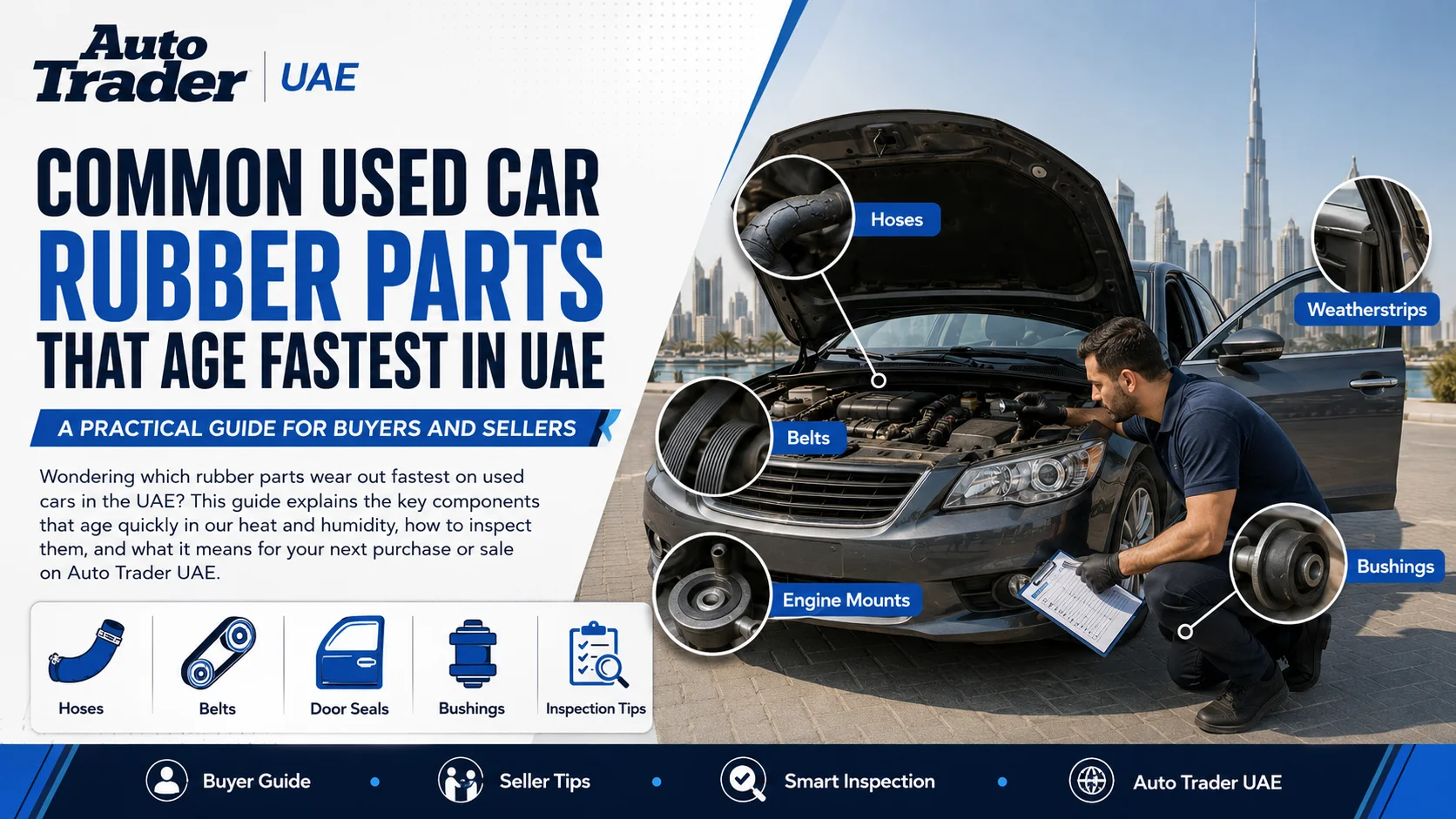
What Used Car Rubber Parts Age Fastest in UAE?
Extreme heat, strong sun and dusty conditions in the UAE are tough on any car, but rubber parts suffer the most. If you’re buying or selling a used car on Auto Trader UAE, understanding which rubber components age fastest can save you money, time and headaches.
Why Rubber Parts Age Faster in the UAE
Rubber hardens, cracks and loses flexibility when exposed to:
- High temperatures – Prolonged parking in direct sun and hot engines accelerate drying and cracking.
- UV radiation – Strong UAE sun breaks down rubber compounds and protective coatings.
- Dust and sand – Act like abrasive particles, especially on moving parts such as suspension and wiper blades.
- Humidity and coastal air – Salt and moisture around coastal Emirates can attack metal-reinforced rubber parts.
Most of this damage is slow and silent, so knowing where to look is crucial during a used car inspection.
Top Used Car Rubber Parts That Age Fastest in the UAE
1. Tyres
Tyres are the most obvious and most critical rubber parts. In UAE conditions, even branded tyres can harden and crack well before the tread wears out.
What goes wrong:
- Sidewall cracking and fine surface splits
- Flat spots from long-term parking in one position
- Hardened rubber leading to poor grip and longer braking distances
How to check when buying:
- Look for the DOT date code on the tyre sidewall (week and year of manufacture).
- Inspect sidewalls and tread for small cracks, bulges or uneven wear.
- Run your hand along the tread – very hard or glassy-feeling rubber can indicate age, even with good tread depth.
Buyer tip: If tyres are older than 4–5 years, budget for an immediate replacement, especially on performance cars and SUVs.
Browse used cars in UAE with your preferred tyre size and budget, then factor tyre replacement into your negotiation.
2. Wiper Blades and Windscreen Washer Hoses
Wiper blades sit directly in the sun and can degrade quickly, sometimes in just one summer.
Common issues:
- Smearing or streaks instead of a clean sweep
- Cracked or split rubber edges
- Washer hoses becoming brittle and leaking
How to check:
- Operate wipers with washer fluid; watch for streaking or skipping.
- Lift the blade and gently flex the rubber – it should be flexible, not brittle.
- Look under the bonnet for any fluid leaks from plastic or rubber washer lines.
Buyer tip: Wiper blades are cheap but essential for safety. Treat badly worn blades as a sign that the car may not have been maintained carefully.
3. Suspension Bushes and Control Arm Bushings
Suspension bushes (rubber mounts in the suspension links and arms) work hard on hot roads and speed bumps. Once they harden or crack, the car can feel loose, noisy and unstable.
What goes wrong:
- Cracks around the edges of the bush
- Excessive movement in suspension arms
- Clunking noises over bumps
- Uneven tyre wear from poor alignment stability
How to check:
- During a test drive, listen for clunks or rattles over small bumps or while braking.
- Notice if the car wanders at highway speeds or feels unstable during lane changes.
- Have a trusted workshop inspect suspension bushes on a lift before finalising a deal.
Buyer tip: Replacing multiple bushes can be costly. Use any confirmed wear as leverage to negotiate the price of a used sedan or used SUV.
4. Engine Mounts
Engine mounts contain rubber that isolates vibration from the cabin. High under-bonnet temperatures in the UAE make these age faster than in cooler climates.
Symptoms of worn mounts:
- Strong vibration at idle, especially in gear on automatics
- Clunks or jerks when shifting from Reverse to Drive
- Noticeable engine movement when revving with the bonnet open (mechanic check)
Buyer tip: Mounts are a typical age-related replacement on higher-mileage cars. For older models on Auto Trader UAE, ask if engine mounts have been replaced recently.
5. Door Seals and Weatherstrips
Rubber seals around doors, windows and the boot are constantly exposed to heat and UV. Once they dry out, they can let in wind noise, dust and even water during heavy rain.
What to look for:
- Cracks, splits or parts of the seal missing
- Flattened areas that no longer spring back
- Excessive road or wind noise during a test drive
- Dust streaks inside the door frame, especially on desert-used vehicles
Buyer tip: Replacing all door seals can be expensive. Pay close attention on premium sedans and coupes where cabin refinement is part of the value.
6. Window Channel Rubbers and Sunroof Seals
Rubber channels that guide side windows and the seals around sunroofs are exposed directly to sun and dust. Once they fail, you can get wind noise, difficult window movement, and leaks.
Warning signs:
- Windows that move slowly, squeak or jerk while going up/down
- Wind noise around the window edge at highway speed
- Water marks or stains on the headliner around the sunroof
Buyer tip: Always test all windows and the sunroof (if fitted) during a viewing. For used luxury cars and SUVs, sunroof repairs can be a significant unexpected cost.
7. Belts and Hose Rubber (Engine Bay)
Modern cars use a mixture of rubber and synthetic materials for engine belts and hoses, but heat still ages them faster in the UAE.
Key components:
- Serpentine/drive belts for alternator, AC compressor, etc.
- Radiator and coolant hoses
- Turbo hoses on some engines (often rubber or rubber-composite)
Signs of aging:
- Fine cracks or glazing (shiny surface) on belt ribs
- Soft, swollen or very hard coolant hoses
- Coolant smell or visible leaks around hose clamps
Buyer tip: Ask for service records that show belt and coolant hose replacement on vehicles older than 5 years, especially if you’re shopping performance cars or family SUVs for long-distance driving between Emirates.
8. CV Joint Boots and Steering Rack Boots
These rubber boots keep grease inside and dust out of key drivetrain components. Once cracked, they can quickly lead to expensive mechanical failures.
What goes wrong:
- Cracked or split CV boots near the wheels
- Grease sprayed around inside the wheel arch
- Torn steering rack boots allowing sand and dust inside
How to check:
- Turn the steering wheel fully left and right and visually inspect the rubber boots behind the front wheels (ideally on a lift).
- Listen for clicking noises when turning sharply and accelerating – often a sign of CV joint damage.
Buyer tip: A torn CV boot is an easy fix if caught early; a noisy CV joint usually means a more expensive replacement is needed.
9. Exhaust Mounts and Hangers
Rubber exhaust hangers sit very close to heat and over time can crack or tear, especially if the car has hit speed bumps or off-road tracks.
Symptoms:
- Rattling or banging sound from under the car over bumps
- Exhaust pipe hanging lower than normal
Buyer tip: This is usually a small repair but can indicate rough use. Pay attention when evaluating off-road focused models and lifted SUVs.
How Fast Do Rubber Parts Age in the UAE?
Lifespan varies by brand, model and usage, but in UAE conditions, many rubber components age faster than in cooler countries. As a rough guideline:
- Tyres: 3–5 years is a common practical limit, regardless of remaining tread.
- Wiper blades: 1–2 years, often less if the car lives outdoors.
- Suspension bushes & engine mounts: Often start to show wear from 100,000–150,000 km, sometimes earlier on heavier vehicles.
- Door seals and window rubbers: Usually degrade notably after 5–7 years of strong sun exposure.
These are indicative only – always base decisions on actual inspection and service history, not mileage alone.
Inspection Checklist for Buyers in the UAE
When viewing a used car listed on Auto Trader UAE, use this quick checklist focused on rubber parts:
- Tyres: Date codes, cracks, uneven wear, matching brands and sizes.
- Wipers: Clean sweep with washer, no chatter or streaking.
- Suspension: Listen for clunks; inspect bushes if possible.
- Engine bay: Check belts and hoses for cracks, leaks and excessive hardness.
- Doors and windows: Open/close each one, check seals and wind noise.
- Sunroof: Open, close and tilt fully; check for damp or stains.
- Underbody: Look (or ask a mechanic) for torn boots and tired exhaust rubbers.
For higher-value cars, consider arranging a professional pre-purchase inspection that includes a detailed report on all rubber components.
Maintenance Tips to Extend Rubber Life
- Park in shade or covered parking whenever possible to reduce heat and UV exposure.
- Wash the car regularly to remove dust and sand, especially from door seals and window channels.
- Use appropriate rubber care products on door seals (avoid oily products that can damage certain rubbers).
- Follow the manufacturer’s service schedule for belts and hoses rather than waiting for failure.
- Rotate tyres and check pressure frequently to minimise uneven stress and heat buildup.
Advice for Sellers in the UAE
If you’re preparing to list your car on Auto Trader UAE, taking care of key rubber parts makes your car more attractive and easier to sell.
- Replace tired wiper blades – low cost, strong visual signal of care.
- Address obviously cracked tyres – buyers will notice, and it can block a deal.
- Fix noisy suspension issues related to worn bushes or mounts.
- Clean door seals and window channels so doors close smoothly and quietly.
- Gather invoices for any belts, hoses, mounts or bushings you’ve replaced.
Mention recent rubber-related maintenance clearly in your listing description for any used sedan, hatchback or used SUV in UAE.
When Should Rubber Wear Stop You Buying a Car?
Some rubber wear is normal on any used car in the UAE. The key is knowing when it’s a negotiation point and when it’s a deal-breaker.
- Normal & negotiable: Old wiper blades, minor door seal wear, tyres approaching age limits but not cracked.
- Serious caution: Deep tyre cracks, badly worn suspension bushes on both axles, multiple torn CV boots, strong engine vibration suggesting failed mounts.
If you like the car but see multiple rubber-related issues, get a workshop quote and decide if the total cost still makes sense versus similar listings on Auto Trader UAE.
Next Steps: Shop Smart on Auto Trader UAE
Understanding which rubber parts age fastest in the UAE helps you:
- Inspect used cars more confidently
- Negotiate based on real maintenance needs
- Keep your next car safer and more comfortable for longer
Ready to apply this checklist in the real world?
- Start with our latest used cars in UAE.
- If you’re based in the city, explore used cars in Dubai with detailed photos and specs.
- Filter by body type if you’re shopping for a family-friendly used SUV or economical hatchback.
Use what you’ve learned about rubber parts to ask better questions, budget for realistic maintenance, and choose the right car on Auto Trader UAE with confidence.
Browse used cars in UAE on Auto Trader UAE to compare live listings, prices, and current market activity more clearly.
Related Links
Buyer Takeaway
When buying a used car in the UAE, focus on vehicle condition, service history, inspection quality, paperwork, and total running costs rather than price alone. Compare options carefully and choose the option that best matches your budget and real needs.
Seller Takeaway
If you are selling a used car in the UAE, present the service history clearly, price the vehicle realistically, and highlight condition, specification, and ownership strengths honestly. A well-prepared listing with accurate details usually attracts more serious buyers.
Conclusion
A careful used car purchase in the UAE starts with research, proper inspection, and clear paperwork before making the final decision.