
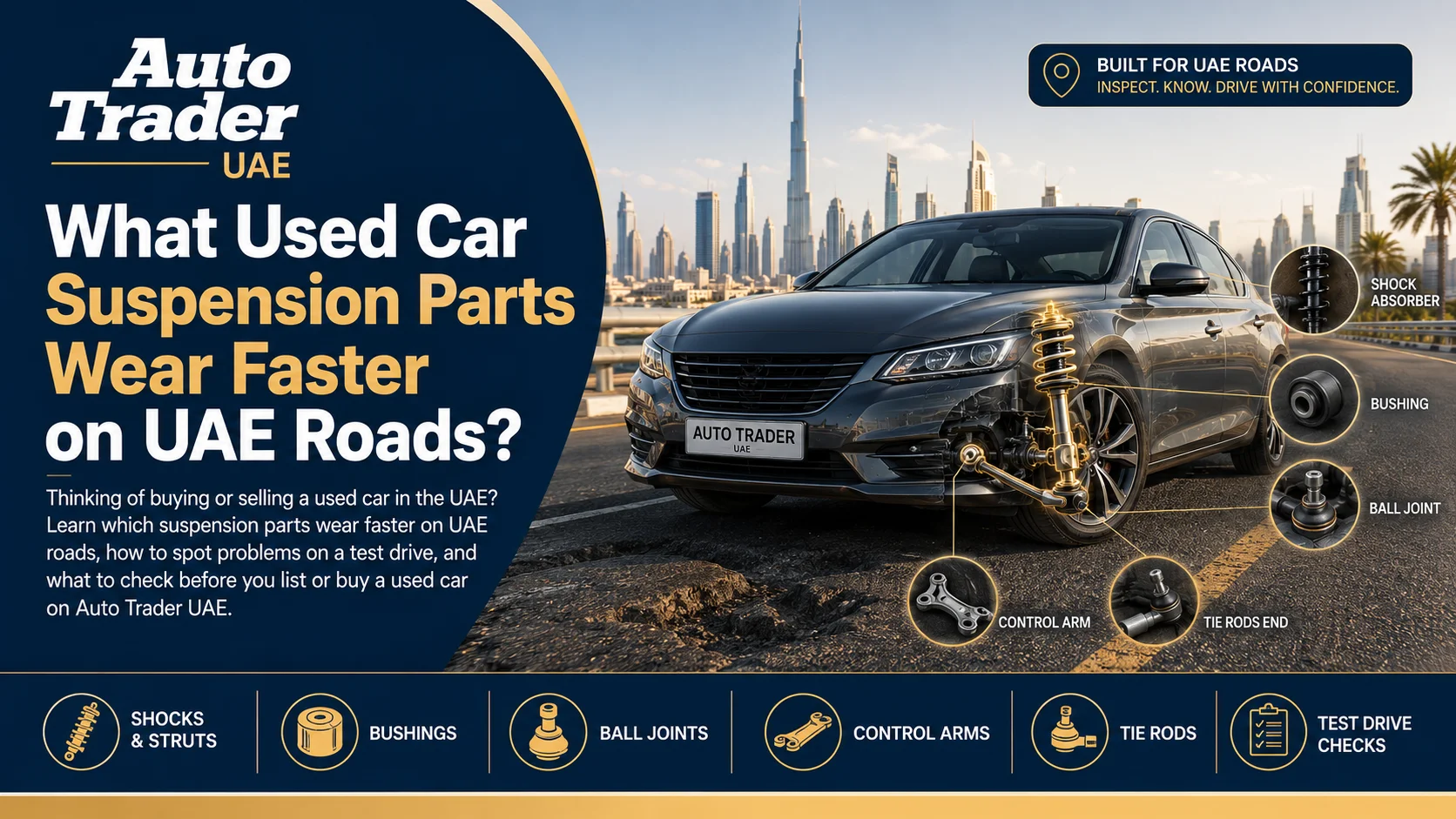
What Used Car Suspension Parts Wear Faster on UAE Roads?
Rough heat, speed humps, sand, and long highway runs all put extra stress on a car’s suspension in the UAE. If you’re buying or selling a used car, understanding which suspension parts wear faster on UAE roads can help you price the car correctly, avoid expensive surprises, and spot a genuinely well-maintained vehicle on Auto Trader UAE.
Why UAE Roads Are Tough on Suspension
Even though the UAE has some of the best highways in the region, local driving conditions are still demanding:
- High temperatures dry out rubber bushes, seals, and shock absorbers.
- Frequent speed bumps and ramps in residential areas stress springs and dampers.
- Occasional off-road use and gravel parking areas can damage joints and bushes.
- Stop–start city traffic plus heavy braking around roundabouts load the front suspension.
- Kerb parking in Dubai, Abu Dhabi, and Sharjah can bend lower arms or misalign wheels.
The result: some suspension parts wear out much faster here than in cooler, smoother markets.
Main Suspension Parts That Wear Faster in the UAE
1. Shock Absorbers (Dampers)
Why they wear fast in the UAE:
- Constant expansion–contraction of internal seals due to extreme heat.
- Repeated compression on speed bumps, ramps, and rough access roads.
Signs of worn shocks when viewing a used car:
- Car feels bouncy or unstable after bumps.
- Nose-diving under braking or excessive body roll in corners.
- Uneven tyre wear or cupping on the tread.
- Visible oil seepage on the outside of the shock body.
Buyer tip: On your test drive, take the car over a few speed bumps at low speed. The body should settle quickly without continued bouncing. If it doesn’t, budget for new shocks.
2. Rubber Bushes and Control Arm Bushings
Rubber bushes connect suspension arms and components to the body, absorbing vibration and keeping everything aligned.
Why they wear fast in the UAE:
- Extreme heat dries and cracks rubber, especially on cars parked outdoors.
- Sand and dust work into joints, accelerating wear.
Symptoms you can spot:
- Clunks or dull knocking noises over small bumps.
- Loose or vague steering feel at highway speeds.
- Vibration in the steering wheel when driving straight.
- Visibly cracked or torn rubber bushes when looking under the car.
Buyer tip: Ask for recent suspension work invoices. Fresh control arm or bush replacements are a plus for a UAE-used car, especially for heavier sedans and SUVs.
3. Ball Joints and Tie Rod Ends
Ball joints and tie rod ends allow steering and suspension movement while keeping the wheels aligned.
Why they wear fast in the UAE:
- Speed bumps and potholes in older areas shock these joints repeatedly.
- Dust and sand can penetrate split rubber boots, washing out grease.
Warning signs:
- Clicking, clunking, or knocking when turning the steering wheel at low speed.
- Steering that feels loose or needs constant correction on Sheikh Zayed Road.
- Uneven tyre wear, especially on the inner or outer edges.
Buyer tip: On your test drive, gently weave within your lane at 80–100 km/h. If the car doesn’t track straight or feels delayed in response, have the steering and joints checked before committing.
4. Suspension Mounts and Top Mount Bearings
Strut top mounts and bearings sit between the shock absorber and the body, insulating vibration and allowing the suspension to rotate with steering.
Why they wear fast in the UAE:
- High cabin and under-bonnet temperatures harden the rubber.
- Frequent steering at standstill (parking, tight malls) loads the top mounts.
Symptoms:
- Squeaks or groans from the front when turning the steering wheel.
- Knocking noises over sharp bumps, especially at low speed.
- Slightly uneven ride height between left and right sides.
5. Springs (Coil or Leaf)
Springs carry the weight of the car and work with shocks to keep the ride level.
Why they wear fast in the UAE:
- Heavy loads and towing, common with family SUVs and pickups.
- Repeated full compression over speed bumps taken too quickly.
What to look for:
- Car sitting low on one side or at the rear.
- Bottoming out (hard hit) over dips, even at low speed.
- Rust or broken, cracked coils on older vehicles.
Buyer tip: Check the car from a few metres away on flat ground. A visibly sagging corner suggests tired springs and possible shock wear.
6. Stabiliser (Anti-Roll) Bar Links and Bushes
The stabiliser bar links connect the anti-roll bar to the suspension, helping control body roll in corners.
Why they wear fast in the UAE:
- Frequent ramp angles and roundabouts put twist into the system.
- Heat and dust degrade small rubber bushes quickly.
Typical signs:
- Rattling or light knocking over rough or cobblestone-style surfaces.
- Excessive lean when turning at normal speeds.
- Play or movement in the link arms if inspected on a lift.
7. Wheel Bearings
Wheel bearings are not usually the first suspension part people think about, but they are directly affected by heat and driving style.
Why they wear fast in the UAE:
- High-speed cruising in hot weather heats up hubs and bearings.
- Occasional water, sand, and dust (especially around coastal or desert areas).
How to detect issues:
- Humming or growling noise that increases with speed, often from one corner.
- Slight vibration through the floor at highway speeds.
Buyer tip: Turn off the stereo and listen at 80–120 km/h. A droning sound that changes when you steer gently left or right often points to a worn wheel bearing.
How to Check a Used Car’s Suspension in the UAE
1. Visual Inspection Before the Test Drive
- Tyres: Look for uneven wear, feathering, or bald inner edges – often a sign of misalignment or worn suspension.
- Ride height: Check that the car sits level front to back and side to side.
- Underbody: If safe to do so, kneel and look underneath for oily shocks, broken boots, or cracked bushes.
2. Simple Static Tests
- Bounce test: Press firmly on each corner of the car and release. It should go down, back up, then quickly settle. Multiple bounces = weak shocks.
- Steering play: With the engine running and the car stationary, turn the wheel slightly left and right. Listen for clunks or excessive free play.
3. Test Drive Checklist for UAE Roads
On your test drive, try to include:
- Speed bumps and residential streets: Listen for knocks, rattles, or squeaks.
- Highway section: Check straight‑line stability, steering feel, and vibration at 100–120 km/h.
- Gentle curves and lane changes: Notice body roll and how quickly the car settles.
- Braking from 80–100 km/h: Watch for nose-diving, pulling to one side, or steering wheel shake.
4. When to Get a Professional Inspection
If you notice any suspicious symptoms, arrange a pre-purchase inspection at a trusted workshop. In the UAE, a full suspension and steering check is relatively affordable compared to the cost of major repairs later.
Which Cars Handle UAE Suspension Wear Better?
There is no single perfect answer, but in general:
- Japanese sedans and crossovers (for example common Toyota and Nissan models) are known for durable suspension setups and good parts availability.
- Body-on-frame SUVs and pickups are often tougher for rough roads, but heavy weight can accelerate bush and shock wear if badly driven.
- European premium cars may offer excellent comfort and handling, but their complex multi-link suspensions can be more expensive to refresh when worn.
Whatever you choose, a car with documented suspension maintenance is usually a safer buy than a low‑price car with no service history.
Questions to Ask the Seller About Suspension
- Have any suspension parts (shocks, arms, bushes, ball joints) been replaced? When?
- Has the car been regularly used off‑road or for desert trips?
- Have you done wheel alignment and tyre balancing on schedule?
- Has the car ever been in an accident that affected the chassis or suspension?
- Are there any current noises, vibrations, or handling issues?
Honest answers help you judge whether the asking price matches the car’s condition.
Tips for Sellers: Preparing Your Car’s Suspension Before Listing
If you’re planning to sell on Auto Trader UAE, a solid, quiet suspension will help your car stand out.
- Fix obvious issues first: Knocking noises, leaking shocks, or badly worn tyres will put buyers off immediately.
- Do a fresh wheel alignment: It’s relatively inexpensive and improves the test drive experience.
- Keep receipts: Suspension repair invoices from reputable garages increase buyer confidence.
- Be upfront about usage: If the car has been used off‑road, say so, but highlight any upgrades or recent work.
- Clean under the arches: Washing away sand and dust makes inspection easier and signals good care.
Typical Suspension Costs to Keep in Mind
Prices vary by brand and model, but as a rough guide in the UAE market:
- Shock absorbers: Front and rear replacements can be a moderate to significant cost, especially on premium models.
- Bushes and control arms: Often replaced as complete arms; labour cost depends on complexity.
- Ball joints and tie rod ends: Usually affordable parts, but alignment is needed afterwards.
- Wheel bearings: Front bearings with integrated hubs can be more expensive than older serviceable types.
As a buyer, use any worn suspension items you discover to negotiate the price realistically. As a seller, consider refreshing key parts if it will significantly improve how the car drives.
Electric and Hybrid Cars: Suspension Wear in the UAE
Electric and hybrid models, increasingly popular on UAE roads, often have:
- Heavier battery packs adding weight over the axles.
- Higher instant torque that can stress tyres and suspension bushes.
Expect slightly faster wear on some components like bushes and tyres, but the same inspection principles apply. A quiet, smooth ride is critical in EVs, so any knock or vibration stands out quickly.
How Suspension Condition Affects Resale Value in the UAE
For both buyers and sellers, suspension condition plays a bigger role in value than many people realise:
- Good suspension: The car feels solid, safe, and refined; buyers are more willing to pay close to asking price.
- Bad suspension: Noises, vibration, and vague steering raise doubts and often lead to heavy price negotiations or a lost sale.
For popular used segments like used cars in UAE and family used cars in Dubai, presenting a car with a tight, well-maintained suspension can set your listing apart from dozens of similar vehicles.
Buyer Takeaway: Choosing the Right Used Car in the UAE
When you browse used cars in UAE on Auto Trader UAE, keep suspension near the top of your checklist:
- Shortlist cars with a clear service history and recent suspension work.
- Always test drive on both city streets and highway, listening for knocks and feeling for stability.
- Don’t ignore uneven tyre wear – it’s often a warning sign.
- Consider a pre‑purchase inspection for any higher‑value or premium model.
Seller Takeaway: Maximising Your Listing on Auto Trader UAE
Before you list your car, especially if it’s a popular sedan or SUV in Dubai, Abu Dhabi, or Sharjah:
- Fix obvious suspension issues and replace badly worn tyres.
- Mention any new shocks, arms, or bushings in your description.
- Highlight smooth, quiet driving and stable highway behaviour.
- Upload clear photos of all four wheels and the car’s stance so buyers can see it sits level.
Conclusion: Smarter Suspension Checks for UAE Buyers and Sellers
Knowing what used car suspension parts wear faster on UAE roads helps you make better decisions, whether you’re upgrading your daily driver or selling a trusted family car. Heat, speed bumps, sandy conditions, and long commutes all accelerate wear on shocks, bushes, joints, and wheel bearings – but these issues are easy to spot if you know what to look for.
Use this guide as a checklist when you search, test drive, or prepare a car for sale on Auto Trader UAE. With a bit of attention to suspension, you can enjoy a safer, more comfortable drive – and secure a stronger deal on your next used car in UAE or used car in Dubai.
Browse used cars in UAE on Auto Trader UAE to compare live listings, prices, and current market activity more clearly.