
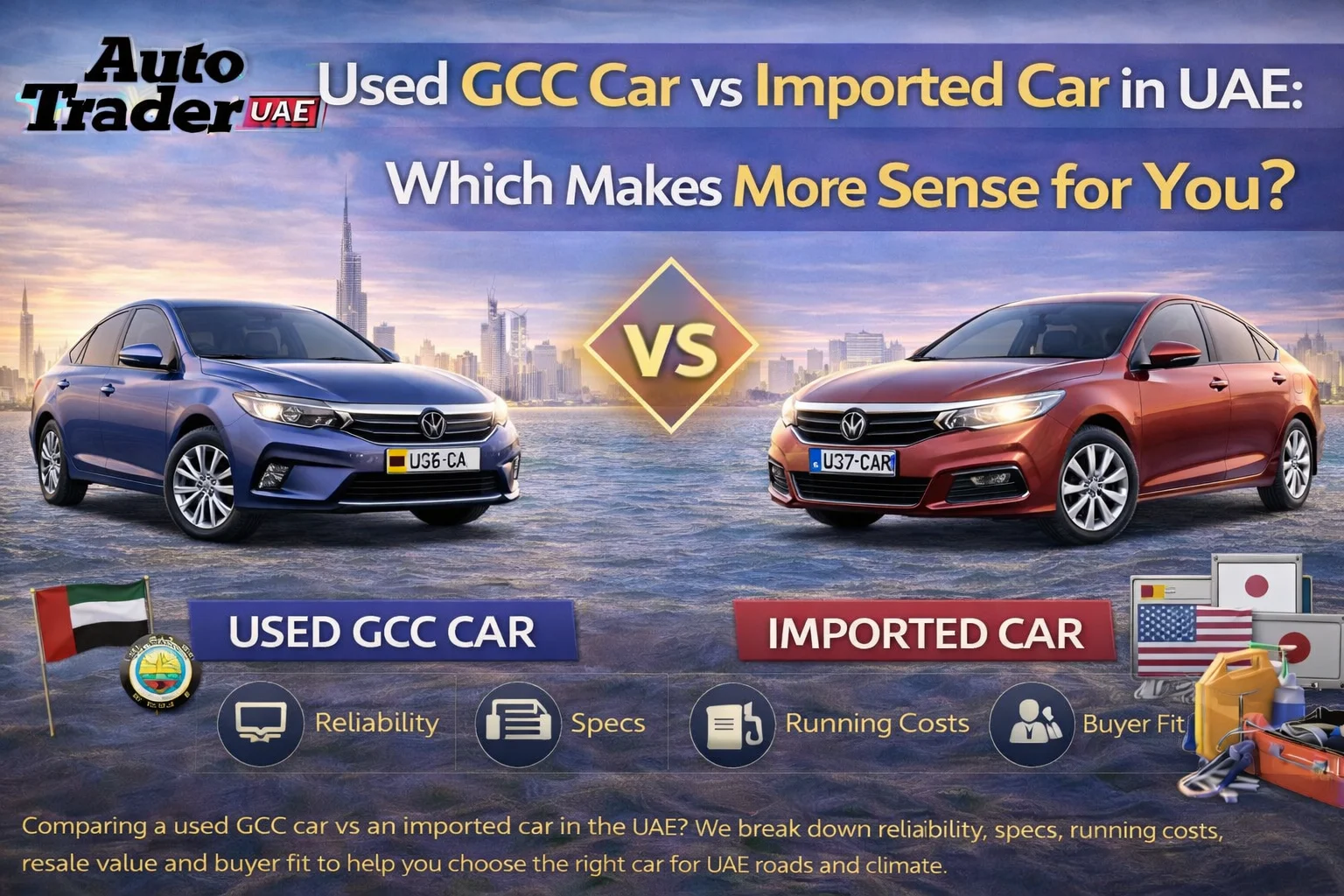
Choosing between a used GCC car and an imported car in the UAE is one of the biggest decisions buyers face on platforms like Auto Trader UAE. Both options can offer strong value, but they suit different needs, budgets, and risk levels.
This comparison looks at how used GCC and imported cars stack up in everyday UAE conditions – from extreme heat to high-speed highway driving and city traffic – so you can make a confident, informed choice.
Introduction
In the UAE, you will see two main types of used cars advertised:
- Used GCC-spec cars – originally sold new in the GCC region (UAE, Saudi, Kuwait, etc.), with specifications adapted for local climate and fuel.
- Imported used cars – brought in from outside the GCC (often the US, Europe, Japan, or Korea), sometimes with different specs, history, and condition.
Both can be smart buys. Used GCC cars typically offer better suitability for the local environment, while imports can sometimes deliver more features for the money. The key is understanding how each option performs in terms of design, practicality, performance, running costs, resale value, and buyer profile.
Key Differences Between Used GCC and Imported Cars in the UAE
Before looking at pros and cons, it helps to clarify where used GCC and imported cars typically differ in the UAE market:
- Climate suitability: GCC cars are built or specified for hot weather, desert dust, and long highway runs. Imported cars may not have the same cooling or corrosion protection.
- Service history and records: GCC cars often have service history with local dealers or workshops, easier to verify within the UAE. Imported cars may have foreign history that is incomplete or hard to confirm.
- Specifications and options: Imported cars sometimes come with higher trims, more safety tech, or unique features not common in GCC-spec models.
- Price and perceived value: Imports can look cheaper for the same model year and mileage, but may carry hidden costs or risks depending on their condition and origin.
- Resale value: The UAE market generally prefers GCC-spec cars, which often translates to stronger and easier resale.
With those fundamentals in mind, we can compare how each option behaves in real UAE ownership.
Pros of Buying a Used GCC Car in the UAE
- Built for local climate: GCC-spec cars usually have upgraded cooling systems (radiators, AC performance, engine cooling), dust protection, and sometimes different fluids or calibration tuned for high heat.
- Better parts and service support: Dealerships and independent garages are familiar with GCC specs, and genuine parts are typically easy to source.
- Stronger market acceptance: Many UAE buyers actively search for “GCC spec” in listings, which can make selling your car later faster and often at a better price.
- Clearer history within the country: If the car has been in the UAE for most of its life, you can often trace service records, accident history (via official channels), and mileage more reliably.
- Insurance and registration simplicity: GCC-spec cars usually pose fewer questions with insurers and registration authorities, especially for comprehensive coverage.
Pros of Buying an Imported Car in the UAE
- Potentially lower purchase price: For the same model year and mileage, imported cars can sometimes be cheaper than GCC equivalents, particularly when sourced from high-supply markets.
- More features for the money: Imports often come in higher trim levels with extras such as advanced driver-assistance systems, premium sound systems, sunroofs, or unique interior finishes.
- Wider variety and rare models: If you’re looking for a specific spec, engine, or body style not officially sold in the region, imports may be the only route.
- Possibility of mild-climate origins: Some imports come from countries with moderate climates, which can mean less sun exposure and potentially better-preserved interiors and paint.
- Appeal for enthusiasts: Performance models, special editions, and certain tuner-friendly cars are more readily available as imports.
Cons of Buying a Used GCC Car in the UAE
- Higher asking prices: Strong demand for GCC-spec cars can push prices up compared to similar imported units, especially for popular SUVs and Japanese or German brands.
- Potential hard use: Cars used for regular long-distance commuting, ride-hailing, fleet use, or off-road trips may have tougher real-world wear than the odometer suggests.
- Sun and heat wear: Extended exposure to UAE sun can lead to faded paint, brittle plastics, and cracked dashboards or seats if the car wasn’t cared for or parked indoors.
- Equipment differences: In some cases, GCC trims can be more basic than overseas versions, with fewer comfort or connectivity features.
Cons of Buying an Imported Car in the UAE
- Uncertain history: Some imported cars arrive with salvage, flood, or major accident backgrounds. If documentation is incomplete, it can be hard to verify true condition.
- Not always heat-ready: Cooling systems, AC, and rubber components may not be designed for prolonged 45–50°C use, which can increase wear and the risk of overheating if not maintained correctly.
- Resale challenges: Many buyers in the UAE prefer GCC-spec cars, so imported cars may take longer to sell or command lower resale prices.
- Parts and compatibility issues: Some imported specs differ slightly from GCC models, which can affect parts availability or require more effort to find the right components.
- Insurance and inspection scrutiny: Depending on the car’s origin and history, insurers may require additional checks or may quote higher premiums, especially for previously damaged vehicles.
Design, Interior Space and Practicality
Design: Externally, used GCC and imported cars of the same model often look very similar. Differences may include headlight types, bumpers, or wheel designs, especially on imported higher trims or special editions.
Interior space: Cabin dimensions rarely change between GCC and imported versions of the same vehicle. The main variations are usually seat materials, infotainment systems, and small comfort features (heated seats, different displays, or sound systems).
Practicality in UAE use:
- Used GCC cars usually have AC systems tuned for maximum cooling, which can make a clear difference during summer.
- Imported cars might offer more comfort features, but you should test the air conditioning thoroughly in hot conditions and check if rear AC vents and sunshades are present for family use.
Performance and Driving Experience in the UAE
Engine and gearbox: Mechanically, a GCC-spec car and an imported version of the same model often share engines and transmissions. However, engine mapping, cooling, and fuel calibration can differ by region.
- Used GCC cars tend to cope better with stop-start traffic and long highway runs in extreme heat, provided they’ve been serviced correctly.
- Imported cars may drive just as well in normal conditions, but heavy use in peak summer heat can reveal weaknesses in older or poorly maintained imports.
Suspension and handling: In some cases, GCC-spec suspension tuning may differ slightly to suit local roads, loads, and high-speed stability. Imported versions may ride softer or firmer depending on their original market.
Running Costs and Ownership
When comparing a used GCC car vs imported car in UAE, ownership costs often tip the balance more than the initial purchase price.
- Fuel economy: There isn’t a clear winner here. Similar engines usually deliver similar fuel use. However, if an import has a different engine size or transmission (for example, a larger petrol V6 not sold in GCC), fuel costs could be higher.
- Servicing and repairs: GCC cars generally win on simplicity: workshops know the specs, and parts are widely available. Imports can be just as affordable if they share mechanical components with GCC models, but unique specs can be more expensive to maintain.
- Insurance: Some insurers in the UAE may quote slightly higher premiums or request additional documentation for imported cars, especially those with accident history abroad. GCC cars are typically straightforward to insure.
- Unexpected repairs: Imported cars brought in after accident or flood damage can carry higher long-term repair risk if the initial reconditioning was not done properly.
Resale Value in the UAE Market
Resale is where the difference between used GCC and imported cars in the UAE is often most visible.
- Used GCC cars: The market clearly favours GCC-spec, especially for SUVs, family sedans, and popular brands like Toyota, Nissan, Honda, Lexus, Mercedes-Benz, and BMW. This typically means faster sale times and stronger resale pricing, assuming clean condition and proper history.
- Imported cars: These can still be sold successfully, but expect a narrower buyer pool and more negotiating, particularly if the car’s origin or history raises questions. Unique imported features can attract enthusiasts, but mainstream buyers usually prioritise GCC spec.
When a Used GCC Car Makes More Sense
- You want a straightforward, low-risk daily car for commuting, family use, or business.
- You plan to keep the car in the UAE and care about future resale value.
- You drive in extreme heat, heavy traffic, or frequent long-distance trips and want maximum confidence in cooling and reliability.
- You prefer clear, locally traceable service history and easier access to parts and service.
When an Imported Car Can Be the Better Choice
- You are looking for a specific trim, engine, or feature set that was not officially sold as GCC spec.
- Your budget is fixed, and you’re comfortable trading some resale strength for a lower upfront price or more equipment.
- You are an enthusiast or informed buyer who knows how to check history reports, inspect repairs, and verify condition or is willing to hire a professional inspection.
- You are less concerned about selling quickly later and more focused on owning something unique.
Buyer Takeaway
For most everyday buyers in the UAE, a used GCC-spec car is the safer and more predictable choice, especially for family duty and long-term ownership. It fits local conditions, simplifies servicing, and usually protects resale value.
However, a carefully selected imported car can deliver excellent value and extra features if you do proper due diligence. The key is to focus on verification rather than just price: history reports, independent inspections, and realistic expectations about resale.
On Auto Trader UAE, you can:
- Filter and compare GCC and imported listings for the same make and model.
- Check seller descriptions for spec details, service history, and accident disclosures.
- Shortlist cars and then arrange a professional inspection before committing.
Conclusion
The choice between a used GCC car vs imported car in UAE is less about which is universally “better” and more about which fits your usage, risk tolerance, and long-term plans.
If you value easy ownership, climate-ready reliability, and resale strength, a well-maintained GCC-spec car will likely suit you best. If you prioritise price, unique specs, or higher trim levels and you are willing to invest time in checks and inspections, an imported car can be a smart alternative.
Whichever route you choose, start by comparing real cars side by side. Use Auto Trader UAE to explore a wide range of used GCC and imported cars, review detailed listings, and narrow down options that match your budget and needs. With the right research and a proper inspection, both paths can lead to a satisfying, value-conscious purchase on UAE roads.
To compare both options properly, browse used cars in Dubai and across the UAE on Auto Trader UAE and check prices, mileage, trim levels, and seller details side by side.
Related Links
Seller Takeaway
If you are selling a used car in the UAE, present the service history clearly, price the vehicle realistically, and highlight condition, specification, and ownership strengths honestly. A well-prepared listing with accurate details usually attracts more serious buyers.