
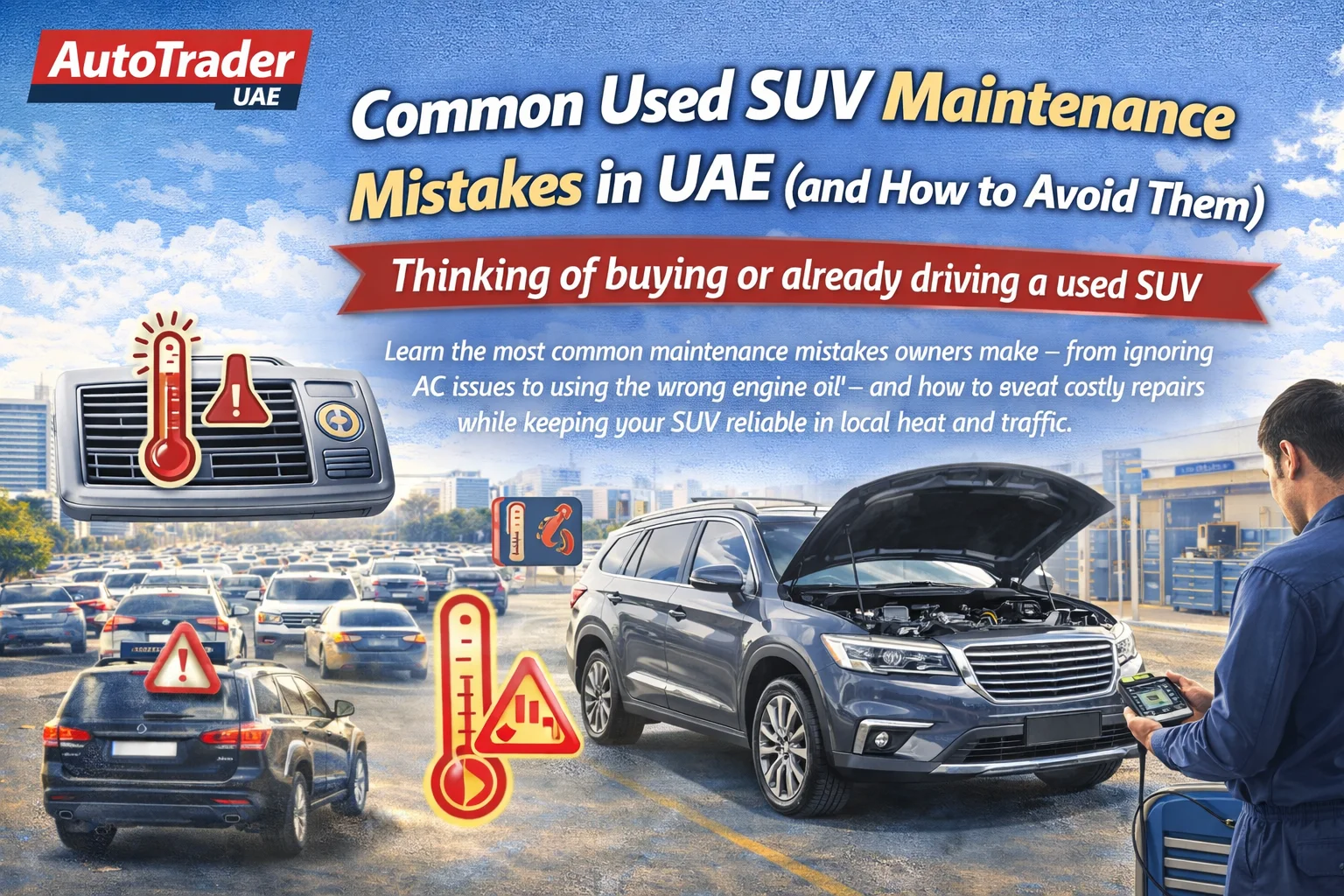
Common Used SUV Maintenance Mistakes in UAE (and How to Avoid Them)
Buying a used SUV in the UAE makes sense – you get space, comfort, and ground clearance for city use, family trips, and desert drives. But many owners treat SUVs like they’re indestructible. In local heat, humidity, dust, and stop‑start traffic, that mindset becomes expensive. This guide from Auto Trader UAE explains the most common used SUV maintenance mistakes in the UAE and how to avoid them, whether you’re planning to buy or already own one.
1. Underestimating Heat and Its Effect on Your SUV
The UAE climate is tough on every system in your SUV. High temperatures accelerate wear on rubber parts, fluids, batteries, and electronics.
Typical heat‑related mistakes
- Skipping regular coolant inspections and only looking at the temperature gauge when there’s a problem.
- Ignoring minor coolant leaks (small drips or smell of coolant) until the SUV overheats.
- Using plain water instead of proper coolant/antifreeze mix.
- Parking in direct sun every day without sunshades, baking the dashboard, electronics, and trim.
What you should do instead
- Check coolant level and condition at least once a month. The colour should be consistent, not rusty or brown.
- Flush and replace coolant according to your owner’s manual or every 2–3 years for many SUVs in local conditions.
- Get any overheating or coolant smell checked immediately. A small hose or radiator leak is cheap; a warped cylinder head is not.
- Use quality sunshades and shaded parking where possible to protect interior plastics and reduce interior temperatures.
2. Using the Wrong Engine Oil or Service Interval
Many used SUV owners choose the cheapest oil or extend service intervals to “save money”. In UAE heat, that can shorten engine life, especially on turbocharged and high‑mileage engines.
Common oil‑related mistakes
- Using the wrong oil grade (too thick, too thin, or not meeting the manufacturer’s specification).
- Ignoring severe‑conditions schedules in the owner’s manual. UAE heat, short trips, and heavy traffic often count as severe use.
- Waiting until the oil light appears instead of following a proper kilometre/time schedule.
- Skipping the oil filter and replacing only the oil.
Best practices for engine oil in UAE
- Follow the manufacturer’s spec first (e.g., 5W‑30, 5W‑40, etc.) with the correct API/ACEA or OEM approval.
- Use quality synthetic oil, especially for turbo, direct‑injection, or performance SUVs.
- Shorten intervals in tough use: if the book says 15,000 km, consider 8,000–10,000 km in heavy traffic, desert use, or frequent towing.
- Always change the oil filter with the oil, using reputable brands.
3. Neglecting the Automatic Gearbox and 4x4 System
SUVs often have automatic transmissions and complex AWD/4WD systems. Buyers assume they’re “sealed for life” and ignore them, especially on used vehicles.
Transmission and 4x4 mistakes
- Never changing transmission fluid on high‑mileage used SUVs.
- Using incorrect ATF or generic fluids not suited to modern gearboxes.
- Ignoring rough shifts, delayed engagement, or shudder when accelerating.
- Not checking transfer case and differential oils on AWD/4x4 models.
- Misusing driving modes (e.g., using 4H/4L incorrectly on dry tarmac).
How to protect your gearbox and 4x4
- Ask for transmission service history when shopping for a used SUV on Auto Trader UAE. If there’s no proof, budget to change it.
- Change ATF and filters according to manufacturer guidance or around 60,000–80,000 km for many conventional automatics (CVT and dual‑clutch may differ).
- Inspect and replace differential and transfer case oil regularly if you tow or drive off‑road.
- Test 4x4 modes before buying: engage low range (if equipped) in a safe spot and listen for abnormal noises.
4. Ignoring AC Until It Fails
In the UAE, a weak or failing AC is more than a comfort issue; it can make the SUV nearly undrivable in summer.
Typical AC mistakes
- Running the AC at max constantly without servicing the system.
- Ignoring weak cooling or strange smells until the compressor fails.
- Using cheap gas top‑ups without leak checks.
- Never changing cabin filters, which overloads the blower motor and reduces airflow.
AC care tips for UAE conditions
- Change the cabin (AC) filter every 15,000–20,000 km, or more often if you drive in dusty areas.
- Have the AC system inspected yearly before peak summer – pressure, leaks, compressor, and fans.
- Fix refrigerant leaks properly; don’t keep topping up gas.
- Use recirculation mode to help the AC cool faster, but occasionally let in fresh air to avoid odours.
5. Overlooking Suspension, Steering, and Tyres
Used SUVs often spend their lives hopping kerbs, hitting speed bumps, and occasionally going off‑road. The result: worn suspension and tyres that many buyers ignore.
Common mistakes with tyres and suspension
- Judging tyres only by tread depth and ignoring age (rubber hardens in heat).
- Running the wrong tyre pressure, making the SUV unstable and wearing tyres prematurely.
- Delaying replacement of worn shocks, bushes, and ball joints, leading to poor handling and uneven tyre wear.
- Ignoring steering play or vibration at highway speeds.
How to keep your SUV safe and stable
- Check tyre date codes (DOT marking). Many experts recommend considering replacement around 5–6 years even if tread remains, especially under UAE heat.
- Set tyre pressures according to the sticker on the driver’s door or manual, adjusting if you regularly carry heavy loads.
- Rotate and align tyres regularly (e.g., every 10,000 km) to avoid uneven wear.
- Inspect suspension components if you hear clunks over bumps or the SUV feels unstable.
6. Neglecting Brakes on Heavy SUVs
SUVs are heavier than small cars, so brake components work harder – especially with passengers, luggage, or towing.
Brake‑related mistakes
- Waiting for grinding noises before changing pads.
- Ignoring brake fluid, which can absorb moisture and reduce performance.
- Using the cheapest pads that may fade quicker under high loads.
- Not checking the condition of brake discs (rotors) when changing pads.
Best practices for SUV brakes
- Check pads and discs at every service or at least every 10,000–15,000 km.
- Replace brake fluid around every 2 years, or sooner if advised for heavy use.
- Choose reputable pad brands that balance stopping power, low noise, and low dust.
- Address vibrations when braking – they may signal warped discs or uneven pad deposits.
7. Poor Battery and Electrical Care
Batteries and electronics suffer in the heat, especially if the SUV is used for short trips or sits parked for long periods.
Electrical mistakes
- Running a weak battery until it suddenly dies in summer heat.
- Overloading the electrical system with poorly installed aftermarket accessories.
- Ignoring warning lights on the dashboard, hoping they will disappear.
How to avoid electrical headaches
- Check battery age. Many batteries in UAE last about 2–3 years depending on quality and usage.
- Have the charging system tested if you notice slow cranking, dim lights, or intermittent issues.
- Use professional installers for accessories like dash cams, upgraded lights, or sound systems.
- Scan and diagnose warning lights early; don’t wait for a breakdown.
8. Skipping Proper Service History Checks Before Buying
One of the biggest used SUV maintenance mistakes in the UAE happens before you even buy the car: ignoring service history.
Buyer mistakes
- Trusting verbal claims like “always serviced on time” without receipts or stamps.
- Not checking for major accident or flood damage, which can affect long‑term reliability.
- Ignoring manufacturer recalls that may still be open on the vehicle.
Smarter pre‑purchase steps
- Request full service records: stamps, invoices, or dealer printouts where possible.
- Order a pre‑purchase inspection from a trusted workshop, especially for high‑value SUVs.
- Check recall status with the official dealer or relevant authority for your SUV’s brand.
- Use Auto Trader UAE tools and filters to compare similar used SUVs and understand typical market pricing.
9. Using Cheap, Low‑Quality or Incorrect Parts
It’s natural to try saving money on maintenance, but some savings cost more in the long run.
Parts‑related mistakes
- Fitting non‑compatible parts that don’t meet OEM specifications.
- Using very low‑quality filters, belts, or cooling system parts to reduce service bill.
- Mixing different types of coolant or brake fluid without checking compatibility.
Smart approach to parts in UAE
- Ask your workshop for OEM or high‑quality aftermarket brands with a good local reputation.
- Use proper fluids (coolant, brake fluid, ATF, power steering) that match your SUV manufacturer’s specifications.
- Balance cost and quality: some items (e.g., suspension bushes, engine mounts) are worth paying more for because labour is expensive.
10. Ignoring Desert and Off‑Road Use in Your Maintenance Plan
Many UAE SUVs see occasional desert trips, wadis, or gravel tracks. Even light off‑roading adds stress that needs to be addressed in your maintenance schedule.
Off‑road mistakes
- Not cleaning the air filter after dusty trips.
- Leaving sand and mud packed under the chassis, around brakes, and on suspension components.
- Ignoring small damage to underbody shields, bumpers, or exhaust after off‑road use.
Post‑desert maintenance checks
- Clean or replace the engine air filter and inspect the air intake for dust build‑up.
- Wash underbody thoroughly to remove sand, salt, and mud.
- Inspect tyres and sidewalls for cuts after airing down and airing up.
- Check all fluids if the SUV has overheated or worked very hard in soft sand.
11. Overlooking Ownership Costs and Maintenance Planning
An important but often forgotten mistake is failing to budget for realistic SUV ownership costs in the UAE.
Typical ownership‑cost oversights
- Choosing a large or premium SUV without considering higher fuel, tyre, and service costs.
- Ignoring future big‑ticket items like timing belt replacement, major service, or suspension refresh.
- Not comparing maintenance patterns between different SUV models before buying.
How to stay in control of costs
- Research common issues and service prices for your target SUV models using Auto Trader UAE articles and listings.
- Set a yearly maintenance budget that includes routine service plus a buffer for unexpected repairs.
- Keep records of all work done; it helps resale value and prevents repeating jobs.
Conclusion: Keep Your Used SUV Strong in UAE Conditions
Most common used SUV maintenance mistakes in the UAE come from assuming these vehicles are tough enough to ignore. In reality, UAE heat, traffic, and occasional desert use mean you need:
- Regular, correct fluid changes.
- Proper care for AC, cooling, tyres, and brakes.
- Attention to transmission and 4x4 systems.
- Quality parts and a realistic maintenance budget.
If you’re still shopping, use Auto Trader UAE to compare used SUVs, check asking prices, and find options with solid service history. If you already own an SUV, aligning your maintenance with local conditions will keep it reliable, safe, and easier to sell when it’s time to upgrade. For more model‑specific tips, ownership‑cost guides, and links to parts, workshops, and used SUV listings, explore the latest articles and search tools on Auto Trader UAE before your next service or purchase decision.
Before deciding, browse used cars in Dubai and across the UAE on Auto Trader UAE to compare condition, mileage, pricing, and seller details for models that fit your ownership goals.
Related Links
Buyer Takeaway
When buying a used car in the UAE, focus on vehicle condition, service history, inspection quality, paperwork, and total running costs rather than price alone. Compare options carefully and choose the option that best matches your budget and real needs.