
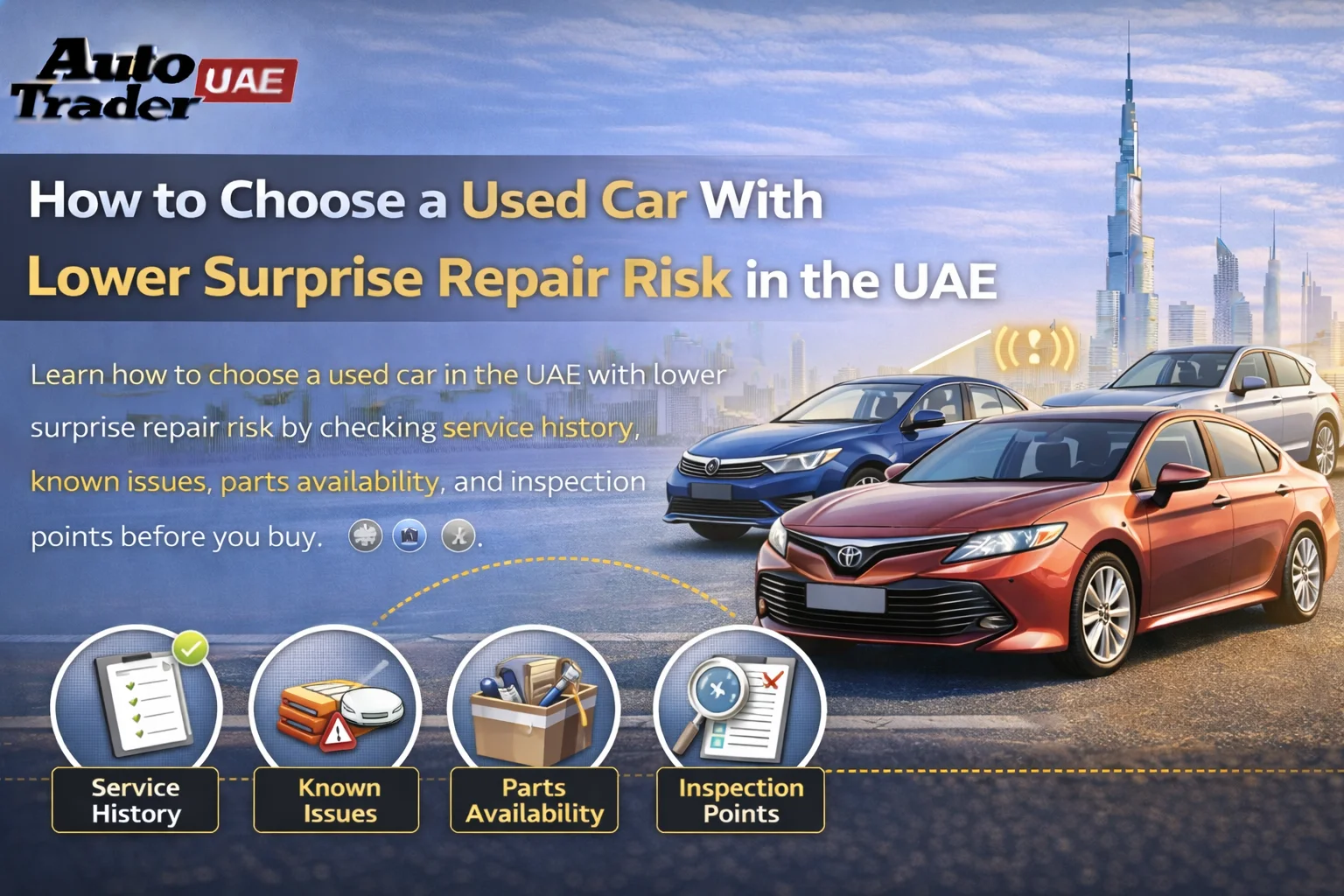
How to Choose a Used Car With Lower Surprise Repair Risk in the UAE
Buying a used car in the UAE can save you a lot of money, but only if you avoid cars that will constantly be in the workshop. This guide explains how to choose a used car with lower surprise repair risk, using practical, garage-aware tips that suit UAE conditions.
1. Start With the Right Shortlist
Not every model is equal when it comes to reliability and repair costs. Before you even view a car, choose models that already have a solid reputation.
1.1 Focus on brands with strong UAE support
In the UAE, lower repair risk usually comes from brands that have:
- Strong dealer and independent workshop networks
- Easy access to genuine and aftermarket parts
- Good track record in hot-climate markets
These are often Japanese, Korean, and some popular European models that you see frequently on UAE roads and in taxi fleets. A model that is common locally is usually easier and cheaper to maintain.
1.2 Check real-world ownership feedback
Before deciding on a model:
- Search owner reviews and long-term reports for common faults and service intervals.
- Look at UAE-focused forums and social channels for feedback on heat-related issues, AC performance, and gearbox reliability.
- Browse used car listings on Auto Trader UAE to see how many similar cars are for sale and what mileage they typically reach. A model that regularly appears with 200,000+ km is usually more durable.
Use this research to remove models with repeated reports of engine, gearbox, or electronics failures.
2. Prioritise Service History Over Low Mileage
In the UAE, a fully documented service history is often more important than a low odometer reading.
2.1 What a good service history looks like
Look for:
- Stamped service book or printed dealer history with regular intervals (typically every 10,000–15,000 km or annually, depending on the brand).
- Invoices that show oil, filters, brake fluid, coolant, and transmission oil changes.
- Record of major services (timing belt/chain checks, spark plugs, coolant flushes) done at the recommended mileage.
A car that has done 150,000 km with on-time services is usually lower risk than a 70,000 km car with missing records.
2.2 Red flags in the history
Be cautious if you see:
- Big mileage gaps with no invoices or stamps.
- Many different minor garages with no clear pattern of regular service.
- Recent engine or gearbox replacement with no clear reason or warranty.
Missing or unclear history increases the chance of hidden issues and surprise repairs.
3. Understand Common Problems by Segment
Different types of cars have different risk areas. Knowing what usually goes wrong helps you inspect smarter.
3.1 Sedans and hatchbacks
Typical areas to watch:
- AC system: In the UAE heat, weak AC, noisy compressors, or poor cooling can mean expensive future repairs.
- Cooling system: Radiator leaks, old coolant, and weak fans can lead to overheating.
- Suspension: Worn shocks and bushings from speed bumps and rough parking areas cause knocking sounds.
3.2 SUVs and 4x4s
High risk points include:
- Four-wheel-drive system: Transfer case, differentials, and 4x4 actuators can be costly if not serviced.
- Air suspension (if fitted): Comfortable but more complex and expensive to repair.
- Off-road use signs: Underbody damage, bent components, and sand intrusion raise future repair risk.
3.3 Hybrids and EVs
For electrified vehicles, pay attention to:
- Battery health: Ask for battery test reports or warranty status.
- Specialist support: Make sure there are workshops in your emirate that can handle hybrid/EV systems.
- Cooling systems: Many hybrids/EVs have separate cooling for batteries and electronics; poor maintenance can be costly.
4. Check Parts Availability and Typical Repair Costs
Choosing a reliable model is not enough; you also want predictable, manageable repair bills.
4.1 How to gauge parts availability in the UAE
- Search local parts suppliers online for your chosen model and see what is available (brake pads, filters, suspension components, body parts).
- Call a couple of independent workshops and ask about common parts prices and lead times.
- Look at how many similar used cars are listed on Auto Trader UAE. High population usually means more parts options, including used parts.
4.2 Models that may carry higher parts risk
Cars that are rare in the UAE or imported as single units from other regions can have:
- Longer waiting times for parts
- Higher prices for basic items
- Fewer mechanics familiar with the systems
Unless you are ready for potential delays and higher costs, prioritise models with established UAE presence.
5. Inspect for Heat and Sand Damage
UAE climate creates specific wear patterns. Ignoring these can lead directly to surprise workshop visits.
5.1 Cooling system checks
During viewing and test drive, look for:
- Temperature gauge staying stable in the middle once warmed up.
- No coolant smell, leaks, or stained marks around radiator and hoses.
- Radiator fins not heavily corroded or clogged with sand.
Any sign of overheating or leaks is a strong reason to walk away.
5.2 AC performance
In hot weather, turn the AC to maximum and check:
- How quickly the cabin cools down.
- Whether the airflow is strong on all vents.
- If there are strange noises when the compressor engages.
Weak AC can mean compressor, condenser, or blower issues, which are not cheap in the UAE.
5.3 Sand and corrosion signs
Look underneath and in the engine bay:
- Excessive sand or mud on suspension and chassis components.
- Rust on underbody, especially around mounts and brackets.
- Sand inside air filter box or intake ducts (suggesting poor filtration or heavy off-road use).
6. Get a Proper Pre-Purchase Inspection
A professional inspection is one of the best ways to reduce repair surprises.
6.1 Where to inspect in the UAE
Consider:
- Dealer service centres (especially for newer cars still under warranty).
- Reputable independent workshops familiar with your chosen brand.
- RTA- or Tasjeel-style comprehensive tests where available.
An inspection should cover:
- Engine compression or health check
- Gearbox operation and fluid condition
- Suspension, steering, and brakes
- Chassis alignment and accident damage
- Diagnostic scan for stored fault codes
6.2 Use the report to negotiate or walk away
A good report helps you:
- Estimate short-term and medium-term repair costs.
- Negotiate the price based on necessary work (tyres, brakes, suspension, leaks).
- Decide to walk away if major engine, gearbox, or structural issues appear.
Paying for an inspection is much cheaper than an unexpected transmission rebuild.
7. Check for Accident and Structural Damage
A car that has been in a serious accident often carries higher future repair risk, even if it looks fine now.
7.1 Visual checks
Look for:
- Uneven panel gaps around doors, bonnet, and boot.
- Mismatched paint shades or overspray on rubbers and trims.
- Weld marks or ripples on the inner fenders and boot floor.
7.2 Documentation and report
Where possible:
- Request any previous accident or repair reports.
- Use approved testing centres that provide structural integrity checks.
Avoid cars with clear frame damage, twisted chassis, or airbag deployments unless repairs are clearly documented and professionally done.
8. Align the Car With Your Real Usage
Choosing a car that fits your lifestyle and driving pattern also reduces breakdown risk.
8.1 Daily city and commute use
For mainly city driving:
- Prefer smaller engines with proven automatic gearboxes.
- Avoid unnecessarily large, complex SUVs if you will not use their off-road capacity.
- Focus on fuel efficiency, easy parking, and simple maintenance.
8.2 Long-distance Abu Dhabi–Dubai or inter-emirate driving
For heavy highway use:
- Look for comfortable seats, stable suspension, and good cruise control.
- Ensure major wear items (tyres, brakes, suspension) are in strong condition.
- Balance engine size and economy: underpowered engines working too hard can suffer long-term.
8.3 Family and load use
For family cars:
- Check rear AC vents and airflow for passengers.
- Inspect seat mechanisms, ISOFIX mounts, and door locks carefully.
- Plan for higher suspension and brake wear and budget accordingly.
9. Plan Your First 12 Months of Maintenance
Reducing surprise repair risk also means doing preventive maintenance once you buy.
9.1 Smart first-service actions
Soon after purchase, especially if history is incomplete, consider:
- Engine oil and all filters (oil, air, cabin) change.
- Coolant flush and brake fluid change if age is unknown.
- Transmission oil service if mileage is high and spec allows.
- New wiper blades, fresh battery check, and tyre inspection.
9.2 Build a simple maintenance budget
Estimate yearly:
- Scheduled services (1–2 per year depending on km).
- Tyres every 3–4 years (more often for heavy use).
- Brake pads and discs depending on driving style.
- Unexpected small repairs (lights, sensors, minor leaks).
Set aside a realistic monthly amount so that routine wear does not feel like a surprise.
10. Use Auto Trader UAE to Reduce Your Risk
Auto Trader UAE can help you choose a used car with lower surprise repair risk by giving you:
- Access to a wide range of used cars, so you can compare models, mileages, and prices in one place.
- Listings where many sellers mention service history, major repairs, and warranty details.
- Related guides and make/model pages to understand common issues and servicing expectations.
As you browse used car listings on Auto Trader UAE:
- Filter by year, mileage, and price to find cars that match your risk comfort and budget.
- Favour cars with clear descriptions of full service history, dealer maintenance, and recent major services.
- Shortlist several options and then arrange independent inspections before committing.
Conclusion
Choosing a used car with lower surprise repair risk in the UAE is about preparation, not luck. Focus on reliable models with strong local support, insist on proper service history, inspect for heat and accident damage, and invest in a professional pre-purchase check. When you are ready to find your next used car, use Auto Trader UAE to explore well-maintained options, compare vehicles, and move forward with more confidence and fewer workshop surprises.
Before deciding, browse used cars in Dubai and across the UAE on Auto Trader UAE to compare condition, mileage, pricing, and seller details for models that fit your ownership goals.
Related Links
Buyer Takeaway
When buying a used car in the UAE, focus on vehicle condition, service history, inspection quality, paperwork, and total running costs rather than price alone. Compare options carefully and choose the option that best matches your budget and real needs.
Seller Takeaway
If you are selling a used car in the UAE, present the service history clearly, price the vehicle realistically, and highlight condition, specification, and ownership strengths honestly. A well-prepared listing with accurate details usually attracts more serious buyers.