
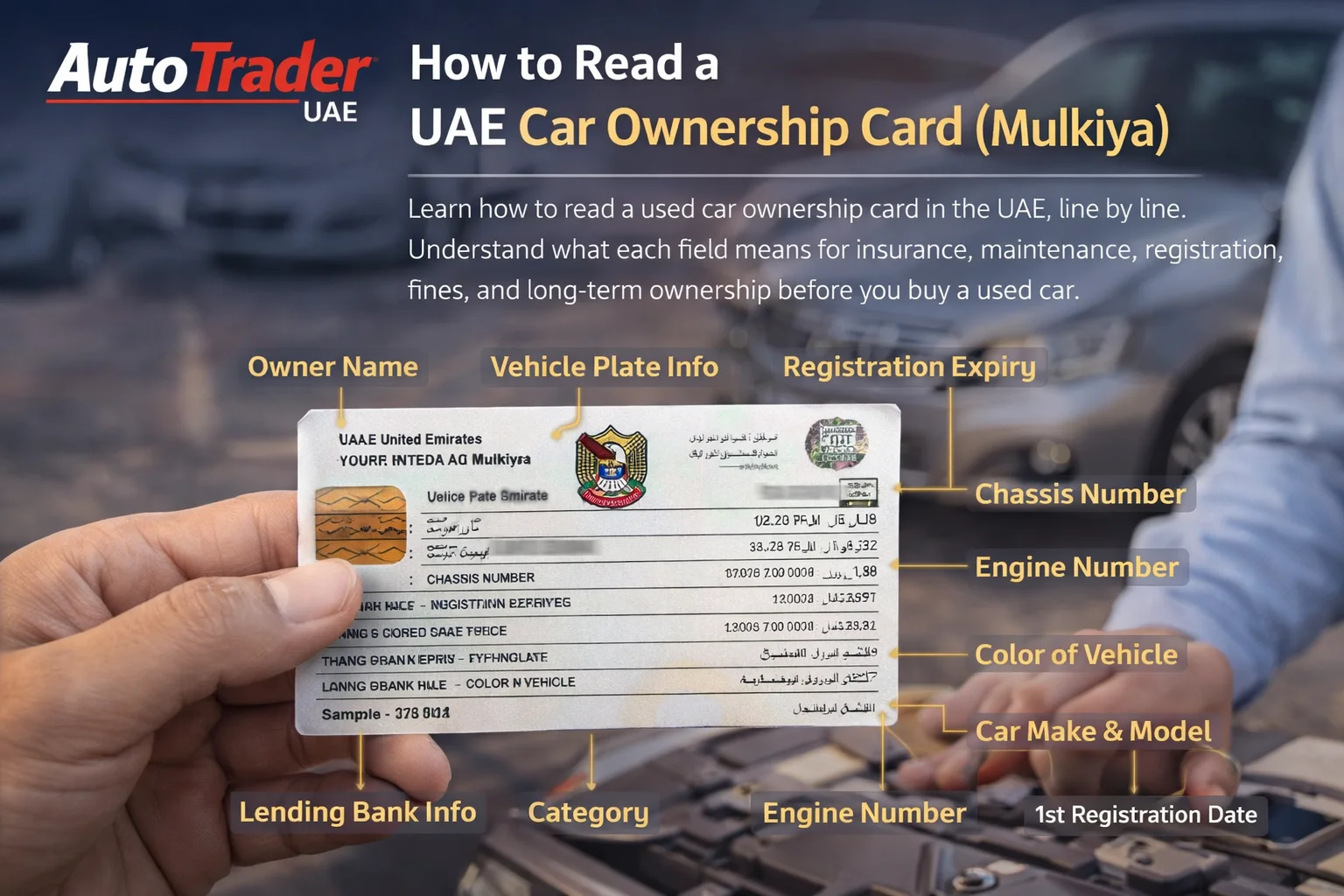
How to Read a Used Car Ownership Card in UAE
Buying a used car in the UAE is much easier when you know exactly what you’re looking at on the ownership card (Mulkiya). This small card carries big information about the car’s identity, history, and your running costs. This guide from Auto Trader UAE explains how to read a used car ownership card in the UAE step by step and what each section means for maintenance, insurance, resale value, and day‑to‑day ownership.
What Is a Car Ownership Card (Mulkiya)?
The car ownership card, often called the Mulkiya, is the official UAE registration document for a vehicle. It’s issued by the traffic authority in each emirate (RTA in Dubai, Abu Dhabi Police, Sharjah Police, etc.) and confirms:
- Who legally owns the car
- Key vehicle details (make, model, year, chassis number, engine number)
- Registration and insurance validity dates
- Mortgage or bank finance status
When you’re buying a used car in the UAE, the Mulkiya helps you verify that the seller is genuine and that the car details match reality.
Front Side: Key Vehicle & Owner Details
Ownership cards from different emirates look slightly different, but the main fields are similar. Below is what you’ll commonly see and how it affects you as a buyer and future owner.
1. Owner Name and ID
What you’ll see:
- Owner’s full name
- Emirates ID or traffic file number
Why it matters:
- The person selling the car should match the name on the card (or be officially authorised).
- If the name doesn’t match, you should ask for a valid power of attorney or walk away.
2. Plate Number and Category
What you’ll see:
- Plate number and code
- Emirate (Dubai, Abu Dhabi, Sharjah, etc.)
- Plate category (private, commercial, etc.)
Why it matters for running costs:
- Private vs commercial affects insurance cost and sometimes registration fees.
- If you plan to change emirate later, you’ll need to re‑register and possibly change plates, which adds a small cost.
3. Vehicle Make, Model and Year
What you’ll see:
- Manufacturer (e.g. Toyota, Nissan, BMW)
- Model and trim code (e.g. Corolla, Patrol, 320i)
- Manufacturing year / model year
Why it matters for ownership and reliability:
- Helps you check current market prices for that exact year and model.
- Older cars usually cost less to buy but may have higher maintenance and lower resale value.
- Some model years have known reliability issues; verify with brand‑specific guides, service campaigns, or recalls.
Compare the details on the card with the car’s badges, documents, and VIN plate. If something doesn’t match, investigate further.
4. Chassis Number (VIN)
What you’ll see:
- 17‑digit Vehicle Identification Number (VIN)
Why it matters:
- The VIN on the Mulkiya must match the VIN stamped on the car (engine bay / door frame / dashboard).
- Use the VIN to check service history, accident checks, and manufacturer recalls.
- Insurance companies use the VIN to verify specifications and risk.
A mismatch in VIN is a serious red flag. Don’t proceed until this is fully explained by the authority or dealer.
5. Engine Number / Engine Capacity
What you’ll see:
- Engine number (sometimes abbreviated)
- Engine capacity (e.g. 1.6L, 2.5L, 4.0L)
Why it matters for daily costs:
- Bigger engines usually mean higher fuel consumption and sometimes higher insurance premiums.
- Some engines are known to be more reliable; search by engine code when researching long‑term ownership.
6. Vehicle Type and Body Style
What you’ll see:
- Saloon (sedan), SUV, hatchback, coupe, pickup, van, etc.
- Sometimes seating capacity or gross weight (for larger vehicles)
Why it matters for practicality and costs:
- SUVs typically have higher fuel and tyre costs than small hatchbacks.
- Pickups and vans might be classed as commercial, affecting insurance and parking rules.
- Seating capacity is important for family use and carpooling regulations.
7. Colour
Why it matters:
- The colour on the card must match the actual car. If it doesn’t, the car might have been repainted without updating RTA.
- Repainting after major accidents can affect resale value and insurance assessment.
If you see evidence of a colour change, ask for RTA approval documentation and repaint invoices.
Back Side: Registration, Insurance & Finance Details
The reverse side of the Mulkiya focuses on dates, validity, and finance. This is where you see how smooth or complicated your ownership might be.
8. Registration Issue and Expiry Dates
What you’ll see:
- Registration issue date
- Registration expiry date
Why it matters for budgeting:
- If the registration is close to expiry, you will soon pay renewal fees, testing, and possibly minor repairs to pass inspection.
- Some buyers use near‑expiry registration as a negotiation point on price.
Consider the cost of passing the next technical test — especially for older cars where tyres, brakes, or lights might need replacement.
9. Insurance Details and Expiry
What you’ll see:
- Insurance company name
- Insurance policy number (in some emirates)
- Insurance expiry date
Why it matters:
- You cannot renew registration without valid insurance.
- If insurance expires soon, add a full year of insurance to your cost of purchase.
- Insurance costs vary heavily by driver profile, vehicle type, and claims history — get quotes in advance for that exact model and year.
For high‑value or performance cars, comprehensive insurance can significantly increase annual running costs.
10. Mortgage / Bank Finance Field
What you’ll see:
- “Mortgaged to: [Bank/Finance Company]” or similar wording
- Or a blank field / "No mortgage" when fully paid
Why it matters:
- If the car is mortgaged, the bank is still the effective owner until the loan is cleared.
- The seller must obtain a release from the bank and remove the mortgage before the car is fully transferred.
- A mortgaged car may come with strict transfer procedures and possible settlement delays.
Never pay the full amount in cash to a private seller for a mortgaged car without a clear, bank‑managed process.
11. Usage Type (Private, Taxi, Commercial, Rental)
What you’ll see:
- Private
- Taxi
- Rental
- Commercial / goods vehicle
Why it matters for long‑term ownership:
- Ex‑rental and ex‑taxi cars may have higher mileage and more wear.
- Private‑use vehicles often have better resale value and may be better maintained.
- Insurance classes and premiums differ for commercial use.
If the card shows “rental” or “taxi” but the seller says it was privately used, be cautious and verify history.
12. Technical Remarks and Special Notes
Some cards have a notes or remarks section. It may include:
- Special body configurations
- Weight restrictions (for pickups and vans)
- Any technical conditions set by the authority
If there are remarks you don’t understand, ask at the RTA or traffic department before finalising the deal.
How the Ownership Card Affects Running Costs
The Mulkiya is more than an ID card for your car; it helps you estimate your ongoing expenses in the UAE.
1. Fuel Costs
From the card you can see:
- Engine capacity
- Vehicle type (SUV vs hatchback, etc.)
Larger, heavier vehicles generally use more fuel. Before buying, compare similar cars on Auto Trader UAE and consider whether a smaller engine or lighter body style could better fit your monthly fuel budget.
2. Insurance Premiums
Insurers look at:
- Make, model, and year
- Usage type (private vs commercial)
- Value of the car and parts
From the card, you can give insurers accurate information and get proper quotes before you buy. This is essential for planning realistic yearly costs.
3. Maintenance and Parts
Using the make, model, year, VIN, and engine details:
- Check typical maintenance costs and service intervals.
- Find out part prices from local workshops or dealers.
- Confirm whether the car is a GCC‑spec model, which usually has better parts availability and cooling systems suited to UAE conditions.
Browsing Auto Trader UAE, you can compare similar cars and see which models are popular — strong demand usually means easier and often cheaper parts availability.
4. Resale Value
The following details on the card affect resale:
- Brand and model reputation for reliability
- Year of manufacture
- Usage type (private vs rental/taxi)
- Number of previous owners (visible in history systems, not always on card)
Cars with desirable specs and private usage typically hold value better and sell faster on the used market.
Practical Checks Before You Buy a Used Car
Use the ownership card together with other checks for a safer purchase.
1. Match Card Details with the Car
- VIN on card vs VIN on chassis
- Engine number (where visible)
- Colour on card vs real colour
- Make, model, and year vs badges and documents
Any discrepancy should be explained with official documents or by the traffic authority.
2. Check for Outstanding Fines and Salik
Use the plate number and sometimes the traffic file number to check for:
- Traffic fines
- Salik or toll violations
Normally, fines should be cleared before transfer. Clarify this with the seller so you don’t inherit unexpected costs.
3. Confirm the Car Is Not Under Dispute
In most emirates, the system will not allow transfer if the car:
- Is mortgaged without bank approval
- Has unresolved police or accident issues
- Has unpaid fines above a certain limit
Still, it’s wise to process the transfer at an official RTA or traffic centre so any issues appear instantly in the system.
4. Get a Pre‑Purchase Inspection
The Mulkiya alone doesn’t show accident history or mechanical condition. Before committing:
- Use the VIN and plate to request a history report where available.
- Arrange a professional mechanical inspection.
- Ask for service records that match the details on the card.
You can shortlist cars on Auto Trader UAE and inspect only the best candidates to save time and money.
Long‑Term Ownership: What the Card Doesn’t Show
The ownership card is essential, but it doesn’t tell you everything about life with the car.
- Service history: You need workshop or dealer records.
- Fuel economy: Research real‑world figures for that model and engine size.
- Common issues: Check owner forums and brand‑specific guides.
- Tyre and brake costs: Ask workshops for quotes based on the model and wheel size.
Combine this information with what you learn from the ownership card for a complete picture of long‑term running costs in the UAE.
Using Auto Trader UAE to Buy a Used Car Confidently
When you search for a used car on Auto Trader UAE:
- Compare multiple listings of the same make, model, and year to understand fair pricing.
- Use detailed filters (year, mileage, body type, budget) to match your running‑cost expectations.
- Shortlist cars and request copies or photos of the ownership card before arranging a viewing.
You can also explore related content such as maintenance guides, ownership tips, and model reviews to plan your long‑term costs more accurately.
Conclusion: Turn the Ownership Card into an Ownership Advantage
Knowing how to read a used car ownership card in the UAE turns a simple piece of plastic into a powerful decision tool. By understanding each field — from VIN and engine size to insurance and mortgage status — you can:
- Verify the car’s identity and avoid problems
- Estimate fuel, insurance, and maintenance costs
- Judge likely reliability and resale value
- Negotiate more confidently with sellers
When you’re ready to find your next car, browse the latest used car listings in the UAE on Auto Trader UAE. Combine smart searching with a careful reading of the ownership card, and you’ll be better prepared for smooth, cost‑efficient ownership in the UAE for years to come.
Before deciding, browse used cars in Dubai and across the UAE on Auto Trader UAE to compare condition, mileage, pricing, and seller details for models that fit your ownership goals.
Related Links
Buyer Takeaway
When buying a used car in the UAE, focus on vehicle condition, service history, inspection quality, paperwork, and total running costs rather than price alone. Compare options carefully and choose the option that best matches your budget and real needs.