
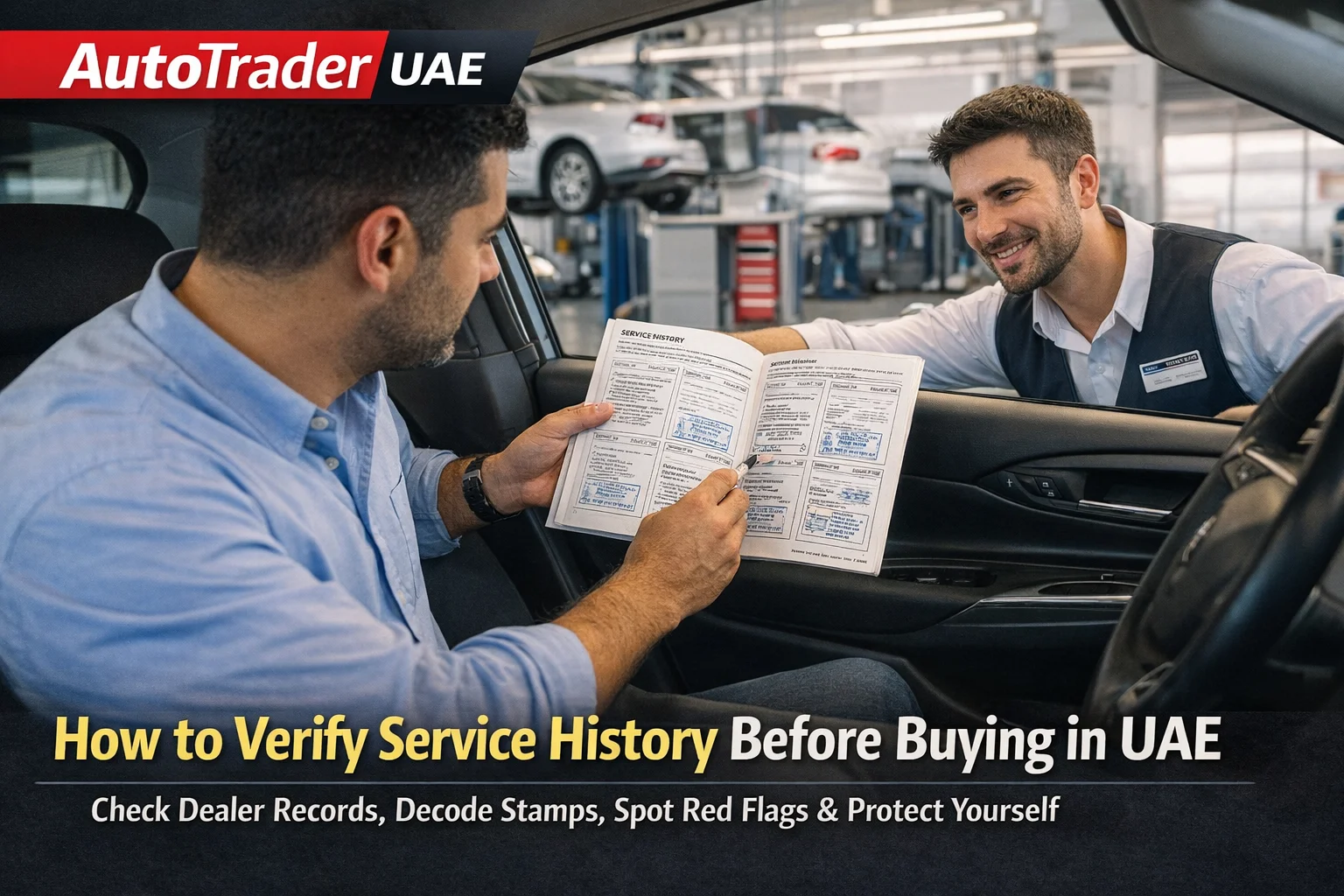
How to Verify Service History Before Buying in UAE
Buying a used car in the UAE can be a smart financial move, but only if you know the car’s true history. Service history is one of the strongest indicators of how a vehicle has been treated, how much it will cost to run, and how reliable it will be for long‑term ownership. This guide explains how to verify service history before buying in the UAE, what to watch out for, and how this impacts running costs, maintenance, insurance and resale. Whether you’re browsing used cars on Auto Trader UAE or viewing a vehicle in person, use this as your step‑by‑step checklist.
Why Service History Matters So Much in the UAE
The UAE’s climate and driving conditions are demanding. Extreme heat, sand, stop‑start city traffic and high‑speed highway runs all put extra stress on engines, cooling systems, tyres and brakes. A complete and verifiable service history helps you:
- Predict running costs: Well‑maintained cars usually need fewer surprise repairs and have more predictable maintenance bills.
- Judge reliability: Regular oil changes, coolant flushes and inspections are critical for long‑term reliability in hot climates.
- Estimate future maintenance: You can see what’s been done and what major services are coming next.
- Protect resale value: A stamped service book and invoices are strong selling points when you list your car later.
- Support insurance decisions: Some insurers price cover based on vehicle age, condition and claims history; a well‑documented car is easier to value fairly.
A car with weak or suspicious service history might be cheaper upfront, but it can quickly become expensive through breakdowns, overheating, or premature wear.
Step 1: Start With the Service Book and Invoices
When you view a used car, always ask the seller for:
- The original service/maintenance book (if the car has one)
- All available service invoices from workshops or dealers
- Warranty and extended warranty documents (if applicable)
What to check in the service book:
- Stamp and signature: Each service should have an official stamp and, ideally, a signature from the service advisor or technician.
- Date and mileage: Ensure services are recorded at reasonable mileage intervals and dates, typically every 10,000–15,000 km or 6–12 months depending on the manufacturer.
- Dealer or workshop name: Check that the stamp belongs to a legitimate dealer or known specialist.
What to check in invoices:
- Vehicle details: VIN (chassis number), registration plate, and model should match the car you’re viewing.
- Mileage at service: Compare against the odometer reading and the service book.
- Work performed: Look for major items like timing belt/chain, transmission service, brakes, coolant, and AC work.
- Parts used: Prefer OEM or high‑quality parts, especially for critical systems (engine, brakes, suspension).
If the seller can’t provide any proof of servicing, consider that a strong warning sign.
Step 2: Cross‑Check Mileage and Dates
Service history must make sense chronologically. Spend a few minutes checking for consistency:
- Order the records by date: You should see mileage steadily increasing over time.
- Watch for mileage drops: If one invoice shows 120,000 km and a later one shows 80,000 km, that’s a red flag for possible odometer tampering.
- Look for long gaps: A 2–3 year gap in servicing, or more than 30,000–40,000 km between services, suggests neglect.
- Check against usage patterns: In the UAE, average annual mileage is often between 15,000–25,000 km. Much higher or lower isn’t bad by itself, but it should make sense with the owner’s story.
If anything looks suspicious, ask the seller to explain and back up their answers with documentation.
Step 3: Verify With Official Dealers or Service Centres
For many brands in the UAE, authorised dealers keep electronic records of servicing carried out within their network. How to verify with the dealer:
- Note the VIN (Vehicle Identification Number) from the car (visible at the base of the windscreen or inside the engine bay, and on the registration card).
- Ask the seller which dealer or service network they used.
- Contact the dealer’s service department (phone, email or in person) and ask if they can share service history based on the VIN.
Some dealers will only share limited information due to privacy policies, but many can at least confirm:
- When the car was serviced in their network
- At what mileage it was serviced
- If there are any outstanding recalls or major recorded repairs
This is especially important for GCC‑spec cars where proper cooling and AC systems matter for long‑term reliability.
Step 4: Use RTA and Police Channels Where Available
While service records themselves are usually held by dealers and workshops, some official UAE channels can help you understand a car’s history. RTA / local traffic authorities:
- In Dubai, the RTA offers online services where you can check basic vehicle details based on plate or chassis number.
- In other emirates, local traffic departments may provide similar checks.
Police accident history services:
- Some emirates’ police portals offer information about recorded accidents involving the vehicle.
- Accident records don’t replace service history, but they help you understand if the car may have had major repairs.
Combine this information with service invoices to see whether major damage was followed by proper repairs at a reputable workshop.
Step 5: Inspect the Workshop Stamps and Names
Not all workshops are equal. A full history at a reputable specialist is usually better than a patchy history at unknown garages. What to look for in workshop details:
- Consistent garages: It’s a good sign if the car has been serviced by the same dealer or known specialist for most of its life.
- Recognisable names: Search the workshop online to see reviews and location.
- Local UAE addresses and numbers: Stamps should show real UAE contact details; vague or incomplete stamps are suspicious.
If in doubt, call one or two of the stamped workshops to confirm that they actually worked on the car.
Step 6: Match Service History With Physical Condition
Even a perfect‑looking service book must match the car’s actual condition. Check the car for signs of care or neglect:
- Engine bay: Excessive oil leaks, burnt smells or messy wiring suggest poor servicing.
- Fluids: Check oil, coolant and brake fluid where possible; old or dirty fluid is a warning sign.
- Tyres: Uneven wear can hint at neglected alignment or suspension issues.
- Interior wear: A low‑mileage car with heavily worn seats and steering wheel may not match the claimed mileage.
Always combine paperwork with a thorough pre‑purchase inspection at a trusted independent workshop or dealer service centre.
Step 7: Understand Major Services and Costly Items
Service history is most valuable when it shows that expensive, time‑based items have already been done. This directly affects your future running costs. For long‑term ownership in the UAE, pay attention to whether the history shows:
- Timing belt or timing chain service: For belt‑driven engines, this is usually due between 80,000–160,000 km (varies by brand). Failure can mean major engine damage.
- Transmission service: Automatic and dual‑clutch gearboxes often need fluid changes at specific intervals.
- Cooling system work: Radiator, water pump, thermostat and coolant changes are critical in hot climates.
- AC system service: AC compressors, condensers and cabin filters often need attention in the UAE.
- Suspension and brakes: Shocks, bushings, brake discs and pads wear faster with rough roads and high speeds.
If these items are missing from the history and the car is at higher mileage, budget for them soon after purchase. You can use this to negotiate the price on Auto Trader UAE or with the seller directly.
Red Flags in Service History You Shouldn’t Ignore
Be cautious if you notice:
- Long gaps (years) with no records at all.
- Missing records at key mileage points (for example, no 80,000 km or 100,000 km service).
- Clearly altered or duplicated stamps (blurry, mismatched fonts, or obviously photocopied).
- Multiple odometer resets or inconsistent mileage between documents.
- Owner refuses pre‑purchase inspection or is vague about where the car was serviced.
Any combination of these issues should push you to walk away or pay significantly less to reflect the risk.
How Verified Service History Impacts Running Costs
A clear, verified history is one of the best tools for predicting what a car will really cost you each month in the UAE. With strong service history, you can:
- Plan upcoming services (e.g. next oil change in 5,000 km, major service at 120,000 km).
- Reduce the likelihood of sudden breakdowns and towing bills.
- Choose a car that fits your budget for parts and labour based on its age and maintenance record.
For everyday commuting in Dubai, Abu Dhabi or other emirates, this means fewer surprises and more predictable ownership.
Effect on Reliability and Day‑to‑Day Practicality
A car with a verifiable, consistent service history is typically:
- More reliable for long distances between emirates or regular airport runs.
- Less likely to overheat during summer traffic or desert drives.
- More comfortable with a properly maintained AC system, suspension and brakes.
For families, ride‑hailing drivers, and professionals who depend on their car daily, this peace of mind is more valuable than a slightly lower purchase price.
Impact on Insurance and Resale Value in the UAE
Insurance:
- Insurers mainly price based on age, model, claims and driver profile, but a well‑maintained car is easier to assess and repair if something goes wrong.
- Cars with severe neglect may be harder to insure comprehensively at competitive rates after major claims or accidents.
Resale value:
- When it’s time to sell on Auto Trader UAE, a fully documented service history gives you a strong selling point.
- Buyers are willing to pay more for a car with complete, verified records compared to a similar car with no paperwork.
- It can help your car sell faster, especially in popular segments like SUVs and family sedans.
Think of service history as an investment: keeping all invoices and stamps organised today helps you recover more money when you upgrade later.
Practical Checklist Before You Buy
Use this quick checklist when viewing a car in the UAE:
- Ask for the service book and all invoices.
- Check dates, mileage and workshop stamps for consistency.
- Verify key services: major intervals, timing belt/chain, transmission, coolant and AC.
- Use the VIN to confirm history with authorised dealers where possible.
- Check accident/ownership history via RTA or police portals if available in your emirate.
- Compare paperwork to the car’s physical condition.
- Arrange an independent pre‑purchase inspection.
If the car passes these checks, you’re in a much stronger position to negotiate price and plan future ownership costs.
Buying Smart With Auto Trader UAE
When browsing used cars on Auto Trader UAE, you can filter listings, compare similar models and review descriptions to see which sellers mention full or partial service history. To buy confidently:
- Look for listings that highlight full dealer service history or complete records available.
- Contact the seller through the platform and request photos of the service book and invoices before viewing.
- Use our other ownership and maintenance guides to understand typical service intervals and costs for specific makes and models.
By combining careful service‑history checks with the wide selection of cars on Auto Trader UAE, you can find a vehicle that’s not only affordable today but also reliable, economical and easy to resell in the future.
Conclusion
Verifying service history before buying in the UAE isn’t just a formality—it’s one of the most important steps in protecting yourself from unexpected costs, unreliable cars and poor resale value. Take the time to review documents, cross‑check with dealers, inspect the car properly and ask questions. When you’re ready to search, head to Auto Trader UAE to explore used car listings, research specific models, and use our ownership‑focused articles to make a confident, well‑informed purchase decision that suits long‑term life in the UAE.
Before deciding, browse used cars in Dubai and across the UAE on Auto Trader UAE to compare condition, mileage, pricing, and seller details for models that fit your ownership goals.
Related Links
Buyer Takeaway
When buying a used car in the UAE, focus on vehicle condition, service history, inspection quality, paperwork, and total running costs rather than price alone. Compare options carefully and choose the option that best matches your budget and real needs.