
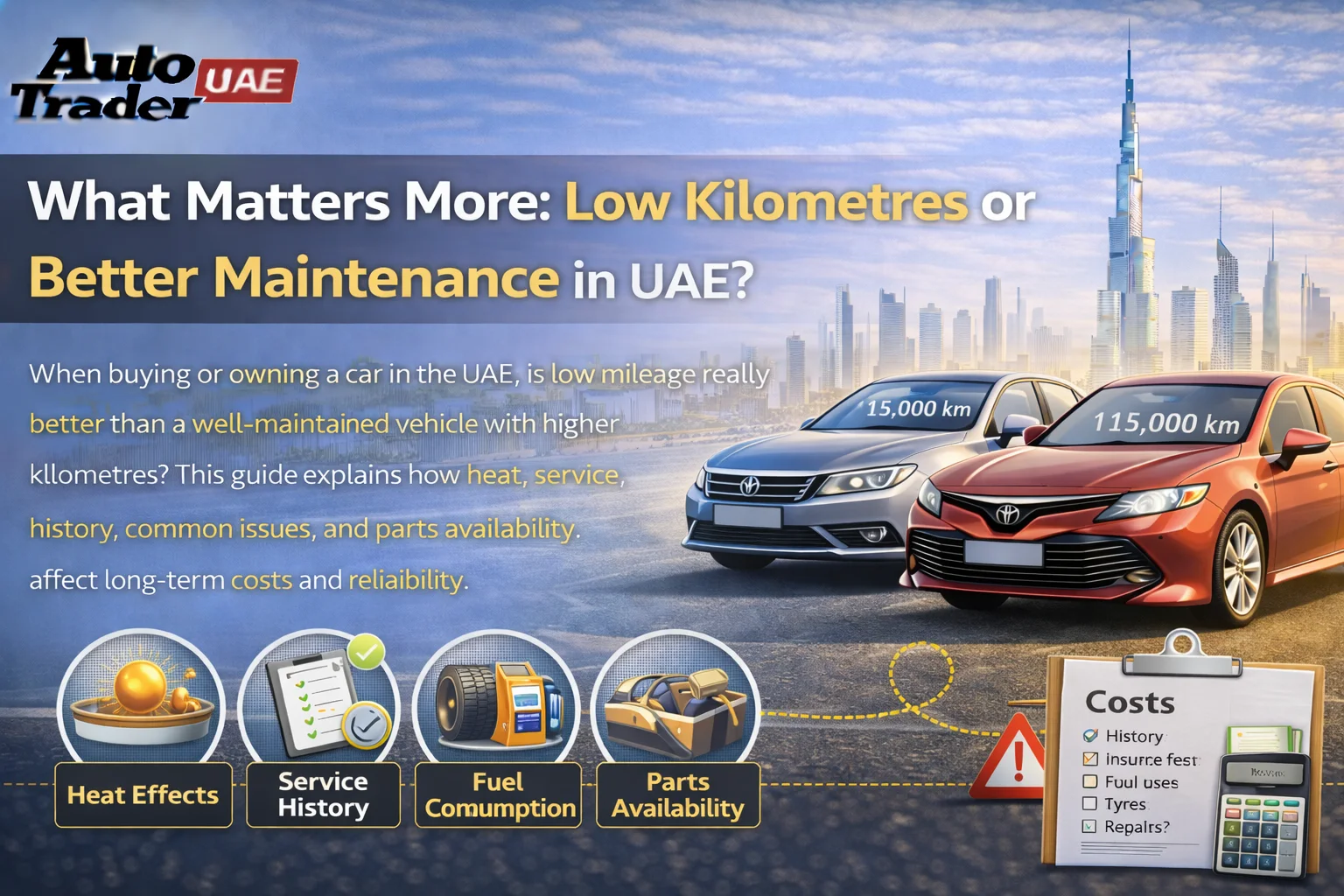
What Matters More: Low Kilometres or Better Maintenance in UAE?
When you shop for a used car in the UAE, you’ll see two common selling points: “very low kilometres” and “full service history.” Both sound good – but which one actually matters more for reliability and running costs?
In the UAE’s hot climate, a car’s maintenance history is usually more important than its odometer reading. A 5‑year‑old car with 160,000 km and excellent, documented servicing can be a safer buy than a 5‑year‑old car with 60,000 km and poor or unknown maintenance.
This guide from Auto Trader UAE breaks down how to judge a car’s real condition, what to prioritise, and how to keep your own car healthy and cost‑effective over time.
Why UAE Conditions Change the Rules
Cars in the UAE work in harsher conditions than many other markets:
- Extreme heat accelerates wear on rubber parts, fluids, batteries, tyres, and paint.
- Stop‑start city driving and short trips can be tougher on engines than steady highway mileage.
- Dust and sand clog filters and can damage paint and interior if not cleaned regularly.
- Long idling with AC on (waiting in car parks, school pickups) means the engine is working even if the car isn’t moving.
This means a car with lower displayed kilometres is not always “lightly used”. It may have spent years idling in traffic and heat with minimal servicing. That’s why serious buyers in the UAE focus on condition, service history, and proper maintenance more than just low mileage.
Low Kilometres: Pros and Hidden Risks
Advantages of a Low‑Kilometre Car
- Less mechanical wear on the engine, gearbox, and suspension – in theory.
- Better resale appeal – low km is easy to advertise and easier to sell later.
- Lower chance major components have already been repaired or replaced.
Risks of Focusing Only on Kilometres
- “City abuse”: A car with low kilometres but heavy city use and idling can actually be more worn than a higher‑km highway car.
- Neglected maintenance: Many owners think “low km = no service needed,” skipping oil changes and checks.
- Age‑related damage: Rubber seals, hoses, and fluids degrade with time, not just kilometres.
- Odometer tampering risk: In any used market worldwide, it can happen if you don’t buy from a trusted source and check records.
In short, low kilometres are good, but they only mean something when combined with proper, time‑based servicing.
Why Strong Maintenance Often Matters More
A high‑kilometre car with strong maintenance can be a better UAE buy than a low‑km car with poor history. Here’s why:
1. Regular Oil Changes vs. “Garage Queen”
Engine oil in the UAE should be changed by time as well as distance. Even if you drive very little, oil breaks down with heat and age. A car that has done 5,000 km in two years but never had an oil change is at more risk than a car that did 50,000 km with oil changes every 10,000 km or by the recommended interval.
2. Sticking to the Service Schedule
Manufacturers specify both kilometre and time‑based service intervals. On a well‑kept car in the UAE, you should see:
- Service stamps or invoices every 10,000–15,000 km, or every 6–12 months (depending on brand).
- Minor services (oil, filters, inspections) done regularly.
- Major services (spark plugs, transmission service, coolant, brake fluid) done roughly every 60,000–100,000 km or as per the brand’s schedule.
3. Parts Replaced on Time
Good maintenance means wear parts are changed before they fail:
- Brake pads and discs when thin or warped, not when metal‑on‑metal.
- Suspension components (bushes, links, shocks) when knocking or leaking.
- Belts and water pumps at the recommended interval, not when they snap.
- Batteries every 2–3 years in our climate; waiting until failure can leave you stranded.
A car that has had these items done, even at higher kilometres, is generally cheaper to own in the next few years than a low‑km car that needs all of this work immediately.
Service Expectations by Age and Kilometres
Use this as a rough guide for what you should expect to see in the service history of a UAE‑market car. Always check the manufacturer schedule for the exact model.
0–50,000 km (Up to ~3 years)
- Regular oil and filter changes.
- Engine air filter and cabin filter changes.
- Basic inspections at each service.
- Possibly first brake pad change depending on driving style.
50,000–100,000 km (~3–5 years)
- All of the above, plus:
- Brake pads and possibly discs replaced at least once.
- Transmission service (if recommended by the manufacturer).
- Coolant and brake fluid change.
- Spark plugs on some engines.
- Suspension checks, with some bushes or links possibly replaced.
100,000–150,000 km (~5–7 years)
- Second or third set of brake pads, possibly second set of discs.
- More suspension parts replaced (bushes, ball joints, shocks).
- Belts, tensioners, and possibly water pump changed.
- Another round of fluids (transmission, coolant, brake, differential if applicable).
150,000 km and Above
- Ongoing replacement of suspension and steering components.
- AC compressor or radiator work may appear.
- Rubber hoses, engine mounts, and other age‑related components.
On Auto Trader UAE, you can compare multiple used cars of the same model and see which ones have the most complete history and recent major work. Often, the slightly higher‑km car with recent big services done is better value than the lowest‑km example needing everything soon.
Common Problems and How Maintenance Influences Them
Most brands and models have typical issues. Strong maintenance doesn’t always prevent them, but it often delays failure and reduces damage.
Engine and Cooling
- Overheating from clogged radiators, weak coolant, or failing fans – more likely when coolant never changed or leaks are ignored.
- Sludge and oil consumption in engines with long gaps between oil changes.
- Timing chain/belt wear if oil quality is poor or belt intervals are ignored.
Transmission and Drivetrain
- Jerky shifting or delayed engagement on automatics without timely fluid changes.
- Premature clutch wear on manuals or DCTs used heavily in traffic with poor driving habits.
Suspension and Steering
- Bushing cracks, especially in hot climates, causing knocks and vibrations.
- Leaking shocks if driven hard over speed bumps or off‑road without checks.
- Misalignment and uneven tyre wear if not regularly aligned and rotated.
AC and Electrical
- Weak AC from dirty condensers, low gas, or blower issues – worsened by lack of cleaning and cabin filter replacement.
- Battery failures due to heat and frequent short trips – better managed with preventive replacement every few years.
When browsing cars on Auto Trader UAE, look in the description for mention of recent work on these systems. A car with documented cooling system and AC repairs, for example, may be a good choice in our climate.
Parts Availability and Repair Considerations in the UAE
Maintenance quality also depends on whether the car is easy to service locally.
Popular Makes and Models
- Better parts availability, both genuine and aftermarket.
- More workshop experience – mechanics see them daily and know common faults.
- Lower labour time for typical jobs due to familiarity.
Less Common or Niche Models
- Some parts may be import‑only, increasing downtime and cost.
- Fewer specialists; you may need a brand‑specific workshop.
- Service history becomes even more critical – mistakes can be expensive to fix.
Before committing to a car, it’s worth checking:
- Are there well‑reviewed independent specialists for this brand in your emirate?
- Are common service parts (filters, pads, belts) widely available?
- Does the service book or invoices show work done at recognised workshops or dealers?
Auto Trader UAE’s make and model pages can help you research typical ownership costs, known issues, and advice for specific vehicles before you browse listings.
How to Judge a Used Car: Practical Checklist
1. Look Beyond the Odometer
- Compare age vs kilometres: does it look reasonable for UAE usage?
- Very low kilometres on an older car demand extra scrutiny of service by time.
2. Inspect the Service History
- Ask for the service book and invoices, not just verbal claims.
- Check that services are done at regular intervals, roughly every 10,000–15,000 km or every 6–12 months.
- Look for big items: brakes, suspension, major fluids, belts, and AC work as the car ages.
3. Check for Heat and Age Damage
- Cracked or faded dashboard and trim – may indicate lots of sun exposure.
- Hardened door and window seals – can cause wind noise and water leaks.
- Paint fade and clear‑coat damage – sign of outdoor parking without protection.
4. Get a Pre‑Purchase Inspection
- Use a trusted workshop or inspection service.
- Request a scan for fault codes, compression test (where relevant), underbody and chassis check, and AC performance test.
- Use the inspection report to negotiate price – especially if the car needs upcoming maintenance.
Maintaining Your Car in the UAE: Practical Tips
Whether your car is low‑km or high‑km, strong maintenance will protect its value and keep costs predictable.
Follow Time‑Based Service, Not Just Kilometres
- Service at least once a year, even if you drive very little.
- If you do heavy city driving or lots of idling, consider shorter intervals.
Protect Against Heat
- Use quality coolant and ensure the cooling system is regularly inspected.
- Park in shade or use a sunshade to protect interior and electronics.
- Don’t ignore early signs of overheating or weak AC.
Prioritise Safety Items
- Brakes, tyres, and suspension are not areas to delay – they affect safety directly.
- Rotate tyres and align wheels regularly to extend tyre life and keep handling stable.
Keep Records
- Save all invoices and service reports.
- Log dates, kilometres, and work done.
- This file strengthens your position when selling on Auto Trader UAE, even if the car has higher kilometres.
So, What Matters More in the UAE: Low Kilometres or Better Maintenance?
In UAE conditions, better maintenance usually matters more than just low kilometres. Ideally, you want both, but if you must choose:
- A well‑maintained, higher‑km car from a careful owner is often the smarter buy.
- A low‑km car with poor or missing history can quickly become expensive in repairs.
When browsing used cars on Auto Trader UAE:
- Use filters to find cars within your budget and preferred mileage range.
- Compare ads for mention of full service history, recent major services, and recent repair work.
- Use our related articles and model guides to understand what maintenance to expect for each car you shortlist.
Conclusion
If you’re buying in the UAE, think like a workshop, not just a marketer. Kilometres are only one piece of the puzzle. Focus on:
- Documented, regular maintenance.
- Evidence of major services completed on time.
- Real‑world condition under UAE heat and driving styles.
Then use Auto Trader UAE to find the right car, compare options, and shortlist vehicles with the strongest maintenance stories – not just the smallest number on the odometer. That’s how you protect your wallet and your peace of mind on UAE roads.
Before deciding, browse used cars in Dubai and across the UAE on Auto Trader UAE to compare condition, mileage, pricing, and seller details for models that fit your ownership goals.
Related Links
Buyer Takeaway
When buying a used car in the UAE, focus on vehicle condition, service history, inspection quality, paperwork, and total running costs rather than price alone. Compare options carefully and choose the option that best matches your budget and real needs.
Seller Takeaway
If you are selling a used car in the UAE, present the service history clearly, price the vehicle realistically, and highlight condition, specification, and ownership strengths honestly. A well-prepared listing with accurate details usually attracts more serious buyers.