
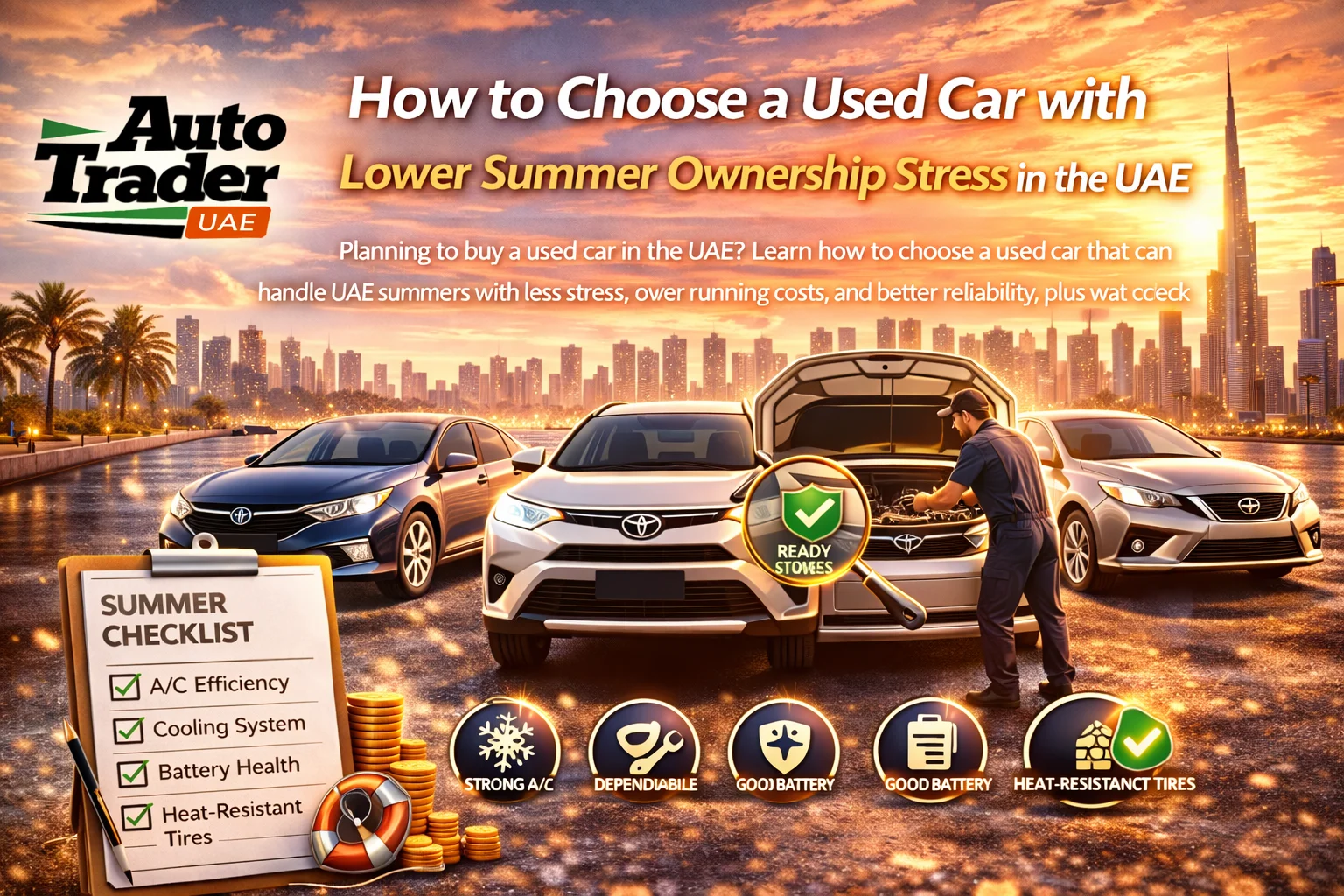
How to Choose a Used Car with Lower Summer Ownership Stress in the UAE
Living with a car in the UAE’s extreme summer heat is very different from driving in milder climates. Temperatures above 45°C, strong sun, sand, and humidity quickly expose weak air-conditioning, tired batteries, and poor-quality cooling systems. If you’re shopping for a used car, choosing wisely now can save you money, time at the workshop, and a lot of summer stress later. This guide walks you through what to look for to keep ownership easy and affordable in the UAE.
1. Start with the Right Type of Used Car
Before diving into specific checks, narrow down the type of car that fits your budget and lifestyle while staying stress‑free in summer.
1.1 Consider your daily use
- Mainly city driving: Compact hatchbacks and small sedans are usually cheaper to run, easier to park, and use less fuel.
- Regular highway commuting: A comfortable sedan or crossover with stable high‑speed manners and good fuel efficiency makes long drives easier.
- Family and school runs: Crossovers and mid‑size SUVs offer better space, but check running costs and tyre prices.
- Occasional desert or off‑road: Choose serious 4x4s with proper cooling and off‑road hardware – but be prepared for higher fuel and maintenance costs.
1.2 Balance age, mileage, and budget
For lower summer stress, aim for the “sweet spot” of age and mileage:
- 3–7 years old: Often a good compromise between price, modern safety/comfort tech, and remaining lifespan.
- Mileage: In the UAE, 15,000–25,000 km per year is common. A car with 90,000 km over 4 years can be normal if well maintained.
- Service history matters more than mileage alone: A higher‑mileage car with full agency or specialist history can be less risky than a low‑mileage car with missing records.
Use Auto Trader UAE’s used car filters to compare prices, mileage, and year side‑by‑side. This quickly shows you what is realistic for your budget.
2. Prioritise Summer‑Proof Reliability
The UAE climate stresses some components more than others. Focus on models and engines known to cope well with heat.
2.1 Research model reliability in hot climates
Before you visit a car, search owner reviews and regional forums – especially from Gulf markets – for feedback on:
- Engine overheating issues
- Weak A/C performance
- Electronics and sensor failures due to heat
- Transmission problems in stop–go traffic and high temperatures
On Auto Trader UAE, browse different generations of the same model to see if there were known issues in specific model years.
2.2 Choose simpler, proven mechanicals
As a rule of thumb, if you want low stress and predictable costs in summer:
- Prefer non‑turbo petrol engines over small turbo units, unless the turbo engine is known to be robust here.
- Be cautious with complex dual‑clutch gearboxes in heavy city use; check their local reliability record.
- Hybrid and EVs can work well, but check battery warranty coverage and dealer support in the UAE.
2.3 Think about parts and service availability
Some brands have widespread dealer and independent workshop support in the UAE, with easily available parts. Others might mean longer waits and higher prices.
If you plan to keep the car 5–8 years, availability of affordable parts and good workshops is a major contributor to low‑stress ownership.
3. Air‑Conditioning: Your Number One Priority
In UAE summers, a weak or unreliable A/C can make daily driving miserable and even unsafe. Always check the system thoroughly before buying any used car.
3.1 How to test the A/C on a viewing
- Start the car, let it idle, and set A/C to the coldest setting with fan at medium–high.
- Allow a few minutes, then check if the air is genuinely cold, not just “cool”.
- Leave the car in the sun with doors closed for several minutes, then sit inside and see how quickly it cools down.
- Check rear A/C vents (if equipped) – important for families.
- Listen for unusual compressor noises and check if the engine idle remains stable when the A/C cycles on.
3.2 Red flags in used car A/C systems
- Visible leaks or oil stains on A/C lines or condenser.
- Bad smells that don’t disappear – may indicate mould in the system.
- A compressor that cuts in and out frequently, or doesn’t engage at all.
Any serious A/C repair in the UAE can be costly. It’s worth negotiating the price or asking for an independent inspection if you notice issues.
4. Cooling System and Heat Management Checks
Engines and transmissions work extra hard in UAE heat. A healthy cooling system reduces breakdown risk and protects your engine.
4.1 What to inspect
- Radiator and coolant: Look for clean coolant at the correct level. Brown, rusty, or oily coolant is a warning sign.
- Radiator fins: Excessive damage, bent fins, or sand buildup can hurt cooling efficiency.
- Cooling fans: Check that both fans (if applicable) run when the A/C is on and the car is idling.
- Hoses: Squeeze them gently when the engine is cool. They should feel firm but not rock‑hard or cracked.
- Temperature gauge: During a test drive, ensure it stays steady in the normal range, even in slow traffic with A/C on.
4.2 Heat‑stressed components to watch
- Batteries: Heat shortens battery life. Check age (usually printed on the battery) and plan to replace if it’s close to 3 years or older.
- Tyres: Look for cracks on the sidewalls, uneven wear, and confirm the manufacture date (older than 4–5 years is a risk in UAE heat).
- Belts and rubber parts: Cracked or shiny belts can fail faster in hot weather.
An independent pre‑purchase inspection can catch many of these problems before you commit.
5. Running Costs: Fuel, Maintenance, and Repairs
Owning a used car with low summer stress isn’t only about avoiding breakdowns; it’s also about predictable, manageable costs.
5.1 Fuel economy vs. real‑world use
Official fuel economy figures rarely reflect UAE summer traffic with constant A/C. Look for owner feedback, and consider:
- Smaller, naturally aspirated petrol engines typically offer a good balance of reliability and efficiency.
- Heavy SUVs and powerful engines will use more fuel – budget accordingly.
- Hybrids can save fuel in city traffic, but check long‑term battery and system reliability in local conditions.
5.2 Service intervals and typical costs
- Check the recommended service interval (e.g., every 10,000 or 15,000 km) and whether shorter intervals are advised for severe conditions.
- Price basic services (oil, filters, A/C service) at both agency and reputable independent workshops.
- Ask for a list of major replacement items due soon: brakes, tyres, timing belt/chain, suspension.
A car that is slightly more expensive to buy but cheaper to service over 5–7 years is often the better long‑term choice.
5.3 Check the service history carefully
For UAE use, a strong, documented service history is one of the best protections against summer headaches:
- Look for regular, on‑time services with stamps or invoices.
- Confirm that major services (such as transmission fluid changes) were done at the correct mileage.
- Be cautious if there is a long gap or missing records, especially in the first few years of the car’s life.
6. Insurance and Registration: Hidden Stress Factors
Some used cars are cheap to buy but expensive or complicated to insure and register.
6.1 Estimate insurance costs before you buy
- Obtain quotes for the specific car (brand, model year, engine size, and your driving history).
- Sporty models, luxury brands, and cars with expensive parts generally have higher premiums.
- Check whether you need agency repair coverage or are happy with approved non‑agency workshops.
6.2 Check for accident history
- Ask the seller about previous accidents and request any repair records.
- Look for inconsistent paint, panel gaps, or overspray that might indicate body repairs.
- If accident damage is suspected, consider a professional inspection or body shop evaluation.
A major-accident car can bring registration issues, higher wear on components, and lower resale value later.
7. Practicality and Comfort in Summer Use
Everyday usability matters more when it’s 45°C outside. Small details can dramatically affect summer comfort and convenience.
7.1 Cabin comfort and materials
- Seat material: Fabric seats stay cooler than dark leather; ventilated seats are a plus if available.
- Cabin colour: Light‑coloured interiors reflect heat better than all‑black cabins.
- Sun protection: Factory‑tinted glass or legal-quality window tint helps keep the cabin cooler and protects trim.
7.2 Space and practicality
- Check rear space if you have children or often carry passengers – cramped back seats become much worse in the heat.
- Look for usable boot space for strollers, groceries, and weekend luggage.
- Check how easy it is to fit child seats, including ISOFIX points and door opening angles.
7.3 Technology that actually helps in summer
- Keyless entry and start so you can get in and go quickly.
- Remote start (where legal and available) to cool the car before you get in.
- Rear A/C vents and climate control for better temperature balance.
8. Resale Value and Long‑Term Ownership
Even if you plan to keep the car for many years, thinking about resale now can reduce your risk and total cost of ownership.
8.1 Choose models with stable demand
In the UAE, cars that are popular with families, fleets, and ride‑hailing drivers often have more predictable resale. Check Auto Trader UAE listings to see:
- How many similar cars are available.
- Typical asking prices for your target age and mileage.
- How quickly well‑priced examples seem to sell.
8.2 Avoid heavy modifications
Extensive modifications – suspension lifts, performance tuning, aftermarket body kits – can:
- Reduce reliability under heat stress.
- Complicate insurance and registration.
- Limit your future buyer pool.
For low stress, a mostly stock, well‑maintained car is almost always the safer choice.
9. Essential Checks Before You Commit
To keep ownership stress low, always perform proper checks before transferring any money.
9.1 Must‑do steps
- Check the chassis and engine numbers match the registration card.
- Request a full service history and any major repair invoices.
- Arrange a pre‑purchase inspection at an independent workshop or testing centre, including A/C performance, cooling system, suspension, and underbody.
- Test drive in real conditions – including some time in traffic with A/C on.
9.2 Questions to ask the seller
- Has the car been used off‑road or for commercial purposes?
- Any overheating incidents or repeated A/C repairs?
- Why are you selling, and how long have you owned it?
- Where was maintenance usually done – agency or independent garage?
The answers will help you judge how the car has been treated and what to expect in future.
10. Using Auto Trader UAE to Find a Low‑Stress Summer Car
Auto Trader UAE can simplify your search for a used car that can handle UAE summers.
- Use filters to narrow by year, mileage, price, fuel type, and body style.
- Compare multiple similar listings to understand fair pricing for your chosen model.
- Browse model‑specific pages and ownership articles to learn about common issues and running costs.
- Shortlist cars with clear photos, detailed descriptions, and mentioned service history.
By combining smart research with the right tools, you can choose a used car that offers strong A/C, reliable cooling, predictable costs, and calm ownership throughout the UAE summer.
Conclusion
Choosing a used car with lower summer ownership stress in the UAE comes down to three things: picking a reliable, heat‑tolerant model; confirming its condition with proper inspections; and understanding the true long‑term costs of fuel, maintenance, and insurance. When you’re ready to start shopping, explore the wide range of used cars on Auto Trader UAE. With detailed listings, filters, and related ownership guides, you’ll be better equipped to find a car that keeps you cool, safe, and stress‑free through many UAE summers to come.
Before deciding, browse used cars in Dubai and across the UAE on Auto Trader UAE to compare condition, mileage, pricing, and seller details for models that fit your ownership goals.
Related Links
Buyer Takeaway
When buying a used car in the UAE, focus on vehicle condition, service history, inspection quality, paperwork, and total running costs rather than price alone. Compare options carefully and choose the option that best matches your budget and real needs.
Seller Takeaway
If you are selling a used car in the UAE, present the service history clearly, price the vehicle realistically, and highlight condition, specification, and ownership strengths honestly. A well-prepared listing with accurate details usually attracts more serious buyers.