
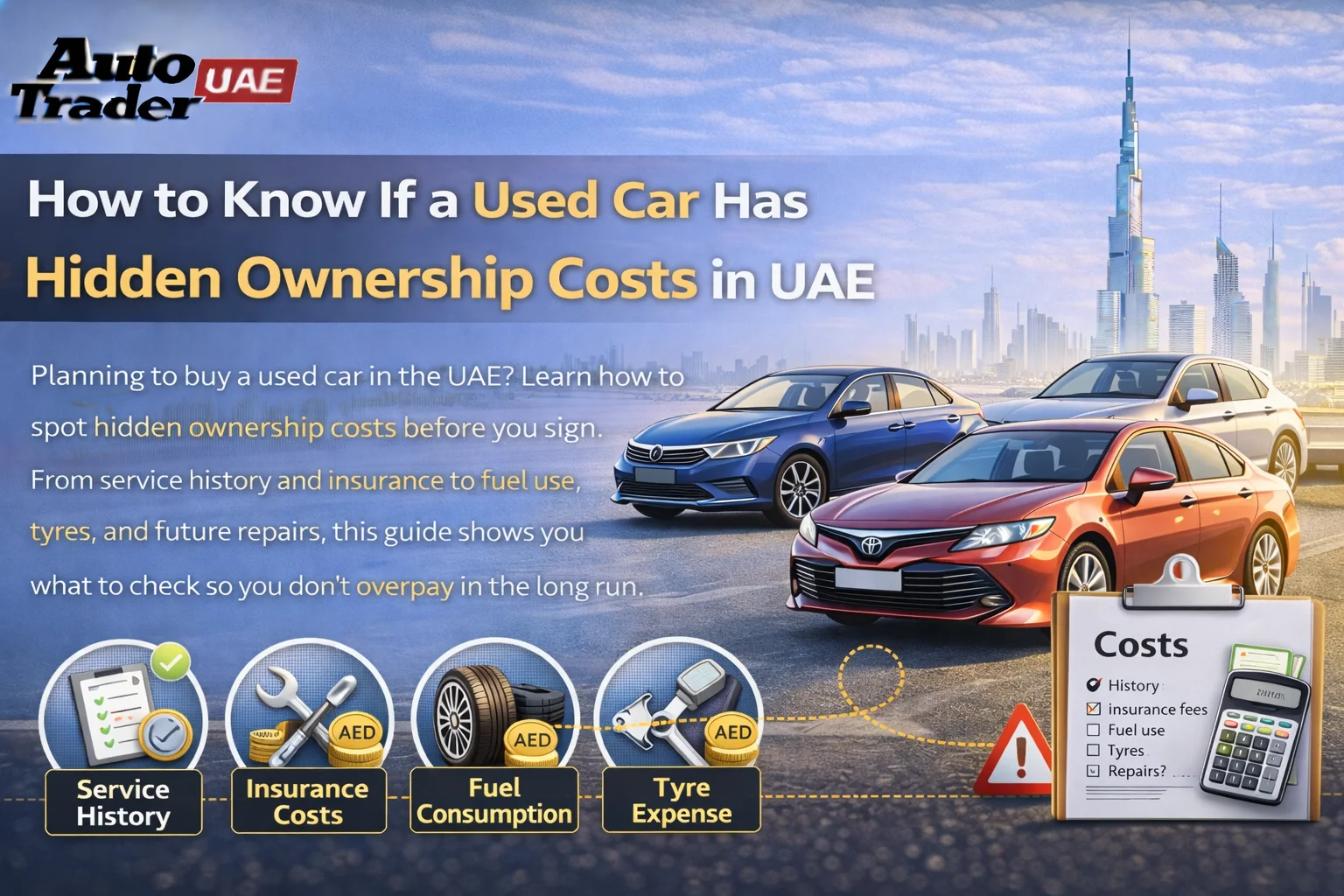
How to Know If a Used Car Has Hidden Ownership Costs in UAE
Buying a used car in the UAE can save you a lot compared with a brand‑new model, but only if you avoid hidden ownership costs. A car that looks like a bargain on the day you buy it can quickly become expensive when you add fuel, insurance, tyres, servicing, and unexpected repairs. This guide from Auto Trader UAE explains how to know if a used car has hidden ownership costs in the UAE, and what to check before you commit.
1. Understand the Real Cost of Owning a Used Car in UAE
When you’re comparing used cars, don’t look only at the asking price. In the UAE, long‑term ownership costs typically include:
- Fuel – depends on engine size, type (turbo, hybrid, etc.), and how you drive.
- Insurance – affected by car value, safety features, driver profile, and accident history.
- Registration and testing – annual renewal, inspections, and fines if something fails.
- Routine servicing – oil changes, filters, fluids, spark plugs, belts, etc.
- Wear items – tyres, brake pads and discs, suspension parts, battery, and A/C components.
- Unplanned repairs – electronics, gearbox, engine work, air suspension, infotainment units.
- Depreciation – loss of value when you resell or trade in.
- Parking, Salik, and fines – especially if you commute daily or live in busy areas.
A car that is cheap to buy but heavy on fuel, tyres, or repairs can end up costing more than a higher‑priced, reliable model over a few years.
2. Check the Service History Carefully
A complete and honest service history is one of the best indicators of future ownership costs.
What a good service history looks like
- Stamped service book or digital records.
- Regular servicing intervals (typically every 10,000 km or 12 months, or as per manufacturer).
- Invoices from an authorised dealer or reputable workshop.
- Major items (timing belt/chain service, transmission service, coolant, brake fluid) done on time.
Red flags that mean higher future costs
- Missing records for long periods or high kilometre jumps with no invoices.
- Very cheap or unknown workshops for complex work like transmission or electrical repairs.
- Repeated repairs of the same item – may indicate an unresolved issue.
- Skipped scheduled services – e.g., timing belt never replaced despite high mileage.
If the seller claims “full service history” but can’t prove it, assume you may face catch‑up maintenance costs after purchase.
3. Estimate Fuel Costs for Your Daily Use
Fuel may be cheaper in the UAE than in many countries, but it’s still a major running cost if you drive daily or cover long distances.
How to estimate fuel cost
- Check the car’s stated fuel consumption (on official specs, reviews, or manufacturer website).
- Adjust for UAE conditions – heavy traffic, short trips, and A/C use often increase real consumption.
- Estimate your annual mileage (work commute, school runs, weekend trips).
- Use a simple calculation: litres per 100 km × annual km ÷ 100 × fuel price.
When fuel costs become a hidden burden
- Large V6/V8 engines if you commute daily or drive mainly in city traffic.
- Older turbocharged engines driven hard or poorly maintained.
- Heavy SUVs used mostly for solo commuting instead of family use.
If you find two used cars you like on Auto Trader UAE, compare their real‑world fuel economy. Over 3–5 years, the difference can be thousands of dirhams.
4. Understand Insurance Costs Before You Buy
Insurance premiums in the UAE vary significantly between models, even with the same driver.
What makes insurance more expensive?
- High car value – luxury and performance models cost more to repair or replace.
- Expensive parts – imported brands or rare models may mean pricy genuine parts.
- Powerful engines – higher risk cars often carry higher premiums.
- Previous accident history – a car with claims may be more expensive to cover.
- Age of car – for very old cars, you may be limited to third‑party cover.
How to avoid hidden insurance shocks
- Get at least two or three insurance quotes using the exact car details (year, spec, chassis number if possible).
- Ask about agency vs non‑agency repair and how that affects cost.
- Check if common extras (GCC coverage, roadside assistance, hire car) are included or add‑ons.
A car with a low purchase price but high insurance premium can quickly eat into your budget.
5. Inspect Tyres, Brakes, and Wear‑and‑Tear Items
Cars in the UAE face extreme heat, sand, and stop‑start traffic. That accelerates wear on tyres, brakes, and suspension.
Tyres
- Check tread depth – if tyres are nearly worn, budget for a full set soon.
- Look at the manufacturing date on the sidewall (week and year). Old tyres (around 5 years or more) may need replacement even if not fully worn.
- Premium SUVs or performance cars often require large, expensive tyres.
Brakes and suspension
- Listen for squeaks, grinding, or vibrations when braking.
- Check invoices to see when brake pads or discs were last replaced.
- On a test drive, note any knocking sounds over bumps, or a loose feeling in the steering – may mean work is due on suspension or steering components.
Replacing tyres, brakes, and suspension parts on some models can cost much more than on others. This is one of the most common hidden ownership costs for used cars in the UAE.
6. Look Out for Costly Technology and Features
High‑spec cars are attractive, but some features can be expensive to repair when buying used.
Features that can increase long‑term costs
- Air suspension – great comfort, but repairs or replacement are costly if components fail.
- Complex infotainment systems – integrated screens, premium audio, and navigation can be expensive to fix or replace.
- Advanced driver‑assistance systems (cameras, radar, sensors) – calibration and replacement can be costly after a minor accident.
- Panoramic sunroofs – leaks or mechanism failures can be expensive in labour and parts.
This doesn’t mean avoiding these features entirely, but factor in the risk. If the car is out of warranty, consider whether you’re comfortable handling potential repair bills.
7. Consider Brand Reputation, Parts Prices, and Workshop Options
Beyond the specific car, some brands are generally cheaper to run in the UAE than others.
What to look at:
- Availability of spare parts – common makes usually have strong parts availability through both dealers and independent suppliers.
- Cost of routine parts – prices for filters, brake pads, and suspension vary widely between brands.
- Number of good independent workshops – if there are many, you can shop around for competitive labour rates.
- Online owner feedback – UAE‑based forums and groups can reveal common issues and typical repair costs for certain models.
If you’re not sure, shortlist some models you like on Auto Trader UAE, then research which are known for reliability and reasonable maintenance costs in local conditions.
8. Check for Accident Damage and Structural Issues
A car with a hidden accident history may be cheaper to buy but expensive to own. Misaligned panels, poor paintwork, or hidden structural damage can lead to repeated repairs, tyre wear, and safety issues.
What you can do in the UAE
- Visually inspect gaps between body panels and look for mismatched paint.
- Look for overspray on rubber seals or trim, which can suggest repainting.
- Check that all doors, boot, and bonnet open and close smoothly and align properly.
- Review any police or insurance reports the seller can provide.
- Consider a pre‑purchase inspection by a trusted workshop or inspection centre.
Hidden accident damage can affect resale value and lead to ongoing alignment, suspension, or electronic issues.
9. Think About Resale Value in the UAE Market
Even if you plan to keep the car for years, resale value still matters. A car that depreciates heavily can be a hidden cost when you decide to upgrade.
What usually protects resale value?
- Popular brands with strong presence in the UAE.
- GCC‑spec vehicles with documented history.
- Neutral colours and common trim levels.
- Low to average mileage with clean records.
- Regular servicing and invoices kept in a file.
Use Auto Trader UAE listings to see how similar cars are priced, how quickly they sell, and how much value they seem to lose over time.
10. Budget for Climate‑Specific Costs in UAE
UAE heat, humidity, and dust create extra wear compared with many other countries.
Areas to pay special attention to
- Air conditioning – test thoroughly. Weak cooling, smells, or strange noises may signal upcoming bills.
- Battery – batteries often have shorter life in hot climates. Check age and condition.
- Cooling system – watch the temperature gauge on a test drive, and look for coolant leaks or old hoses.
- Interior condition – sun‑damaged dashboards, cracked leather, and faded plastics can affect comfort and resale.
Cars that have been regularly parked in covered areas or garages often age better and cost less to refresh.
11. Use a Checklist Before Committing
Before you transfer ownership, run through a simple checklist:
- Verified service history and major maintenance completed.
- Tyres and brakes with enough life left.
- Insurance quotes obtained and understood.
- Fuel consumption estimated for your actual daily use.
- No serious accident or flood damage signs.
- All electrical features (A/C, windows, infotainment, cameras, sensors) working correctly.
- Pre‑purchase inspection done, or at least a test drive on mixed roads.
If any item on this list worries you, either negotiate the price to cover expected repairs or walk away and keep browsing.
12. How Auto Trader UAE Can Help You Avoid Hidden Costs
Auto Trader UAE is designed to make used car buying more transparent and informed.
- Wide range of used car listings – compare prices, specs, and conditions across many brands and models.
- Filters for budget and body type – focus on cars that fit your long‑term running cost expectations, not just the purchase price.
- Related guides and ownership articles – learn about maintenance, insurance, and reliability for different types of vehicles.
- Research by make and model – understand typical issues and market values so you can negotiate with confidence.
By combining careful checks with the tools and listings on Auto Trader UAE, you can spot hidden ownership costs early and choose a used car that suits both your lifestyle and your long‑term budget.
Next step: Use Auto Trader UAE to shortlist a few used cars within your budget, then apply the checks in this guide to each one. With a little preparation, you can enjoy worry‑free ownership and better value over the years you keep your car in the UAE.
Before deciding, browse used cars in Dubai and across the UAE on Auto Trader UAE to compare condition, mileage, pricing, and seller details for models that fit your ownership goals.
Related Links
Buyer Takeaway
When buying a used car in the UAE, focus on vehicle condition, service history, inspection quality, paperwork, and total running costs rather than price alone. Compare options carefully and choose the option that best matches your budget and real needs.
Seller Takeaway
If you are selling a used car in the UAE, present the service history clearly, price the vehicle realistically, and highlight condition, specification, and ownership strengths honestly. A well-prepared listing with accurate details usually attracts more serious buyers.
Conclusion
A careful used car purchase in the UAE starts with research, proper inspection, and clear paperwork before making the final decision.