
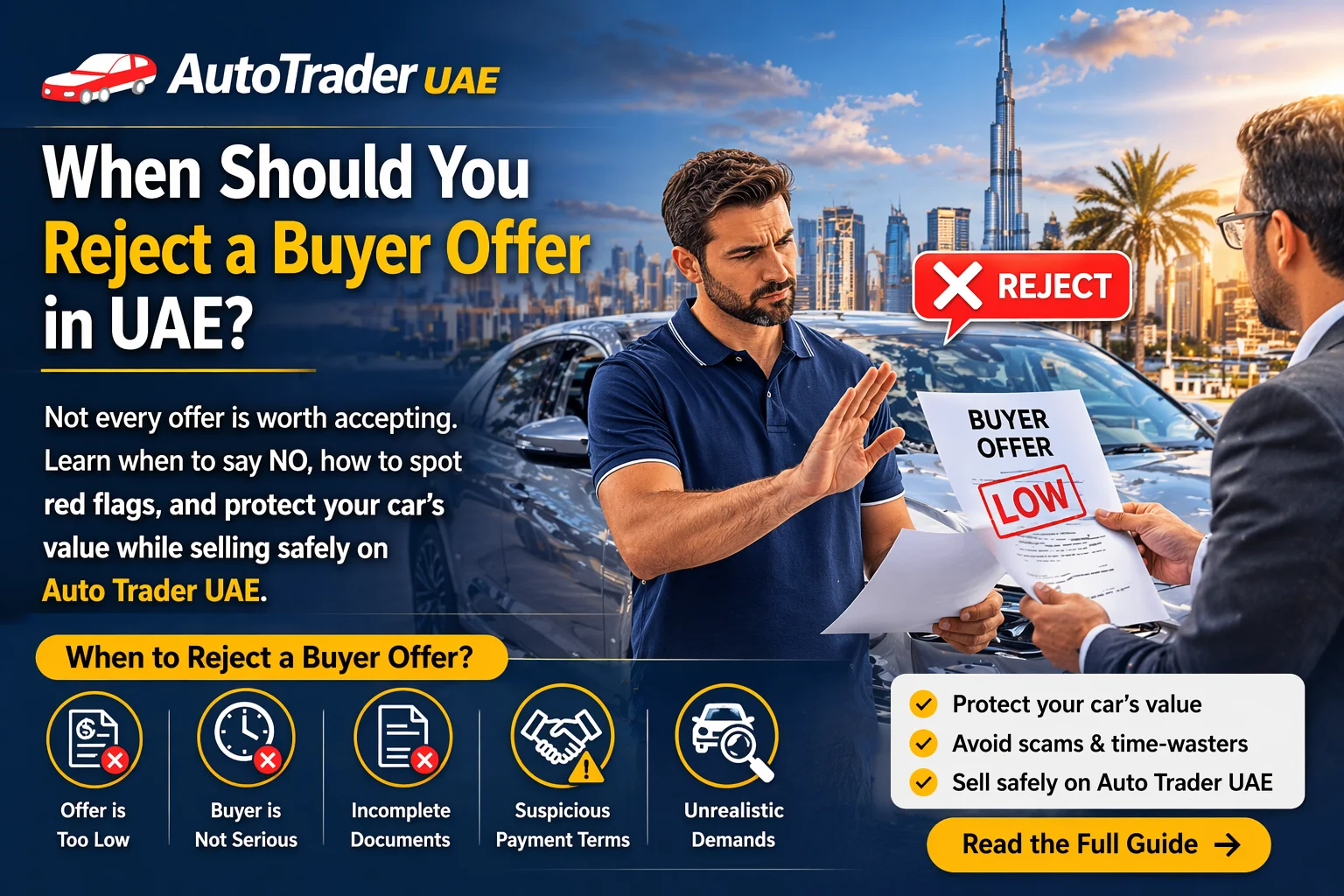
When Should You Reject a Buyer Offer in UAE?
Selling a car in the UAE can move fast, especially when you advertise on trusted platforms like Auto Trader UAE. But speed should never come at the cost of safety or price. Knowing when you should reject a buyer offer in UAE is just as important as recognising a good one.
This guide explains the key warning signs, fair pricing tips, and negotiation strategies so you can say “no” with confidence, and hold out for the right buyer.
When Is It Right to Reject a Buyer Offer?
You don’t have to accept every offer that comes your way. In many situations, rejecting an offer is the smartest, safest, and most profitable choice.
1. The Offer Is Far Below Market Value
If a buyer’s first offer is extremely low compared to market prices, it’s a strong reason to reject or firmly counter.
- Your car is well-priced based on age, mileage, and condition.
- You’ve checked similar listings on Auto Trader UAE and other portals.
- The offer is 15–30% (or more) below fair market value with no solid reason (e.g. major defects).
What to do:
- Politely share your asking price logic (service history, options, new tyres, GCC specs, etc.).
- Make a realistic counter-offer if you are willing to negotiate.
- If the buyer is still unreasonably low, walk away. Serious buyers will pay close to market value for a well-maintained car.
2. The Buyer Refuses a Proper Inspection
In the UAE, it’s standard for used cars to go through an RTA-approved test centre (like RTA, Tasjeel, Shamil, or other recognised inspection services) before finalising the deal.
Be cautious if a buyer:
- Refuses any independent inspection.
- Insists on a quick “cash only, no test” deal.
- Wants to skip RTA testing or avoid official channels.
Why you should reject: Transparent buyers are usually happy with inspection – it protects both sides. Avoiding tests can indicate hidden issues, potential fraud, or future disputes about the car’s condition.
3. Payment Terms Feel Risky or Unclear
How you get paid is just as important as the price.
Reject offers when buyers:
- Insist on paying later after the car is transferred.
- Offer post-dated cheques or multiple instalment cheques without any legal contract or dealer involvement.
- Propose transferring money from an overseas account after you hand over the car.
- Suggest meeting somewhere unusual to exchange large cash amounts.
Safer alternatives:
- Instant bank transfer while you are together at the RTA service centre.
- Cash deposit made in front of you at a bank branch (not in a car park).
- Payment handled via an authorised dealer or reputable showroom when selling through them.
4. The Buyer Pressures You to Decide Immediately
Some buyers try to rush the process so you don’t have time to think, compare, or check details.
Consider rejecting if the buyer:
- Insists you accept on the spot “or the offer is gone”.
- Wants you to skip reading documents or skipping test drives.
- Gets angry or pushy when you say you need time to consider.
Red flag: Genuine buyers know a car is a major purchase. They may move quickly, but they rarely force you or make you uncomfortable.
5. The Offer Ignores Your Car’s Condition and History
If you have:
- Full service history from an agency or trusted garage.
- New tyres, brakes, or battery.
- Low mileage for the model year.
- GCC specs (often preferred in the UAE).
…you can justify a stronger asking price compared to similar cars without these advantages.
If a buyer completely ignores this added value and insists on a “scrap price”, you’re rarely dealing with a fair offer. It’s often better to reject and wait for buyers who appreciate documented maintenance.
6. The Buyer’s Story or Documents Don’t Add Up
Protect yourself by paying attention to inconsistencies. Warning signs include:
- Buyer’s ID doesn’t match the name on their payment method.
- They avoid sharing basic details or showing Emirates ID/driver’s licence at RTA transfer.
- They insist on registering the car in someone else’s name without clear reason or legal documentation.
If anything feels suspicious, you are under no obligation to continue the sale. Politely reject the offer and stop communication.
7. The Buyer Keeps Changing the Deal at the Last Minute
Some buyers agree on a price, then try to renegotiate at the RTA centre or right before payment.
For example:
- Claiming new “problems” they just discovered to force a big discount.
- Changing payment method unexpectedly (from cash to cheque, from instant transfer to later transfer).
- Asking you to pay their transfer fees or traffic fines that were never discussed.
How to respond: You can always reject the new terms and walk away. Your time is valuable, and a buyer who changes the rules at the last minute is unlikely to be reliable.
How to Know If the Offer Is Fair in the UAE Market
Before you reject any buyer offer, make sure your own expectations are realistic for the UAE used car market.
1. Compare Similar Listings
Browse Auto Trader UAE for cars similar to yours:
- Same make, model, year.
- Similar mileage and trim level.
- Similar condition and options (sunroof, leather, advanced safety, etc.).
This gives you a live picture of what real buyers are paying and helps you recognise a fair offer when it comes.
2. Adjust for Condition and Costs
Be honest about your car’s weaknesses:
- Major service due soon (gearbox, timing belt, suspension).
- Cosmetic damage (paint, dents, interior wear).
- Pending repairs or warning lights.
Serious buyers will factor these into their offer. If your price doesn’t reflect necessary work, a lower offer may still be reasonable.
3. Consider How Quickly You Need to Sell
If you need to sell urgently (leaving the country, upgrading soon, or avoiding storage costs), it may be worth accepting a slightly lower but safe and clean offer rather than holding out for the highest possible price.
However, urgency should never force you into a risky payment arrangement or a deal that feels wrong. Safety first, price second.
When to Negotiate Instead of Rejecting
You don’t always need to reject immediately. Sometimes the buyer’s first offer is a starting point for a fair agreement.
It’s worth negotiating when:
- The buyer is respectful and transparent.
- Their offer is slightly below your target, not extremely low.
- They accept proper inspection and safe payment methods.
- Differences are mostly about minor issues (small scratches, tyre wear, etc.).
Simple negotiation tip: Decide your minimum acceptable price before any meeting. If the offer is above that and the buyer is genuine, work towards a win–win deal.
Red Flags That Deserve an Immediate "No"
Some situations justify an instant rejection, no matter how good the price sounds.
- Unwilling to use official RTA transfer or avoiding proper ownership change.
- Suspicious payment methods (foreign transfers after handover, unknown third-party payers, or large cash deals in private, isolated locations).
- Refusal to share ID or show up at official centres.
- Extreme pressure tactics or aggressive behaviour.
- Too many excuses for why they can’t follow normal, safe procedures.
In these cases, your safest move is to firmly, politely reject and look for another buyer.
How to Politely Reject a Buyer Offer in the UAE
Protecting yourself doesn’t have to create conflict. You can be firm and respectful at the same time.
Examples of polite rejection messages:
- “Thank you for your interest. I’ve checked current market prices and I can’t go that low. I’ll wait for another offer.”
- “I only complete sales with inspection and RTA transfer. If that doesn’t work for you, I’ll have to decline.”
- “For safety reasons, I only accept full payment at RTA transfer by bank transfer or cash deposit at the bank. I can’t proceed with cheques or delayed payment.”
Setting clear conditions helps serious buyers respect your process and quickly filters out risky ones.
Buyer Takeaway: Respecting the Seller’s Limits
If you’re a buyer in the UAE, understanding why sellers may reject your offer can help you secure better deals:
- Do your homework on prices before offering.
- Be ready to go for inspection and RTA transfer.
- Use safe, clear payment methods.
- Respect that sellers have a minimum price and safety conditions.
Approaching the deal professionally builds trust and increases your chances of getting the car you want at a fair price.
Seller Takeaway: Protect Price and Safety First
As a seller in the UAE, remember:
- You are never obliged to accept a suspicious or unfair offer.
- Market knowledge helps you distinguish between lowball and fair negotiation.
- RTA transfer, proper inspection, and safe payment are non-negotiable.
- Polite but firm rejection can save you from financial loss and legal trouble.
Conclusion: Use Trusted Platforms and Clear Rules
Knowing when you should reject a buyer offer in UAE gives you control of the selling process. If the price is far below market, payment is risky, inspection is refused, or the buyer makes you uncomfortable, it’s wise to say no and move on.
Listing your car on Auto Trader UAE connects you with a wide pool of serious buyers actively searching for used cars across the Emirates. Present your car honestly, set clear conditions, and don’t be afraid to reject offers that don’t meet your standards. The right buyer will value a transparent, well-documented car – and will pay accordingly.
Ready to meet better buyers? Start by creating a detailed listing on Auto Trader UAE and explore our other selling guides to make every step of your sale safer and smoother.
If you are exploring used cars in Dubai or elsewhere in the UAE, Auto Trader UAE makes it easier to compare listings, prices, trims, mileage, and seller details in one place.