
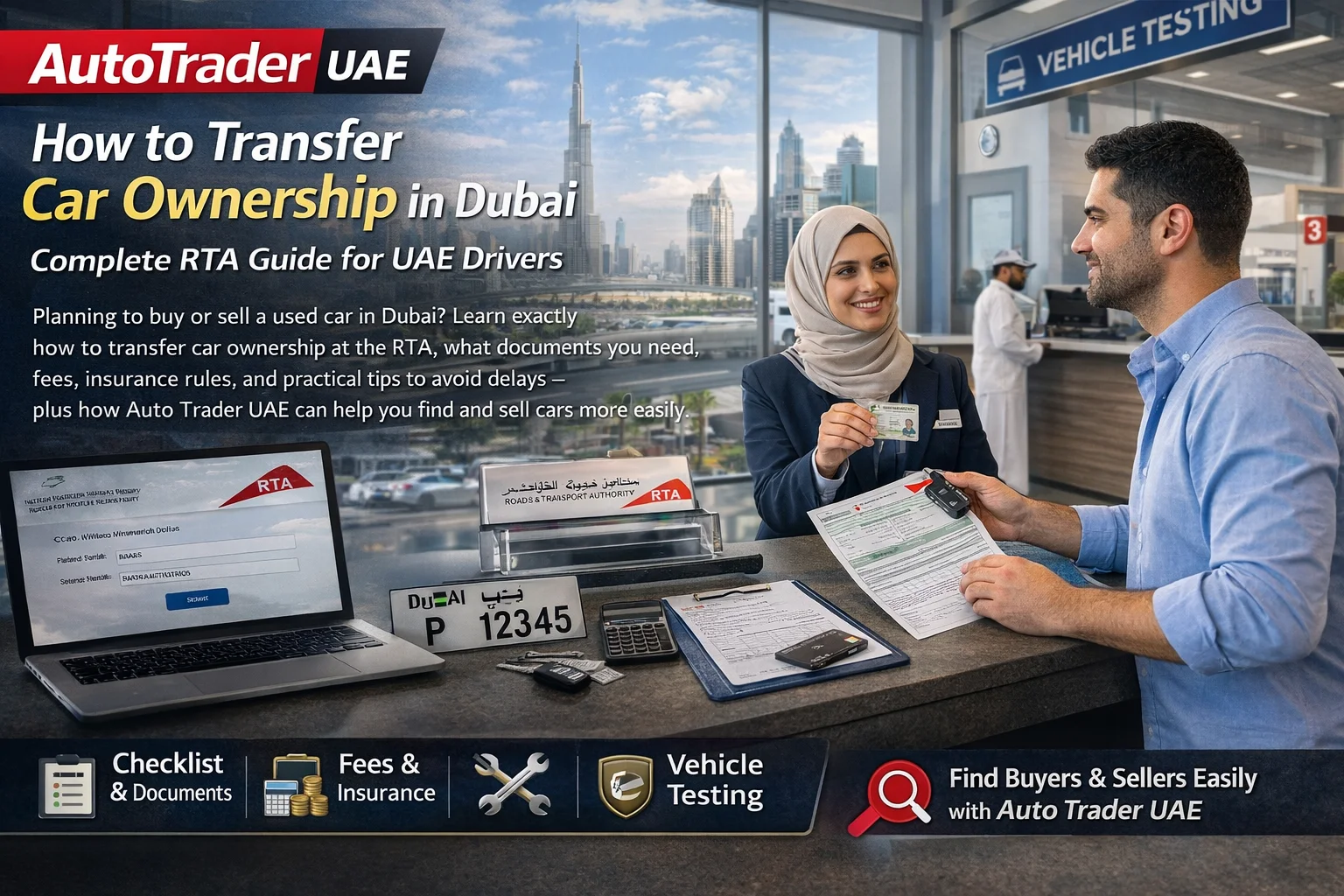
How to Transfer Car Ownership in Dubai: Complete RTA Guide
Transferring car ownership in Dubai is straightforward when you know the exact steps, fees, and documents. Whether you’re buying or selling a used car, doing the transfer correctly protects both parties and keeps you legal on UAE roads. This guide explains how to transfer car ownership in Dubai through the RTA, what it costs, how insurance and finance affect the process, and some ownership tips about running costs, maintenance, and resale value. Throughout, we’ll highlight where Auto Trader UAE can make the process smoother.
1. Basic Rules for Car Ownership Transfer in Dubai
Before you start, it helps to understand the basic RTA rules that apply across Dubai and the wider UAE:
- Buyer and seller must both be present at an RTA Customer Happiness Centre or approved service center (unless you use an authorised representative with a power of attorney).
- The car must pass an RTA vehicle inspection if it is older than three years (some newer cars may be exempt, but an inspection is still recommended for peace of mind).
- The seller must clear all outstanding fines and Salik (or tolls) linked to the car plate or traffic file before transfer.
- The buyer must have valid UAE car insurance in their name on the same day as registration.
- The vehicle must not have any active bank loan (mortgage) registered. If it does, the loan has to be released electronically before transfer.
- Only UAE residents with a valid residence visa and Emirates ID can register a vehicle in their name in Dubai (with limited exceptions for GCC nationals, diplomats, and companies).
These rules apply regardless of whether you found the car through a private ad, a dealer, or an online marketplace like Auto Trader UAE.
2. Required Documents for Buyer and Seller
Having all documents ready will make your RTA visit quick and stress-free.
2.1 Documents Required from the Seller
- Original Emirates ID
- Valid UAE driving licence (sometimes requested)
- Original vehicle registration card (Mulkiya)
- RTA inspection certificate (if required for that vehicle)
- Bank loan release (if the car was under finance)
- Number plate (if you are cancelling or transferring the plate)
- Company documents if the car is under a business name (trade licence, stamp, authorised signatory, etc.)
2.2 Documents Required from the Buyer
- Original Emirates ID
- Valid UAE driving licence
- UAE residence visa (if not on Emirates ID yet, carry passport and visa page)
- Valid motor insurance policy in the buyer’s name, covering the purchased vehicle
- For company buyers: trade licence, company stamp, and authorised signatory documents
Keep digital and paper copies where possible. If you’re planning multiple viewings through Auto Trader UAE listings, it’s good to keep these documents handy so you can move quickly when you find the right car.
3. Step‑by‑Step: How to Transfer Car Ownership in Dubai
Here’s the typical flow when you’re buying or selling a used car in Dubai.
Step 1: Agree the Deal and Collect Basic Details
Once buyer and seller agree on the price:
- Take a clear photo of the registration card so the buyer can check year, specs and chassis number.
- Confirm any remaining warranty or service contract and whether it can be transferred.
- Discuss if the number plate stays with the car or will be retained by the seller (this affects RTA fees).
If you’re still comparing options, you can browse thousands of used cars for sale in the UAE and short‑list your favourites before committing.
Step 2: Vehicle Inspection at an RTA-Approved Centre
If the car is due for an inspection:
- Visit an RTA testing centre (e.g. Tasjeel, Shamil, Wasel, Mumayaz, or similar approved centre).
- The test normally checks brakes, suspension, lights, emissions, and chassis.
- If the car passes, you’ll get an inspection certificate valid for a limited period (often 30 days).
- If it fails, repairs must be completed and the car re‑tested before ownership transfer.
For buyers, this inspection is also a basic health check. When you shortlist a car via Auto Trader UAE, you can ask the seller whether it recently passed RTA testing and request any service history.
Step 3: Clear All Fines and Salik
The seller must clear traffic fines before the RTA will process the transfer.
- Check fines through the RTA app, Dubai Police site, or at RTA kiosks.
- Pay any Salik tolls linked to the plate.
- Make sure there are no pending black points or blocks that might delay the transfer.
Step 4: Release Any Bank Loan (Car Mortgage)
If the car was financed:
- The seller must contact the bank or finance company and settle the remaining loan.
- The bank then sends an electronic clearance (mortgage release) to the RTA system.
- Only after this release appears in the system can the RTA complete the ownership transfer.
Buyers should always confirm that the mortgage is cleared before paying the full amount.
Step 5: Arrange New Insurance in the Buyer’s Name
Ownership cannot be transferred without valid insurance for the new owner.
- The buyer should obtain a new policy quote using the car details and their licence info.
- Decide on Third‑Party Liability vs Comprehensive cover, depending on the car’s age and value.
- Coordinate with the insurer so the policy is active the same day as the RTA visit.
When browsing cars on Auto Trader UAE, take note of the model year, engine size, and safety features, as these affect your insurance premium.
Step 6: Visit the RTA Centre to Complete Transfer
Buyer and seller should visit one of the following:
- RTA Customer Happiness Centres
- RTA‑approved registration centres (Tasjeel, Shamil, etc.)
At the counter:
- Take a ticket and wait for your number.
- Submit all required documents.
- Confirm whether the plate will stay with the car or be changed/retained.
- Pay the ownership transfer fees and any remaining RTA charges.
- The RTA prints a new Mulkiya (registration card) in the buyer’s name.
- The buyer receives the new card and fitment of new plates if applicable.
From that moment, the car is legally under the buyer’s name.
Step 7: Cancel or Move Insurance and Salik
After transfer:
- The seller can cancel their old insurance policy or transfer it to another vehicle if the insurer allows.
- The buyer should update or open a Salik account with the new plate number.
4. Typical Costs of Transferring Car Ownership in Dubai
Exact RTA fees may change over time, but you should budget for:
- Ownership transfer fee: A standard RTA fee for change of ownership, usually different for light vehicles versus motorcycles.
- Knowledge and innovation fees: Small additional charges collected with most RTA services.
- Vehicle inspection fee: Charged if the car needs testing.
- Plate fees: If you issue new plates, upgrade to a special plate, or replace damaged plates.
- Insurance premium: Depends on car type, value, driver age, and claim history.
Always check the latest prices through the official RTA website or app before visiting.
5. How Ownership Transfer Affects Long‑Term Running Costs
Buying a car is only the beginning. In the UAE, long‑term costs matter just as much as the purchase price. A proper transfer process gives you a clean starting point for ongoing ownership.
5.1 Registration and Annual Renewal
Once you transfer ownership, you’ll be responsible for annual registration renewal in your own name.
- Each year you’ll need a valid inspection certificate (for older cars), insurance, and payment of RTA renewal fees.
- Keeping registration on time avoids fines and hassle at renewal.
5.2 Insurance Over the Years
What you choose at ownership transfer sets the tone for future premiums.
- Newer and higher‑value cars usually benefit from Comprehensive insurance.
- As the car ages, some owners move to Third‑Party only to reduce cost, especially for budget cars.
- Clean driving and no claims help reduce premiums steadily.
When comparing cars on Auto Trader UAE, factor in how each model will affect insurance costs over a 3–5‑year period.
5.3 Maintenance and Reliability
A proper ownership transfer is an ideal time to check the car’s maintenance status:
- Ask for service history and major repair invoices.
- Plan an immediate baseline service after purchase: engine oil, filters, fluids, and basic checks.
- Search our guides by make and model to understand common issues and service intervals for the specific car you’re buying.
Well‑maintained cars are more reliable, cheaper to run, and easier to sell later.
5.4 Fuel Economy and Day‑to‑Day Costs
Ownership transfer is also your chance to upgrade to a car that suits your daily use:
- City commuters may prefer fuel‑efficient hatchbacks or crossovers.
- Families might prioritise space, safety features, and comfort.
- High‑mileage drivers should consider engine size, fuel economy, and tyre costs.
Use Auto Trader UAE filters (body type, engine size, fuel type, mileage, year) to find a car with running costs that match your budget.
6. Resale Value and Future Ownership Transfers
Even as you transfer ownership now, it’s smart to think ahead to resale.
6.1 Keeping Your Car Attractive for the Next Buyer
To get a stronger price when you sell in the future:
- Follow regular maintenance at trusted workshops (and keep invoices).
- Fix small cosmetic issues before they turn buyers away (paint, interior trim).
- Avoid unapproved modifications that might cause RTA or insurance issues.
- Renew your Mulkiya on time so the car’s legal status is always clear.
6.2 When You’re Ready to Sell
When it’s time for your next upgrade:
- List your vehicle with clear photos and honest descriptions on Auto Trader UAE.
- Mention recent RTA tests, major services, new tyres, or warranty coverage.
- Use our platform to compare market prices for similar cars, so you don’t under‑ or over‑price your listing.
A clean history and organised paperwork make the next ownership transfer easier and faster for you and your buyer.
7. Common Questions About Car Ownership Transfer in Dubai
Can I transfer car ownership online?
The RTA provides some digital services, but for many private sales you’ll still need to visit a centre for inspection, plate handling, and document verification. Check the RTA app or website for any updated online options.
Can a tourist or visitor transfer a car to their name?
In general, UAE residence and an Emirates ID are required to register a car. Visitors should consult the RTA or a legal advisor for any exceptional cases.
Who pays the transfer fees – buyer or seller?
The RTA doesn’t fix this rule; it’s up to the agreement between buyer and seller. Many buyers agree to pay the registration fee, while the seller clears their fines and loan.
How long does the process take?
If all documents are ready, the RTA visit itself may take 30–60 minutes, depending on queue times and whether vehicle testing is needed.
8. Practical Tips to Avoid Delays
- Visit the RTA centre in the morning on a weekday to avoid peak crowds.
- Check all documents the night before – IDs, insurance, inspection certificate, loan clearance.
- Agree on payment method clearly (bank transfer, cash, manager’s cheque) and avoid transferring money before you’re both at the RTA unless you fully trust the process.
- Double‑check the chassis number on the car, inspection report, and Mulkiya to avoid mistakes.
9. How Auto Trader UAE Helps with Smooth Ownership Transfers
Auto Trader UAE is designed to make the whole journey – from shortlisting a car to completing ownership transfer – as clear and convenient as possible:
- Wide choice of listings: Explore a large selection of used cars across the UAE, from budget daily drivers to premium SUVs.
- Detailed filters and data: Narrow results by price, mileage, year, body type, and location so you only visit cars that truly match your needs.
- Supportive content: Use our ownership guides and reviews to understand maintenance expectations, insurance implications, and reliability of popular models.
- Resale advantage: When you’re ready to sell, our platform helps you reach serious, well‑informed buyers who already understand the RTA transfer process.
Conclusion
Knowing how to transfer car ownership in Dubai gives you confidence to buy and sell used cars safely and legally. With the right documents, cleared fines, insurance in place, and a quick visit to an RTA centre, the process is usually completed in under an hour. If you’re planning your next car or getting ready to sell your current one, start with Auto Trader UAE – compare prices, check real‑world running costs, and use our guides to make every step of ownership in the UAE easier, from the first search to the final signature at the RTA.
Before deciding, browse used cars in Dubai and across the UAE on Auto Trader UAE to compare condition, mileage, pricing, and seller details for models that fit your ownership goals.
Related Links
Buyer Takeaway
When buying a used car in the UAE, focus on vehicle condition, service history, inspection quality, paperwork, and total running costs rather than price alone. Compare options carefully and choose the option that best matches your budget and real needs.