
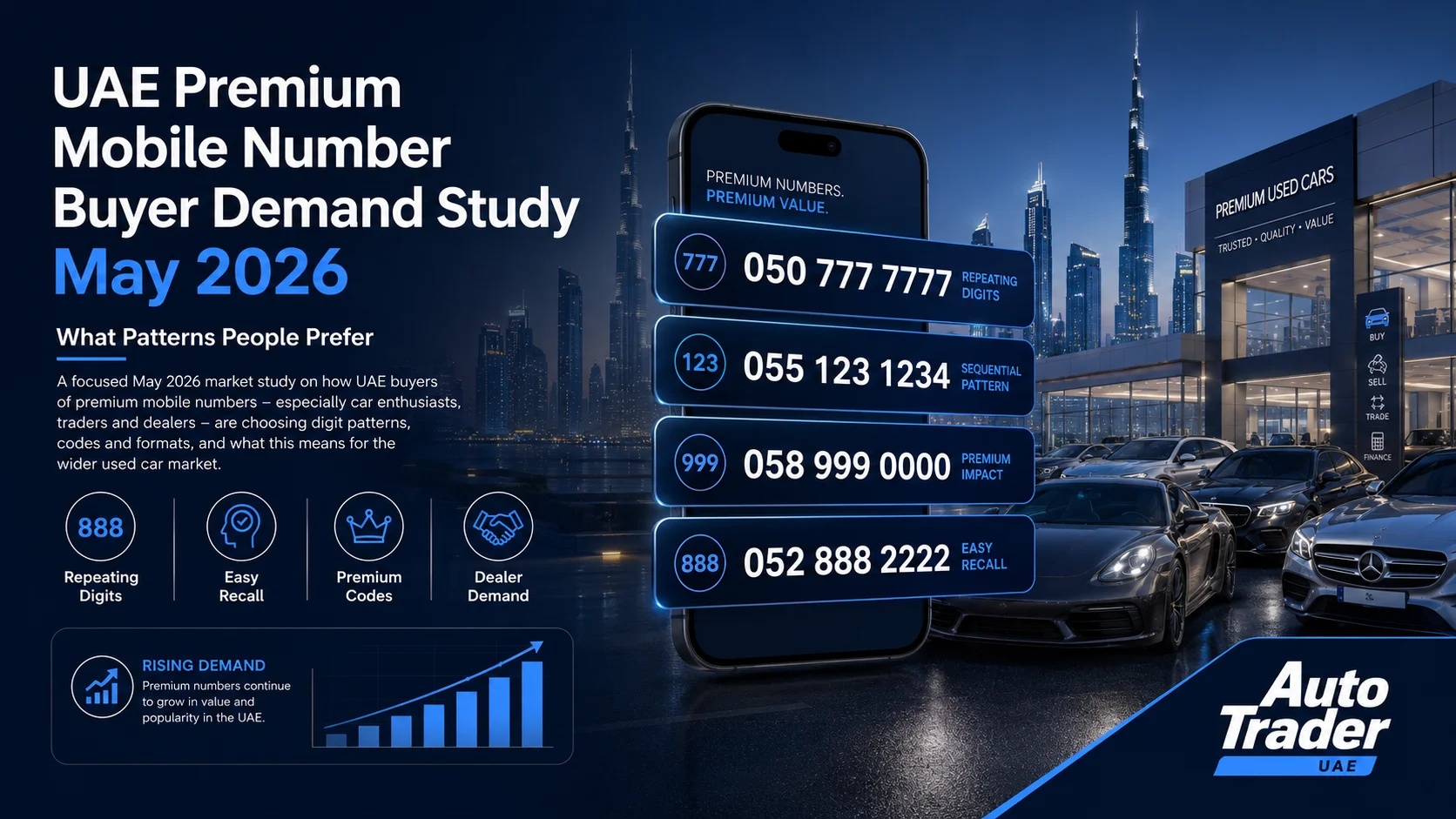
Overview
Premium mobile numbers have become part of the wider status and identity game in the UAE, sitting alongside private plates, performance cars and bespoke car wraps. In May 2026, buyer activity around special-number SIM cards continues to track closely with trends seen in luxury and performance vehicles on Auto Trader UAE. For dealers and private sellers in the used car market, understanding what patterns people prefer in mobile numbers helps to read sentiment at the upper end of demand: when buyers chase distinctive numbers, they are often the same profiles bidding strongly on distinctive plates, limited-run SUVs and well‑specified German sedans.
• Symmetry, repetition and easy-to-remember sequences remain the most sought-after patterns.
• Codes linked to key UAE cities (especially 050/055/052 ranges) see consistent interest from car enthusiasts.
• Many premium-number buyers are simultaneously active in used luxury and 4x4 searches on Auto Trader UAE.
• Premium numbers are increasingly packaged with high-end vehicles in private listings.
• Clean, memorable patterns help ads stand out, especially for luxury SUVs and sports sedans.
• Sellers who use a premium contact number in their listing tend to attract more qualified enquiries in the upper price bands.
In the same buyer segments that actively pursue premium mobile numbers in May 2026, we see elevated interest in:
• Toyota Land Cruiser used listings
• Nissan Patrol used listings
• BMW X5 used inventory
• Mercedes-Benz G‑Class used cars
• Tesla Model 3 used listings and Tesla Model Y
Methodology
This May 2026 study focuses on directional trends rather than exact transaction volumes. The analysis combines several signal types that intersect with premium-number demand and the UAE used car market:
- Observed listing behaviour on Auto Trader UAE where sellers highlight special mobile numbers and unique plate numbers in descriptions.
- Relative search and filter activity across high‑end models such as the Land Cruiser, Nissan Patrol, BMW X5, Mercedes-Benz S‑Class and Tesla Model 3.
- Anecdotal feedback from UAE‑based traders and small dealers who operate both in used cars and premium-number brokering.
- Publicly available information and auction results trends from major UAE authorities and entities.
- Premium plate and number auction patterns from official channels and press coverage
- Used luxury and 4x4 search behaviour on Auto Trader UAE (directional)
- Advert descriptions promoting special contact numbers
- Macro indicators from UAE government and city statistics portals
Relevant official reference sources include:
- Dubai Roads & Transport Authority (RTA) – for plate auctions and transport market indicators
- Dubai Statistics Center – for population and income distribution trends
- UAE Government Portal (u.ae) – for regulatory and telecom sector background
- UAE Ministry of Interior – for traffic and vehicle registration context
- DEWA – for broader EV and infrastructure signals that correlate with higher‑end buyer profiles
Key Findings
- 1. Symmetrical and repeated-digit patterns lead buyer interest
Buyers in May 2026 show a clear preference for numbers with repeated digits (e.g. 7777, 8888), mirrors, or simple arithmetic sequences. These patterns are easier to remember and carry the same "instant recognition" effect as low‑digit plate numbers.
Parallel car demand: This preference closely matches activity in distinctive, easily recognisable vehicles. On Auto Trader UAE, we see stronger enquiry levels around standout models such as the Mercedes-Benz G‑Class, Range Rover and high‑spec BMW X5 units – the same buyer profiles that often advertise a premium contact number in their listings. - 2. City and legacy codes still matter
Legacy prefixes associated historically with Dubai and Abu Dhabi continue to carry weight in perceived prestige. While telecom operators have diversified ranges, many premium buyers lean toward what they see as "classic" codes that mirror the way they prefer older but prestigious plate codes.
Parallel car demand: This aligns with persistent appetite for established nameplates rather than untested badges – for example Toyota Land Cruiser, Nissan Patrol and Mercedes-Benz S‑Class, all of which remain staples in upper‑income used‑car search activity. - 3. Birth-year and lucky-number integration is common
A noticeable share of premium-number interest is built around integrating personal lucky numbers, birth years or repeated pairs (e.g. 1985, 2020, 11‑22‑33 types). Buyers tend not to compromise on these when negotiating, viewing them as part of their identity.
Parallel car demand: In used vehicles, this same personalisation trend appears as specific trim and colour combinations. Listings for BMW 5 Series and Audi A6 with exact interior colours or option packs often attract the same style‑conscious buyers chasing a matched mobile number. - 4. Status-focused segments drive the top end of the market
The highest premiums are typically paid by status‑sensitive buyers: senior executives, traders, and enthusiasts already invested in premium plates and high‑value vehicles. For them, number patterns, plates and car choice form a single status set.
Parallel car demand: These are the profiles most visible in demand for Porsche 911, Mercedes-AMG models, and fully loaded Tesla vehicles. Listings that pair a standout car with a standout contact number tend to command firmer asking positions in negotiation. - 5. Traders package premium numbers with cars to de-risk negotiations
Some small traders and private sellers experiment with bundling a premium number into the sale of a car, particularly when marketing modified SUVs and performance saloons. While this is still niche, it appears as a negotiation tool to hold line on price rather than discount.
Parallel car demand: This is more frequently seen on hero models, such as a customised Nissan Patrol, lifted Land Cruiser or tuned BMW M5, where individuality and presence matter as much as resale value. - 6. Digital-first buyers favour simple, international-friendly patterns
A separate group of buyers – younger professionals and digital entrepreneurs – value numbers that work cleanly on business cards, WhatsApp and international contacts. They tend to prefer shorter, more logical sequences over purely symbolic combinations.
Parallel car demand: In the used market this coincides with higher interest in practical but aspirational models such as Tesla Model 3, Hyundai Tucson and Kia Sportage, where tech features and running costs weigh as heavily as image.
Buyer Takeaway
For buyers active in both premium mobile numbers and used cars, the key is to treat the number as part of your overall image strategy, not a substitute for vehicle quality or condition. In the upper end of the UAE used car market, a distinctive number may help signal seriousness when you contact sellers of high‑demand models like the Land Cruiser in Dubai or a well‑kept Nissan Patrol in Dubai. However, premium numbers do not change core fundamentals: documented service history, accident records, and realistic pricing based on mileage and specification. If you are in the digital-first, professional segment, choose a number that is easy to dictate and remember across languages – it will sit naturally on your business cards, social media profiles, and Auto Trader UAE enquiries when you reach out on vehicles such as a used Lexus RX or BMW X3.
Seller Takeaway
For private sellers and small dealers, premium mobile number ownership can be used strategically within listings, but it should support – not replace – strong fundamentals such as clear photos, transparent history, and market-aligned pricing. If you already own a memorable number, consider using it in high-value listings where buyer trust and recall matter most – for example when marketing a clean BMW X5 in Dubai or a low‑mileage Mercedes-Benz E‑Class in Dubai. Consistency across your ads, WhatsApp and offline signage helps reinforce credibility. Packaging a premium number within a car deal should be approached cautiously. It may make sense where the car itself is an expression of individuality – modified SUVs, tuned performance saloons or rare specifications. In more mainstream segments, most buyers still prefer a keener car price over an attached number. From an operational perspective, closely watch how buyers respond when you highlight a special number in your listing. If it drives more serious enquiries on your premium stock – such as used Teslas or Land Rover SUVs – it may be worth maintaining that number specifically for your automotive transactions.
Conclusion
Premium mobile number demand in the UAE, as of May 2026, tracks closely with broader patterns in the high‑value used car market. Buyers who chase symmetrical, legacy-coded and personalised number sequences are often the same profiles driving enquiries for iconic SUVs, German luxury sedans and emerging EVs on Auto Trader UAE. For the market overall, the implication is not that premium numbers directly raise car prices, but that they help signal segments of demand where willingness to pay for scarcity and identity is strongest. Recognising these signals can help both buyers and sellers position themselves more effectively in negotiations. Whether you are listing a hero SUV with a standout number or simply searching for your next daily driver, the most efficient way to read the market is through live inventory. Explore current used cars in UAE or focus your search on used cars in Dubai to see how premium-number owners and high‑intent buyers are actually behaving today.
For a closer view of how these market shifts are playing out, Browse premium mobile numbers in UAE on Auto Trader UAE to compare live listings, prices, and current market activity more clearly.