
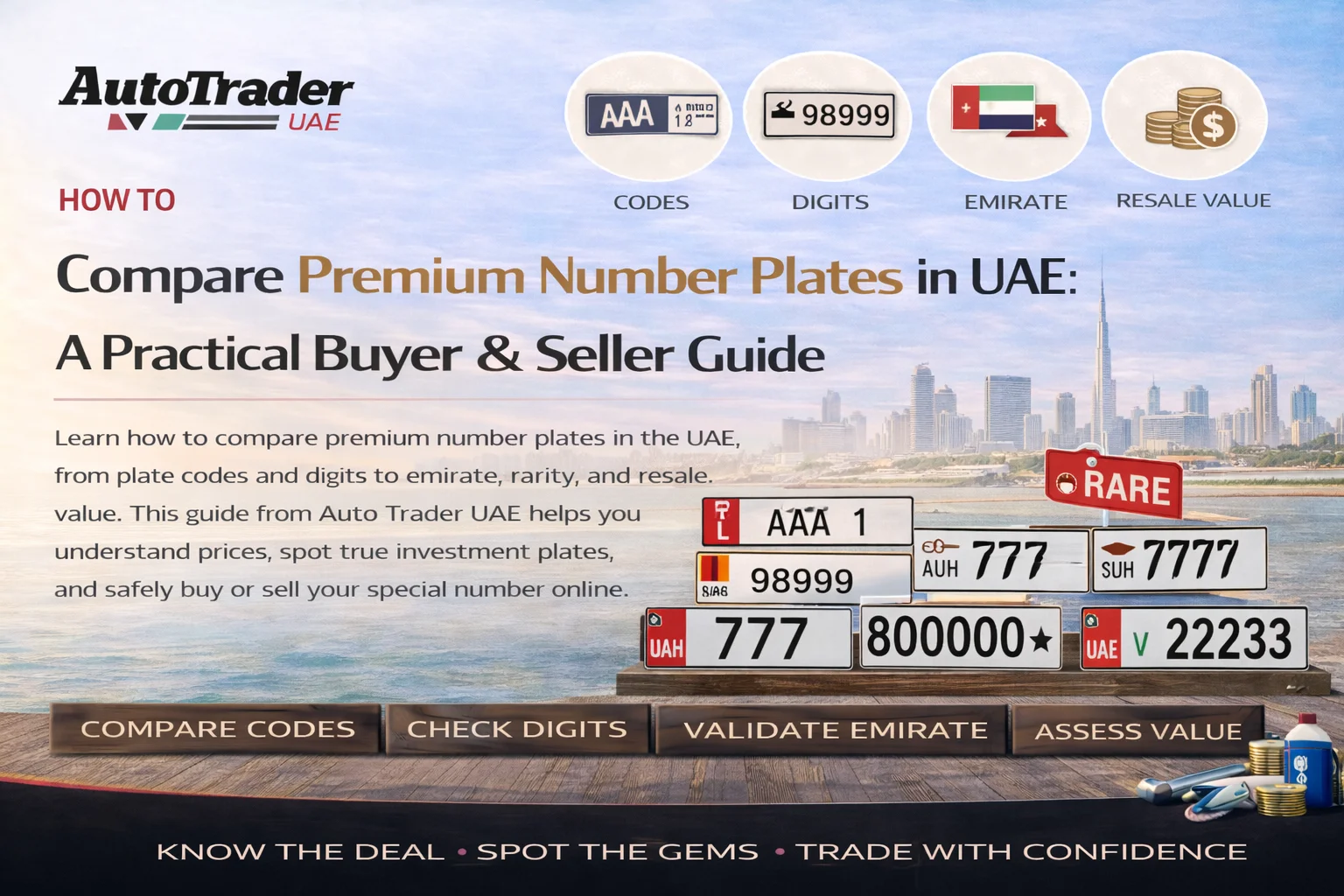
How to Compare Premium Number Plates in UAE
Premium number plates are a big part of car culture in the UAE. A short, memorable plate can say a lot about your status, your business, and even your investment mindset. But with so many codes, emirates, and auction styles, knowing how to compare premium number plates in the UAE is essential before you buy or sell.
This guide from Auto Trader UAE explains how to compare special plates, what really affects value, and how to use online platforms and auctions safely and smartly.
Overview
Premium plates in the UAE range from affordable two- or three-letter combinations to ultra-exclusive single-digit plates that can sell for millions of dirhams. When you compare plates, you’re not just comparing numbers – you’re comparing:
- Emirate (Dubai, Abu Dhabi, Sharjah, etc.)
- Code / category (the letter or combination beside the number)
- Number pattern (single, double, triple digit, repeating, or special sequences)
- Rarity and demand
- Condition and paperwork (clean history, transferability)
- Seller motivation and current market mood
Understanding how these factors work together will help you compare plates like an investor instead of an impulse buyer.
1. Understand the Premium Plate Basics in the UAE
1.1 Emirate matters
Each emirate has its own plate design, codes, and registration authority (RTA in Dubai, Abu Dhabi Police, etc.). Demand and prestige can differ by emirate.
- Dubai & Abu Dhabi: Usually command higher prices for rare and low-digit plates because of higher visibility and stronger collector demand.
- Sharjah, Ajman, Ras Al Khaimah, Fujairah, Umm Al Quwain: May offer more accessible entry prices for premium patterns, with growing interest from regional buyers.
Comparison tip: When comparing plates, always compare within the same emirate first. A three-digit Dubai plate cannot be fairly compared to a three-digit plate from a smaller emirate without adjusting for demand.
1.2 Codes, categories, and series
Most plates display a code (often a letter or a combination) plus the digits. Some series are newer, some discontinued, and some simply more desirable.
- Certain codes are older or more exclusive, making them more collectible.
- Newer series may be cheaper even with similar digit length.
Comparison tip: When you see two plates with the same digits but different codes, check which series is older and how many plates exist in that series. Scarcer, early codes often justify a premium.
1.3 Digit count and patterns
Digit length is one of the strongest visual indicators of value.
- Single digit: Rare and elite. Usually reserved for serious collectors and high-budget buyers.
- Two-digit and three-digit: Highly desirable; strong demand for visually clean combinations.
- Four-digit: Popular middle ground for buyers wanting prestige without extreme prices.
- Five-digit and above: Entry point into personalised patterns (birth years, repeating numbers, etc.).
Within each digit length, patterns matter a lot:
- Repeating (1111, 2222, 9999)
- Sequential (1234, 2345)
- Mirror / palindromes (1221, 2112)
- Meaningful dates (1985, 2000, 2020)
- Lucky numbers (especially 8 and 9 for some cultures)
2. Key Factors to Compare When Choosing a Premium Plate
2.1 Prestige vs. practicality
Before you compare specific plates, decide your priority:
- Prestige & image: You want a plate that stands out at a glance – think fewer digits and powerful patterns.
- Personality & meaning: A plate that reflects your name, company initials, or an important date.
- Investment & resale: A plate that is likely to keep or grow its value.
Your goal will shape which plates you should actually compare.
2.2 Rarity and demand
Two plates can look similar but have very different market appeal.
- Check how many similar plates exist in the same series (e.g., how many similar triple-digit patterns remain unsold).
- Look at recent auction results from major UAE auctions to see what styles are trending.
- Note cultural preferences: some buyers avoid certain digits, others pay more for what they consider lucky numbers.
Comparison tip: When comparing prices, a small jump in rarity (for example, from 1020 to 1000) can justify a large jump in price if the pattern is more iconic.
2.3 Price vs. plate strength
Think of a premium plate like property: location and layout matter more than size alone. To compare realistically, consider:
- Digit length (fewer digits = typically higher value)
- Pattern strength (memorable, simple, and visually balanced)
- Emirate desirability
- Series / code status (older, rarer codes usually win)
Put two plates side by side and ask:
- Which would be easier for someone to remember after seeing it once?
- Which looks cleaner on a luxury car?
- Which has more universal appeal, beyond personal taste?
2.4 Liquidity and resale potential
If you plan to upgrade cars or plates in the future, treat your plate like a tradable asset:
- Neutral patterns (e.g. 7777, 8080, 1212) resell more easily than highly personal ones.
- Shorter, simpler numbers are easier to advertise and attract buyers across different cultures.
- Popular emirates and famous series tend to be more liquid in the secondary market.
Comparison tip: When comparing two plates at a similar price, choose the one that would appeal to the widest audience if you needed to sell quickly.
2.5 Budget and total cost of ownership
Comparing premium plates is not just about headline price. Include:
- Transfer fees (vary by emirate and channel)
- Service charges from auction houses or online platforms
- Associated registration costs when assigning to your car
If you’re stretching your budget for a plate, make sure you’re not compromising on the car itself. A balanced approach is to set a fixed plate budget as a percentage of your car’s value and compare options within that band.
3. How to Compare Plates by Category (With Examples)
3.1 Entry-level premium plates
These are usually four- or five-digit plates with some pattern or personal meaning.
When comparing, focus on:
- Clean, easy-to-read numbers over random sequences
- Patterns that could still appeal to future buyers
- Series from popular emirates, even if the digits are higher
3.2 Mid-tier luxury plates
Typically three- or four-digit plates with strong patterns or lucky numbers:
- Repeated pairs (1122, 5566)
- Palindromes (2112, 2332)
- Notable years (1980, 2000)
Compare these based on:
- Digit count first
- Then pattern strength
- Then emirate and series
3.3 High-end collector plates
These are single-, two-, or special three-digit plates with exceptional rarity.
For these, the comparison is more like art or luxury property:
- Historic auction prices for similar styles
- Public recognition (plates that are known in the community)
- Future auction potential vs. private sale demand
Buyers at this level usually already own high-end or supercars. The plate is a visible extension of their collection.
4. Where to Find and Compare Premium Number Plates in UAE
4.1 Official auctions and government platforms
Each emirate holds official plate auctions, often online and sometimes in physical events. These are a good reference for:
- Real-time bidding behaviour
- Recent market prices by category
- Authentic, verified plates with secure transfer
Use recent auction results as a benchmark when someone offers you a plate privately.
4.2 Online classifieds and specialist marketplaces
Platforms like Auto Trader UAE list both used cars and premium plates, giving you a direct feel for asking prices across different emirates and patterns.
When browsing online listings:
- Filter by emirate first to make fair comparisons.
- Sort by price and digit count to see how plates are positioned.
- Open multiple listings in tabs and compare patterns and series side by side.
Pairing your premium plate search with a used car search on the same platform can also help you plan the total look and budget for your next vehicle.
4.3 Dealer and broker offers
Some specialist dealers and brokers focus on premium UAE plates. They can offer curated collections, but always compare:
- Their asking price vs. live listings on Auto Trader UAE
- Recent auction results for similar plates
- Any service or convenience fees they add
5. How to Compare Safely: Checks Before You Buy
5.1 Verify ownership and documents
Always confirm that:
- The seller is the registered owner of the plate.
- There are no outstanding fines or issues linked to the plate in the relevant emirate system.
- The plate is eligible for transfer to your name.
Whenever possible, complete the transfer through official channels or recognised service centres to reduce risk.
5.2 Compare market references, not just one offer
Before paying, always:
- Find at least 3–5 similar listings (same emirate, similar digit count and pattern).
- Check if the plate type has appeared in recent auctions and what it sold for.
- Be cautious of deals that are much cheaper or more expensive than the market without a clear reason.
5.3 Beware of unrealistic promises
Be wary of any seller who:
- Guarantees a specific future resale profit
- Refuses to share plate details for verification
- Insists on full payment in cash without any official paperwork
6. Tips for Sellers: How to Position Your Plate Against the Competition
6.1 Know your segment
Before listing, decide where your plate sits:
- Entry-level premium
- Mid-tier luxury
- High-end collector
Then search Auto Trader UAE and auctions for the closest matches. Use those as your pricing frame.
6.2 Present your plate clearly
In your listing:
- Always mention the emirate, code, and digit count.
- Highlight any strong patterns (e.g. repeating numbers, mirror numbers).
- State that transfer can be done through official channels.
6.3 Be realistic on price
Overpricing will push buyers to better-positioned plates. If buyers can clearly see similar or stronger plates for less, yours will sit unsold.
To stay competitive:
- Position your price slightly below similar plates if you want a faster sale.
- Be open to reasonable negotiation, especially if the buyer is closing quickly and paying through secure channels.
Buyer Takeaway
When learning how to compare premium number plates in the UAE, treat each option like an asset:
- Compare plates within the same emirate and series first.
- Give more weight to digit length and pattern strength than to personal emotion.
- Check listings on Auto Trader UAE alongside auction results to understand fair value.
- Verify ownership and transfer conditions before paying any deposit.
Seller Takeaway
To sell a plate quickly and at a fair price:
- Identify plates most similar to yours in emirate, digits, and pattern.
- Price your plate realistically based on live listings and recent auction outcomes.
- Create a clear, honest listing on Auto Trader UAE with all plate details and transfer process explained.
- Be prepared to negotiate, especially if the buyer is serious and verified.
Conclusion
Comparing premium number plates in the UAE is part science, part style. If you focus on emirate, series, digit length, and pattern strength, you’ll quickly see which plates genuinely stand out – and which are overpriced for what they offer.
Whether you’re upgrading your daily driver, buying a special plate for a new luxury car, or trading as an investor, using a trusted platform is key. On Auto Trader UAE, you can compare premium plates, browse used cars, and research popular makes and models in one place – helping you match the right car with the right plate at the right price.
Start by exploring current used car listings and premium plate ads, shortlist a few combinations you like, and compare them using the steps in this guide before you buy or sell.
If you are exploring used cars in Dubai or elsewhere in the UAE, Auto Trader UAE makes it easier to compare listings, prices, trims, mileage, and seller details in one place.