
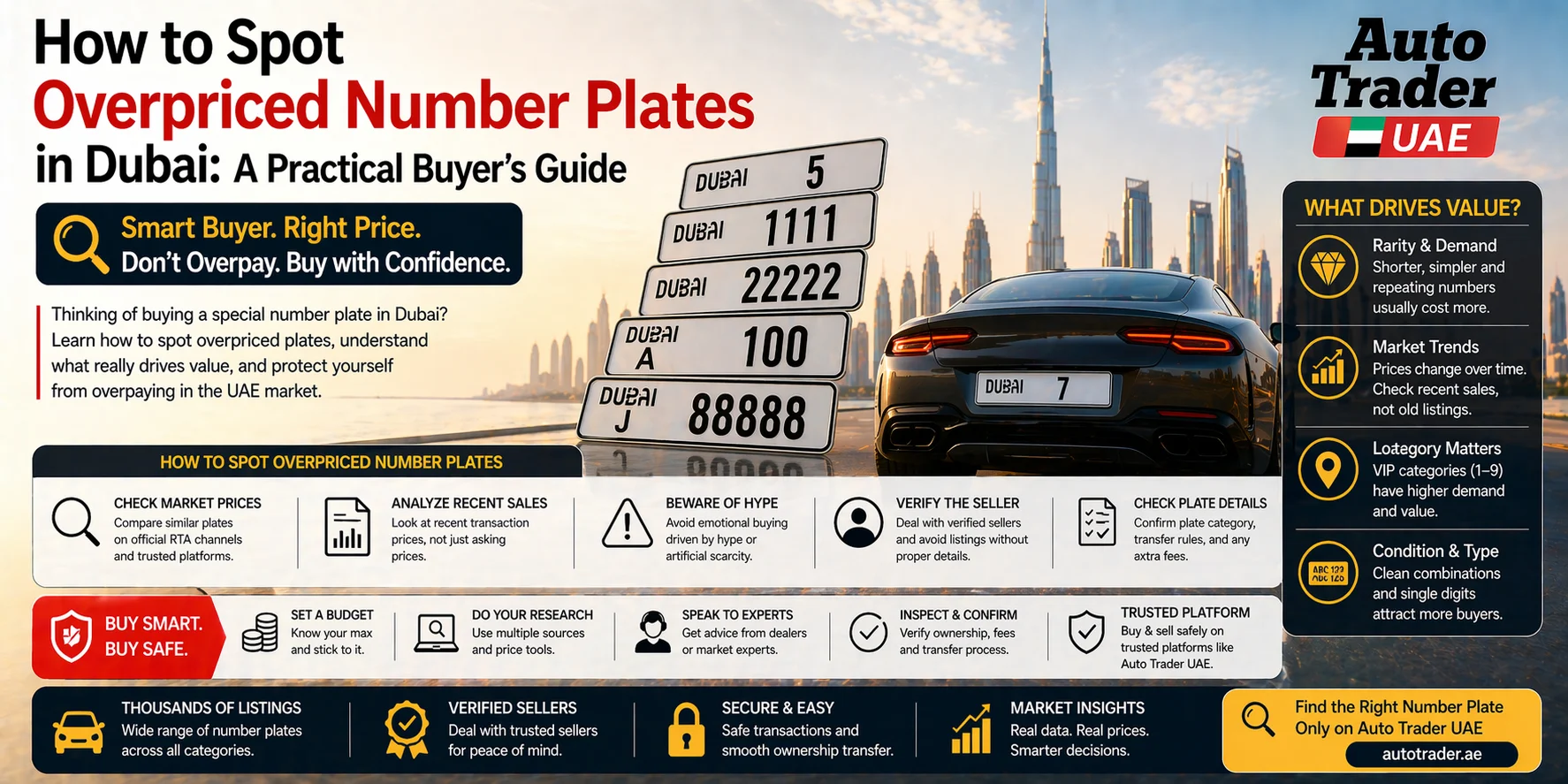
How to Spot Overpriced Number Plates in Dubai
Dubai’s love of special number plates is no secret. A simple two- or three-digit plate can sell for more than a luxury car, and even regular private plates can carry a premium if they have the right combination of numbers and letters.
If you’re thinking of buying a unique number plate – whether as a status symbol, investment, or just for fun – it’s easy to overpay. This guide from Auto Trader UAE explains how to spot overpriced number plates in Dubai, what really affects plate value, and how to buy smartly and safely.
Why Number Plates Are So Expensive in Dubai
Before you can recognise an overpriced plate, you need to understand why some plates are genuinely expensive in the UAE:
- Rarity: Shorter numbers (1–5 digits) and special series are limited and sought after.
- Status and prestige: In Dubai, a distinctive plate is often seen as a sign of success.
- Cultural and personal meaning: Lucky numbers, birthdays, and easy-to-remember sequences can drive demand.
- Official auctions and record prices: High-profile RTA auctions raise the perceived value of similar plates.
Genuine rarity and demand can justify a high price. The challenge is separating truly valuable plates from those that are simply overpriced.
Red Flags That a Number Plate Is Overpriced
These are the most common warning signs that a plate is priced above its realistic market value:
1. The Number Has No Real Rarity or Appeal
Ask yourself:
- Is the plate short (1–4 digits) or just a normal 5-digit sequence?
- Does it have repeating or patterned numbers (e.g. 1111, 1234, 2020)?
- Does it form a meaningful sequence or date that many buyers might want?
If the answer is no, and it’s just a random combination, a big price tag is usually unjustified. Many average 5-digit plates are offered at speculative prices simply because sellers hope to catch an uninformed buyer.
2. The Plate Code Is Less Desirable
In Dubai, the code or letter on the plate (such as A, B, etc.) can influence demand. Early or prestigious series can be more attractive. However, some sellers overcharge simply because the plate is Dubai-registered, even if:
- The code is from a common or newer series.
- The number itself is long and not distinctive.
Compare the asking price with similar codes and digit counts. If the only “special” feature is the emirate or code, be cautious.
3. Massive Gap Between Asking Price and Similar Listings
Search online classifieds, RTA auction histories, and number plate marketplaces. Look for plates with:
- Same emirate
- Similar code or letter series
- The same number of digits
- Comparable patterns (repeating digits, sequences, etc.)
If similar plates are consistently listed far cheaper, the plate you’re viewing is likely overpriced. A reasonable premium for a slightly better pattern is normal – but a huge jump without a clear reason is a red flag.
4. Seller Justifies Price with Hype, Not Facts
Watch out for descriptions like:
- “Guaranteed future investment”
- “Almost unique” when it’s just a random five-digit number
- “Price will double soon” without any real evidence
Real value is supported by rarity, comparables, and demand, not hype. If the seller cannot explain why the plate is special in clear, objective terms, they may be inflating the price.
5. Unrealistic Comparison to Record-Breaking Plates
Some sellers compare their plate to famous record-breaking auction results to justify their price. But those plates typically have:
- Extremely rare numbers (often 1–2 digits)
- Prestigious codes
- Media coverage and historical significance
A normal multi-digit plate with no media attention cannot be fairly compared to multi-million-dirham plates. If the seller keeps referring to record prices while their plate has little in common, treat the price with caution.
6. Long Time on the Market with No Movement
Check how long the number plate has been advertised. If you see the same plate:
- Listed for months (or even years)
- Repeated across multiple platforms
- With minor price drops but no sale
that usually indicates the market is rejecting the price. A truly well-priced, desirable plate tends to move faster, especially in an active market like Dubai.
7. No Clear Ownership or Transfer Process
Overpricing sometimes comes with other warning signs such as:
- Seller cannot prove they are the legal owner.
- They avoid handling the transfer through official RTA channels.
- They request large cash payments without any formal contract or receipt.
A plate that seems “too complicated” to buy at a very high price is not worth the risk. Legitimate, high-value plates are sold through clear, official processes.
What Really Drives Number Plate Value in Dubai?
To spot overpriced number plates, understand the real value drivers:
1. Digit Count
- 1–2 digits: Extremely rare and usually very expensive.
- 3 digits: Generally high value, especially with patterns (like 555 or 101).
- 4 digits: Mid-to-high value depending on pattern and series.
- 5 digits: Most common – value depends heavily on pattern and meaning.
2. Pattern and Memorability
Certain patterns are more desirable, such as:
- Repeated digits (1111, 7777)
- Sequences (1234, 2345)
- Mirrored or balanced numbers (2112, 9009)
- Years and dates (1980, 2000, 2024)
The more visually striking and easy to remember, the stronger the potential demand.
3. Cultural and Personal Significance
In the UAE, certain numbers can be considered lucky or meaningful. Plates reflecting:
- Birthdays or anniversaries
- Special dates (e.g. 0101, 1221)
- Numbers that are locally considered positive or lucky
may attract a premium – but only if there are enough potential buyers who value that specific combination. This is where some sellers overestimate demand and overprice.
4. Code / Series Prestige
All plates are not equal, even with the same digits. Some series and codes are more established or simply more sought after. When comparing prices, always compare like-with-like:
- Same emirate (e.g., Dubai vs another emirate)
- Same or similar letter code/series
- Similar digit count
A premium for a more prestigious series can be justified – but if the seller is asking several times more than similar series without clear reasons, that’s a sign of overpricing.
5. Recent Auction and Market Activity
Official auctions in Dubai can influence private sale expectations. When a pattern sells high at auction, similar plates may try to follow that pricing trend. However, not every similar plate will achieve the same result.
Before agreeing to a price, look at recent auction results and private listings for a realistic sense of value, not just one headline-grabbing sale.
How to Check If a Number Plate Price Is Fair
Use these steps to judge if the asking price is reasonable or inflated.
1. Compare with Similar Plates
Search multiple platforms and filters:
- Use online marketplaces and classified sites in the UAE.
- Check social media groups that focus on plate trading.
- Look at RTA auction results when available.
List 5–10 plates that are close to what you’re considering and note their asking prices. If your target plate is far above the cluster without a compelling reason, it’s likely overpriced.
2. Ask for Justification from the Seller
Request a clear explanation:
- Why is this plate worth this amount?
- Are there previous offers or valuations?
- Has this plate been auctioned before?
A genuine, informed seller will usually have reasonable answers. Vague replies are a sign to negotiate hard or walk away.
3. Consider Your Real Use and Budget
Be honest about why you’re buying:
- For personal pride or style: Focus on what you like and can comfortably afford.
- For business image: Consider how much visibility the plate brings relative to cost.
- For investment: Be conservative; don’t rely on speculative future gains.
Overpaying because you think you “must have it now” is one of the easiest ways to end up with an overpriced plate.
4. Get a Second Opinion
If you’re unsure, speak to:
- Experienced plate traders or collectors.
- Friends or family who have bought plates before.
- Online communities where people discuss plate values.
Even a quick second opinion can highlight unrealistic pricing or confirm that a plate is genuinely special.
Practical Tips to Avoid Overpaying for a Plate
- Set a maximum budget before you start hunting and stick to it.
- Don’t rush: Similar plates appear regularly; think in months, not days.
- Pay attention to timing: Market interest can rise during peak seasons and fall during quieter months.
- Be ready to walk away: If the seller won’t negotiate and the price feels wrong, move on.
- Track asking prices over time: If you watch the market for a few weeks, you’ll quickly learn what’s realistic.
Safe Buying: Verify Ownership and Use Official Channels
Price is only part of the story. A plate can be fairly priced but risky to buy if the process is not handled correctly.
Always Verify Ownership
- Ask for ID and documents that prove the seller owns the plate.
- Check that the details on the documents match the plate and the seller.
- Be wary of people claiming to sell on behalf of someone else without proper authorisation.
Use Official Transfer Procedures
Number plate transfers in Dubai should go through the Roads and Transport Authority (RTA) or authorised service centres. This helps you:
- Avoid fraud and disputes.
- Ensure the plate is cleared of any fines or issues.
- Receive valid proof of ownership.
Never rely only on informal agreements or cash handovers without an official transfer.
Match the Plate to the Right Car
Remember that a plate is part of your overall vehicle image and budget. If you’re shopping for a car at the same time:
- Use Auto Trader UAE to compare used cars for sale across the UAE.
- Balance your budget between the vehicle and the plate – you don’t want to put a premium plate on a car you’re not really happy with.
Buyer Takeaway: How to Get the Best Value Plate
When buying a number plate in Dubai:
- Understand what makes a plate genuinely valuable: digit count, pattern, series, and meaning.
- Use comparable listings and recent sales to judge whether a price is realistic.
- Ignore hype and emotional pressure from sellers.
- Stick to your budget and be patient; the right plate will come.
- Always complete the transaction through official channels.
Seller Takeaway: How to Price Your Plate Sensibly
If you already own a plate and want to sell it:
- Research similar plates before setting a price – don’t rely only on record auction headlines.
- Be realistic about demand; not every sequence is unique or highly desirable.
- Present clear information in your advert (digit count, series, pattern, meaning).
- Be open to negotiation; an overpriced plate may sit unsold for months.
- Promote the plate alongside your car listing on platforms like Auto Trader UAE to reach serious buyers.
Conclusion: Buy Smart, Not Just Expensive
Learning how to spot overpriced number plates in Dubai will save you money and help you find a plate that genuinely suits your style and budget. Focus on real value drivers, compare prices carefully, and never feel pressured into paying more than you’re comfortable with.
If you’re upgrading your car as well as your plate, explore Auto Trader UAE for a wide choice of used cars in the UAE, guides on buying and selling vehicles, and more expert tips. Build the right combination of car and plate, and enjoy the full experience of driving in the UAE – without overpaying.
If you are exploring used cars in Dubai or elsewhere in the UAE, Auto Trader UAE makes it easier to compare listings, prices, trims, mileage, and seller details in one place.